What Is Unlimited PTO? A Business Owner's Guide to Offering Open Time Off Policies
By Jaden Miller , October 29 2026

What is unlimited PTO, and is it worth offering at your business? This guide covers what is unlimited PTO from an employer's perspective. It explains how it works, the real costs and savings, what belongs on every pay stub, state compliance essentials, and a five-item policy checklist you can use before you announce a thing.
Key Takeaways
- Unlimited PTO lets employees take as much paid time off as they need, subject to manager approval and business coverage.
- About 6% of U.S. employers offer unlimited PTO, per SHRM's 2026 Employee Benefits Survey, down from 8% in 2023.
- Employees on unlimited PTO take about 16 days a year on average, versus 14 days for workers with a set allotment, per a 2024 Empower survey.
- A genuine unlimited PTO policy generally eliminates accrual liability and payout obligations at termination. This lowers payroll exposure for your business.
- A compliant policy needs written terms, approval criteria, an encouraged minimum, and clear documentation on every pay stub.
- Introduction
- What Is Unlimited PTO? A Plain-English Definition
- What Is Unlimited PTO in Practice? How It Actually Works
- How Many Days Do Employees Actually Take?
- Pros of Unlimited PTO for Your Business
- Cons of Unlimited PTO for Your Business
- Unlimited PTO and Payroll: What Belongs on the Pay Stub?
- Compliance Essentials: State-by-State Requirements
- Should Your Business Offer Unlimited PTO?
- Streamlining Pay Stub Creation for Your Team
Introduction
You are running a growing business. Your top performers are watching benefits from competitors. You are tired of tracking accrual balances in a spreadsheet that nobody trusts. The unlimited PTO question lands on your desk every hiring cycle. Is it a recruiting edge, or a financial and compliance risk you cannot model?
This guide is built for the business owner side of the table. It explains what is unlimited PTO, how it works in practice, and what it costs and saves your business. It covers what your pay stubs need to show and the compliance essentials you cannot skip. By the end, you will have a five-item policy checklist and a three-question gut check to decide whether the policy fits your company. If you would rather skip the spreadsheet and use a purpose-built paystub tool for small businesses, that option is available too.
What Is Unlimited PTO? A Plain-English Definition

What is unlimited PTO? Unlimited PTO is a paid time off policy that does not assign employees a fixed annual allotment. Instead of accruing two weeks per year and tracking a balance under a traditional PTO policy, employees request flexible time off, get manager sign-off, and take it.
So what does unlimited PTO mean for your books? There is no accrual line to maintain. There is no balance to carry on the balance sheet. There is no payout liability when an employee leaves. As of 2026, about 6% of U.S. employers offer paid open or unlimited leave, per SHRM's 2026 Employee Benefits Survey. That figure is unchanged from 2025 and down from 8% in 2023.
The trade-off is clear. You give up the predictability of a capped allotment in exchange for lower administrative load and a stronger recruiting story. You also take on the responsibility of running approvals consistently across managers. This is what unlimited PTO means in practice.
What Is Unlimited PTO in Practice? How It Actually Works
The mechanics are simple on paper and disciplined in practice. An employee notifies their manager. The manager confirms business coverage. The time is approved. The employee is paid as if they worked.
The phrase "unlimited" is misleading. No business can absorb a senior engineer taking 90 days off in a quarter. Coverage requirements, project deadlines, and team dependencies create informal caps even when the written policy has none.
Five non-negotiables turn an unlimited PTO policy from a perk slogan into something your business can actually run:
- A written policy document. Spell out who approves, what notice period applies, and how requests are escalated. Clear PTO policies prevent confusion.
- An advance notice window. Most workable policies require two weeks for stretches of three or more days. This helps with managing PTO effectively.
- Approval criteria. Tie approval to coverage and deliverables, not manager mood. This ensures the policy is applied consistently.
- An encouraged minimum. Tell employees you expect them to take at least 15 days. Have leadership model it. This addresses the pros and cons of unlimited PTO.
- A clear FMLA distinction. Unlimited PTO does not replace federal or state-protected leave. Your policy must say so.
On the pay stub side, the change is smaller than employees usually expect. Hours worked still drive gross pay. Taxes still come out. Deductions are unaffected. The only difference is that the PTO balance field most employees are used to seeing on a standard pay stub layout simply will not appear. There is no balance to carry.
How Many Days Do Employees Actually Take?

Employees with unlimited PTO take about 16 days off per year on average. That is only two days more than the 14 days taken by workers with a set allotment, according to a 2024 Empower survey of 1,028 full-time workers. Nearly 1 in 4 workers (23%) say they would take less time off under an unlimited policy. Plan headcount around 15 to 20 effective workdays off per employee, not a runaway number. This is how unlimited PTO work differs from expectations.
The 2023 to 2026 trend has been a quiet pullback. SHRM's benefits surveys show the share of employers offering paid open or unlimited leave slipping from 8% in 2023 to 7% in 2024 and 6% in 2025 and 2026.
The lesson for your business is to model labor capacity on roughly the same number of days off you would plan for under accrual. Then audit usage annually.
Pros of Unlimited PTO for Your Business
When weighing what is unlimited PTO worth to your bottom line, start with the upside. It is real, especially for businesses with fewer than 200 employees that compete with larger companies for talent. Here are the advantages of unlimited PTO:
- Recruiting and retention edge. Candidates read unlimited PTO as a signal of trust. This matters when you are competing for talent against companies that pay more. These are real unlimited PTO pros.
- Lower administrative load. No accrual tracking, no balance reconciliation, no awkward year-end carryover conversations. Your finance team gets hours back every payroll cycle.
- No payout liability at departure. Under accrual policies in several states, unused PTO is treated as earned wages owed at separation. That PTO is taxed as ordinary wages on payout. A genuine unlimited PTO policy generally removes that liability.
- Employees treated as professionals. The shift in tone matters. You are saying you trust your team to manage outcomes, not punch a clock.
- Faster onboarding. New hires can take time when they need it. They do not have to wait six months to accrue their first vacation day.
- No year-end use-it-or-lose-it rush. You avoid the December staffing crunch when half the team is burning their remaining days.
Understanding these unlimited PTO pros and cons helps you decide if it fits your business.
Cons of Unlimited PTO for Your Business
If you only read the recruiting brochures, what is unlimited PTO sounds like a no-brainer. The downsides are equally real. Most of them come down to culture and consistency rather than cost. Here are the cons of unlimited PTO:
- Employees take less time, not more. Without a defined number to anchor against, employees default to whatever their manager visibly takes. That is usually too little. The social proof vacuum produces burnout, not abuse.
- Inconsistent application across managers. One manager approves freely. Another second-guesses every request. Within twelve months you have a fairness complaint on your hands.
- Coverage planning is harder. Forecasting labor capacity without a hard cap requires manager discipline that not every team has.
- State compliance gray areas. Colorado's labor department says an "unlimited" policy that caps time off in practice is really a fixed amount of PTO that must be paid out at separation.
- Difficult to measure usage. Without a balance to report, you need a separate tracking habit to see who is and is not taking time off.
- Cultural backfire if leaders skip vacations. If you and your management team never take time off, your policy reads as a trap. It does not matter what the handbook says.
These are the real PTO pros and cons you need to weigh carefully.
Unlimited PTO and Payroll: What Belongs on the Pay Stub?
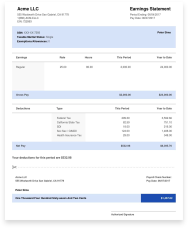
Under unlimited PTO, the pay stub shows hours worked, gross pay, taxes, and deductions. It does not show a PTO accrual balance, because there is not one. Approved unpaid days appear as a separate line. In California, the stub (or a written statement given with each paycheck) should show paid sick leave as "unlimited" to satisfy the state's sick leave rules. Keep approval emails and calendar records on file in case of an audit or wage dispute.
In practice, here is what changes on your payroll documentation:
- The "PTO Balance" or "Vacation Hours Available" line you carried under accrual is removed.
- Hours worked, regular and overtime, still drive gross pay exactly as before.
- Bonus calculations tied to "hours worked" are unaffected. PTO days are paid as regular working time.
- If an employee takes unpaid leave (rare under unlimited but possible), that should appear as a clearly labeled line item.
- Year-end W-2 figures are unchanged in structure. There is no PTO payout entry, because there is no accrual to pay out.
The audit trail matters more than it did before. Without a balance for accounting to lean on, you need approval records. Keep calendar invites, manager confirmations, or HRIS approval logs retained for at least three years. If a former employee files a wage claim, those records are your defense.
If you run payroll through QuickBooks, confirm your QuickBooks paystub setup is configured to omit the PTO balance field for these employees.
Compliance Essentials: State-by-State Requirements
A complete answer to what is unlimited PTO has to cover compliance, not just culture. Most state wage-and-hour laws were written for accrual-based PTO. That puts unlimited PTO into a legal gray area in a handful of jurisdictions you should know about.
- California, Colorado, North Dakota, and Massachusetts treat earned vacation or PTO as wages owed at separation. Unlimited PTO sidesteps this only if the policy is genuine and clearly written. In 2020, a California appeals court (McPherson v. EF Intercultural Foundation) held that the state's vacation payout law applied to an "unlimited" policy that had an implied cap, and Colorado's labor department treats "unlimited" plans that cap time in practice the same way.
- Sick leave is separate. State paid sick leave laws (California and New York, among others) still apply. California lets an unlimited plan meet its sick leave tracking rule by showing paid sick leave as "unlimited" on the pay stub or a written statement given with each paycheck.
- FMLA is unaffected. If you have 50 or more employees, federal FMLA leave (up to 12 workweeks of unpaid, job-protected leave for eligible employees) runs in parallel with your unlimited policy. Document it separately.
- Final paycheck rules still apply. State timing rules for issuing final pay (in California, immediately when you fire someone, or within 72 hours when an employee quits without notice) are not waived. Separately, do not confuse unlimited PTO with a payroll tax holiday. That is an entirely different federal mechanism.
Run your written policy past employment counsel before rollout. This is especially important if you operate in multiple states. The legal cost upfront is small compared to a single wage-claim defense.
Should Your Business Offer Unlimited PTO?
Should your company offer unlimited PTO? Only offer it if leadership will model healthy usage. Your team must be able to cover 15 to 20 days off per employee without missing deliverables. You also need a consistent manager approval process already in place.
Without those three conditions, an accrual policy with clear caps gives your business better predictability. Some businesses find that flexible time off (FTO) works better than unlimited PTO.
Run yourself through the three-question gut check. These frequently asked questions help you decide:
- Will your leadership team visibly take at least 15 days off this year?
- Can your team absorb 15 to 20 days off per employee without sliding on deliverables?
- Do you already have a manager approval framework your team trusts?
Two yeses and a maybe is a green light. Anything less, and you should fix the underlying culture or coverage gap before changing the policy. This is how unlimited PTO should be evaluated.
Streamlining Pay Stub Creation for Your Team
Whichever PTO model you run, your obligation to produce accurate, compliant pay stubs every cycle does not change. Hours worked, taxes withheld, deductions, and year-to-date totals all still have to be right, every pay period, for every employee.
As your headcount grows, the time you spend formatting and double-checking stubs grows with it. Teams that move off legacy ADP paystub workflows usually do so to consolidate documentation. A paystub generator handles the calculations and formatting consistently. The time you save goes back into the parts of the business only you can run.
Conclusion
The honest answer to what is unlimited PTO comes down to your team. Unlimited PTO is a strong policy for businesses that already have a culture of trust and consistent management. It saves you accrual tracking, usually eliminates payout liability, and signals you treat employees as professionals.
Done casually, it backfires. Create accurate, compliant pay stubs for your team in minutes and spend your time on the parts of the business that need you most.
You Might Also Like



Frequently Asked Questions
Similar Articles



We’ve helped numerous individuals and businesses create professional documents! Create yours today!