PTO: The Employer's Guide for 2026
By Jaden Miller , April 7 2026

Spending hours setting up employee leave rules instead of running your business? You're not alone. Paid time off is one of the most searched employee benefits topics. As an employer, the decisions you make about time-off affect hiring, retention, compliance, and your bottom line. This guide helps you define PTO for your business, covering structures, accrual methods, and compliance requirements. You'll also learn how to document compensated leave on your employees' pay stubs using a paystub generator.
Key Takeaways
- PTO is compensated time away from work that you define through your company's policy. There is no federal minimum.
- More than 17 states now mandate some form of paid sick leave, so check your state's requirements.
- In many states, accrued PTO counts as earned wages and must be paid out when an employee leaves.
- The national average is 11 vacation days plus 7 sick days after one year of service.
- Document PTO balances and payouts on employee pay stubs to stay audit-ready and avoid disputes.
What Is PTO?
What's PTO? The acronym stands for a widely recognized workplace benefit. The PTO meaning is simple: compensated time an employee takes away from work while still earning regular pay. These policies typically cover vacation days, sick leave, and personal time. Unlike FMLA or military leave, it's an employer-provided benefit, not a federal requirement.
The PTO meaning in work contexts varies depending on the employer and industry. Every employer approaches it differently based on company size and workforce needs. What is PTO in work terms? It represents compensated leave as part of your total benefits package. What is PTO at work beyond a line item? It affects your ability to attract good candidates and keep your team. What is PTO used for? Employees use it for vacation, illness, appointments, and personal obligations. The meaning of PTO extends to every industry, from healthcare to tech.
What is paid time off at its core? It's a standard workplace benefit that most employers now include in their compensation packages. The paid time off meaning encompasses any employer-approved absence where the employee still receives regular wages. This distinction matters when separating required leave from optional benefits.
The paid time off definition is easy to grasp, but the policy choices behind it are where most employers need help. What does PTO stand for at work, beyond the words? It's an employer-defined benefit, not a government program. Personal time off is sometimes used to mean the same thing. But the personal time off meaning usually refers to just one category within a broader policy. The core PTO definition covers any company-approved paid absence. What is personal time off? It's a subset of your overall plan that employees use for non-medical, non-vacation needs.
How PTO Works: Structures and Accrual Methods
Choosing the right PTO structure shapes how your employees earn and use their time off. It also affects your payroll costs. There are three main models.
Traditional PTO
This is the most structured option. Employees get a set number of days per year, often based on how long they've worked for you. Workers with one year of service might get 10 days, rising to 15 after five years. PTO time builds up each pay period. You track balances through payroll software or spreadsheets. This is the most common setup for small businesses. Each PTO day accrues based on your chosen schedule.
PTO Bank
This model combines vacation time, sick leave, and personal days into one balance. Employees draw from a single pool for any absence. The upside for employers is simpler tracking. The risk: higher payout costs in states like California and Massachusetts. In those states, accrued PTO counts as earned wages no matter how it was labeled.
Unlimited PTO
With this approach, there are no accrual caps. Employees request time off with manager approval. According to SHRM research, employees with unlimited PTO actually take fewer days. The average is 16 compared to 14 with capped plans. For employers, unlimited PTO eliminates payout liability at termination in most states. But without written guidelines in your employee handbook, inconsistent approval patterns can create legal exposure.
Accrual Methods and What They Cost You
PTO accrual follows one of two paths: per-pay-period accrual or frontloaded. With accrual, employees earn PTO hours based on hours worked. For example, 1 hour of PTO per 30 hours worked. With frontloading, the full balance is ready on day one.
Here's the cost calculation most employers overlook. If you offer 10 PTO days to an employee earning $25 per hour, that's roughly $2,000 per year in PTO liability per employee. Frontloading creates that liability immediately. Accrual defers it across the year.
Types of PTO Your Employees Are Entitled To
What is a PTO day, exactly? Not every type of leave falls under PTO, and not every type is optional. Here's what business owners need to know about each category of employee PTO:
- Vacation time: Discretionary time off for rest and travel. Fully employer-defined.
- Sick leave: Time off for illness or medical appointments. Mandated in 17+ states as of 2026. The PTO meaning medical professionals should know is that sick leave may be separate from general PTO depending on your state.
- Personal days: Time off for personal matters not covered by other categories. Is personal time off paid? That depends on your company's policy.
- Bereavement leave: Time off following a death in the family. Increasingly offered but not federally required.
- Parental leave: Time off for the birth or adoption of a child. FMLA provides 12 weeks unpaid for qualifying employers.
- Floating holidays: Flexible days employees choose, often in lieu of fixed company holidays.
- Jury duty: Most states require employers to provide time off for jury service.
- Volunteer time off: A growing benefit that supports employee engagement and community involvement.
The key point: some of these are required by law depending on your state. Others are extras that help you stand out in hiring.
How to Set Up a PTO Policy for Your Business
Building a PTO policy doesn't have to be complex, but skipping steps causes problems later. Follow this process:
- Choose your structure. Traditional, PTO bank, or unlimited. Each has different payroll and compliance implications.
- Set accrual schedules and caps. Define how PTO is earned and whether unused days roll over or expire.
- Define the request and approval process. Establish clear procedures so managers apply rules consistently.
- Address carryover and payout rules. Decide on use-it-or-lose-it limits versus rollover caps, keeping state law in mind.
- Verify state compliance. More than 17 states now mandate paid sick leave. Several expanded requirements in 2024 and 2025, including Colorado, Illinois, and Minnesota.
One pitfall to avoid: combining sick leave and vacation into a single PTO bank. This raises your payout costs in states like California, Massachusetts, and Colorado, where all accrued PTO must be paid out when someone leaves. Another risk is offering unlimited PTO without clear approval rules. That can lead to discrimination claims if managers approve requests unevenly.
Understanding the PTO work meaning for your specific industry helps you design a policy that matches employee expectations. Document your PTO time off rules clearly in your employee handbook so every team member knows what to expect.
Consider adding mental health days to your policy. It's a growing trend for 2026 and signals to employees that you take employee burnout and work-life balance seriously.
Is Your PTO Competitive?
What PTO means for your budget depends on structure and headcount. Bureau of Labor Statistics data paints a clear picture. Private-sector workers with one year of service get an average of 11 vacation days and 7 sick days per year. After five years, vacation days rise to about 15. After 10 to 20 years, that number reaches 18 to 20 PTO days.
The PTO meaning work candidates evaluate during hiring starts with the day count. The PTO days meaning for job candidates is straightforward: how many days will they actually get? If you're offering fewer than 11 vacation days to new hires, you're below the national average. The PTO meaning job seekers look for is a clear number in the offer letter. A strong pay time off policy is one of the most cost-effective tools for employee retention and recruiting.
PTO Compliance: Payout Laws and State Requirements
There's no federal law requiring private employers to offer PTO. But state tax and labor laws add significant obligations. What is PTO leave in a legal context? PTO leave means earned wages in many jurisdictions.
Several states treat accrued PTO as earned wages. That means you must pay out unused balances when someone leaves. The biggest states to watch include California, Colorado, Massachusetts, and Illinois. Other states ban use-it-or-lose-it policies. You can't force employees to give up accrued PTO leave at year-end in those states.
FMLA is a separate law. It gives 12 weeks of unpaid leave for medical and family events but doesn't replace your PTO policy.
The bottom line: your employee's final paycheck is often the most closely reviewed check in any dispute. Accurate PTO payout records on that final pay stub protect your business.
PTO on Pay Stubs: What Employers Need to Document
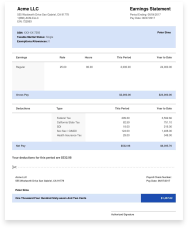
PTO hours should appear on every employee pay stub. What are PTO hours on a stub? This includes the current accrual balance (similar to YTD tracking on pay stubs), any PTO time used during the pay period, and any PTO payouts or cash-outs. The PTO hours meaning on a pay stub reflects how much compensated leave an employee has earned and used. What is PTO hours tracking? It's the running total that updates each pay period.
Good pay stub records serve three purposes. They show employees their PTO balance. They protect your business during audits. And they create a solid record if a former employee disputes their final payout. If you're creating pay stubs for multiple employees, keep it consistent. Every stub should show PTO data the same way, whether it's a pay stub or payslip.
You Might Also Like
- How to Access Your Pay Stubs Online
- How to Find Pay Stubs From an Old Job
- Self-Employed Pay Stub Guide
- Understanding Garnishments on a Pay Stub
- How Many Pay Stubs Do You Need for a Car Loan?
Conclusion
PTO is a business choice with real money, legal, and retention effects. The right paid time off policies draw talent. The right compliance protects your business. And the right records keep you audit-ready.
Create professional pay stubs for your employees in minutes. Start generating stubs now. Accurate PTO calculations, every time.



Frequently Asked Questions
Similar Articles



We’ve helped numerous individuals and businesses create professional documents! Create yours today!