How Many Pay Periods in a Year? A Simple 2026 Guide
By Jaden Miller , February 13 2026
Not sure how many pay periods in a year you should expect to see on your paycheck? You're not alone.
New employees starting their first job or freelance work, or those who have never monitored their payment schedule, may face confusion throughout the process. The good news is that the system operates through simple mechanisms. These become clear when you learn its basic operating rules.
This guide explains all types of pay periods through simple language. It will teach you about how many pay periods in a year, which schedule provides what information, and how your salary is distributed across your pay period statements.
You'll also learn what makes 2026 slightly different for those on a biweekly payment period schedule. Think of this as your friendly paystub generator crash course on pay periods.
Key Takeaways
- Most workers in the US get paid biweekly, which means 26 pay periods in a year
- Weekly = 52, biweekly = 26, semi-monthly = 24, monthly = 12 pay periods per year
- The special year of 2026 contains 27 biweekly pay periods, which differ from the standard 26 periods.
- The $60,000 annual salary translates into $2,307 biweekly pay before any deductions are made, according to the paycheck.
- Your state may have rules about the minimum pay frequency your employer must follow
- Key Takeaways
- What Is a Pay Period? (And What’s a Pay Date?)
- How Many Pay Periods in a Year by Schedule
- Types of Pay Periods Explained
- How Much Is Each Paycheck? (Salary Broken Down by Pay Period)
- Why 2026 Has 27 Pay Periods (And What That Means for You)
- How Overtime Works With Different Pay Periods
- Does Your State Have Pay Period Rules?
- How Do Pay Periods Work? A Quick Checklist
- You Might Also Like
- Final Thoughts
What Is a Pay Period? (And What’s a Pay Date?)
Your employer uses a pay period to monitor your work hours, which determines your paycheck. The biweekly pay period spans across two weeks. The pay date is when you actually receive your money, usually two to three business days after the pay period ends.
So, what's a pay period in everyday terms? The system functions as a countdown timer system. The pay period starts when you begin work. It runs until the end of each cycle. The system tracks all your work activities during the designated time period. The timer stops to trigger payroll processing, which generates a paycheck report for you.
The pay period definition operates as a basic system that establishes the regular payment schedule for employee wages. You can explain to others that the period between two consecutive paychecks is the answer to "What does pay period mean?" or "What is pay period?"
Pay Period vs. Pay Date
People tend to misunderstand this point. Your pay period and your payday aren't the same thing.
Your pay period is when you work. Your pay date is when you get paid for that work. There's usually a gap of 2 to 3 business days between payroll processing.
The pay period from January 1 to January 14 determines when the pay date will be activated on January 17. The standard time period between these events should be three days. Don't panic if you don't see money on the last day of your pay period.
How Many Pay Periods in a Year by Schedule
So, how many pay periods in a year will you actually get? The answer depends on your pay schedule. Understanding how many pay periods in a year you'll receive is essential for budgeting.
| Pay Schedule | Pay periods per Year | How Often You Get Paid |
| Weekly | 52 | Every week |
| Biweekly | 26 | Every two weeks |
| Semi-monthly | 24 | Twice per month |
| Monthly | 12 | Once per month |
So, how many paychecks per year will you get? If you're on a biweekly schedule like most American workers, you'll receive 26 paychecks in a year. The schedule follows how many pay periods per year on a typical two-week work period. Weekly workers get 52 paychecks per year, and monthly workers get 12.
The semi-monthly and monthly schedules follow the same annual totals each year. But the number of pay periods biweekly workers receive can vary from one another. There are occasional years when you'll receive an extra pay period. More on that below.
Types of Pay Periods Explained
Understanding how many pay periods in a year you'll have starts with knowing the four main types. How long is a pay period? Your work schedule depends on the scheduling system that your employer implements.
Weekly Pay Periods (52 per Year)
A weekly pay period is seven days long. The start and end dates for a weekly pay period operate from Monday through Sunday. However, payday will operate on the next Friday.
You'll find that how many weekly pay periods in a year is always 52 (and sometimes 53 in a leap year). Weekly pay is common in construction, retail, and food service. Many retail workers, like those at Family Dollar, get paid weekly. Hourly workers tend to prefer it because the cash flow is more frequent.
The downside is that your employer operates payroll 52 times annually. This results in elevated administrative costs.
Biweekly Pay Periods (26 per Year)
Biweekly is the most popular pay schedule in the United States. According to the Bureau of Labor Statistics, about 43% of US employers use it. Large companies like Walmart and Amazon typically run biweekly pay.
If you get paid biweekly, how many paychecks in a year should you expect? Usually 26. That's because there are 26 biweekly pay periods per year in most years. The biweekly pay schedule consists of 14-day blocks, which make up each period.
How many pay periods in biweekly schedules can change? In certain years, the calendar alignment creates 27 pay periods instead.
How many pay periods are in a year biweekly, for 2026? It's 27, not the usual 26. People also ask how many biweekly pay periods in 2024. The answer for 2024 was the standard 26. And if you're wondering how many paychecks in a year biweekly 2024, that was also 26.
Both salaried employees and hourly workers can be on a biweekly pay. The system enables workers to receive steady income payments while businesses keep their workforce expenses within their financial capabilities.
Semi-Monthly Pay Periods (24 per Year)
Semi-monthly means you get paid twice every month. This is usually on the 1st and 15th, or on the 16th and the last day. That gives you exactly 24 pay periods per year, every single year. No surprises.
This schedule works well for salaried employees because each paycheck covers a fixed half-month. However, semi-monthly pay periods vary in length, usually between 15-16 days. This variation can make overtime calculations become more complex for hourly workers.
Monthly Pay Periods (12 per Year)
Monthly pay means one paycheck per month, 12 pay periods per year. So, how many pay periods in a year for monthly workers? Always 12. From an employer’s perspective, this is the simplest payroll structure. It requires less administrative work, fewer payroll runs, and lower processing costs compared to more frequent pay schedules.
However, the main drawback of this system becomes clear because employees must wait until the end of each month to receive their earnings. The system of bill and expense management through cash flow creates difficulties when you must use monthly pay to meet your financial requirements. This schedule is most common for salaried employees in senior roles.
How Much Is Each Paycheck? (Salary Broken Down by Pay Period)
Your paycheck amount depends on your annual salary divided by the number of pay periods.
For a $60,000 salary:
Weekly pay = $1,153.85
Biweekly pay = $2,307.69
Semi-monthly pay = $2,500.00
Monthly pay = $5,000.00 per paycheck before taxes and deductions.
The following example shows how a fixed payment amount per pay period would appear for a $60,000 annual income.
| Pay Schedule | Periods | Gross paycheck |
| Weekly | 52 | $1,153.85 |
| Biweekly | 26 | $2,307.69 |
| Semi-monthl | 24 | $2,500.00 |
| Monthly | 12 | $5,000.00 |
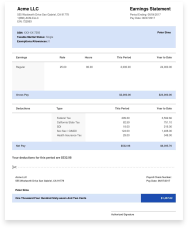
Now that you understand "What does per pay period mean?", you can calculate your own take-home pay. The figures represent total amounts that have not been affected by payroll taxes, benefit deductions, or withholding used for retirement or insurance purposes. If you need help understanding what shows up on your check, take a look at our paystub templates to see a standard breakdown. Your net pay (what hits your bank account) will be lower.
Wondering "How much do 60 days in get paid?" At $60,000 per year, roughly 60 days (about 3 biweekly pay periods) comes out to around $6,923 gross. In a 27-period year like 2026, that biweekly paycheck for a $60,000 salary drops to about $2,222.22 per check. Your annual compensation stays the same because it now includes the new paycheck.
Why 2026 Has 27 Pay Periods (And What That Means for You)
The schedule of 2026 contains 27 biweekly pay periods, which differ from the typical 26 periods found in other years. This happens because January 1, 2026, falls on a Thursday. The calendar system creates a situation that results in biweekly schedules having an extra payday.
This isn't a glitch. It happens roughly every 11 years. The next years with 27 biweekly pay periods are 2037 and 2048. So, how do pay periods work in these years? Exactly the same way; you just get one more cycle.
If you work as a salaried employee, you should not worry. Your annual salary doesn't change. Each individual paycheck is slightly smaller because the same total gets divided by 27 instead of 26.
Pro Tip: Your biweekly schedule in 2026 includes the additional paycheck, which gives you a great opportunity. You could use the additional income to build your emergency fund, pay down debt, or increase your retirement contributions. Your current budgeting system, which uses 26 paychecks throughout the year, makes this additional paycheck seem like a reward.
Employers need to develop strategies to handle 27-period years in advance. The process requires three essential elements:
- Budget adjustments
- Benefit reduction recalculation
- Successful communication with employees.
Many payroll systems, like ADP, handle the adjustment automatically.
How Overtime Works With Different Pay Periods
The weekly calculation of overtime applies to all hourly workers regardless of their pay period status. The Fair Labor Standards Act (FLSA) requires employers must give their staff members 1.5 times their typical wage rate for every hour they work exceeding 40 hours during a typical workweek.
The system allows easy tracking of overtime because the pay period schedule follows a weekly and biweekly pattern. This matches the complete week format. However, semi-monthly pay periods can be more complicated. A single semi-monthly period may cover parts of two or even three different workweeks. This can make overtime calculations less straightforward.
If you’re paid semi-monthly and work overtime, your pay stub needs to show your weekly work hours. Since overtime is based on each individual workweek, reviewing those weekly totals is the only way to confirm that your overtime pay was calculated correctly.
Does Your State Have Pay Period Rules?
Multiple states across the country have established regulations that determine how frequently employers need to make salary payments to their employees. The following examples demonstrate the concept.
| State | Requirement |
| New York | Weekly for manual workers |
| California | Semi-monthly (specific date windows) |
| Arizona | Paydays no more than 16 days apart |
| Connecticut | Weekly (some exceptions for monthly) |
| Alabama | No state requirement |
| Florida | No state requirement |
| South Carolina | No state requirement |
| Rhode Island | Weekly (unless employer gets approval) |
The FLSA contains federal rules that state laws can use to implement more payment schedule requirements. If you're not sure about your state's rules, check the Department of Labor's state payday page for the most current requirements.
The knowledge of state rules regarding payroll schedule and how many pay periods in a year becomes essential for both employers selecting these options and employees who need to understand them.
How Do Pay Periods Work? A Quick Checklist
Pay periods work on a repeating cycle. Your employer tracks your work hours from the start to the end of each work period. After the period ends, payroll processes your pay, and you receive your paycheck on the scheduled pay date.
A first-time payroll calendar handler should follow this basic organizational process.
- Ask HR about your pay schedule. Determine the payment schedule, which includes weekly, biweekly, semi-monthly, or monthly intervals. Not sure what HR does or how to reach them? You must finish all required onboarding paperwork before starting your work.
- Mark your pay dates. You can schedule your appointments by adding them to their calendar, or you can use your phone to set reminder alerts.
- Note when each pay period starts and ends. The system enables users to monitor their working hours and schedule future work assignments.
- Watch for holidays. The payment for payday will be made on the previous business day when a bank holiday falls.
- Review your pay stub. You need to check your work hours, gross pay, and deductions on each pay statement to ensure they match the actual amounts. Your W-2 form at tax time should match your total pay stub amounts for the year.
You Might Also Like
- How to Access Your Walgreens Employee Pay Stub
- Dollar General Pay Stub Portal Guide
- 7-Eleven Pay Stub Portal: Employee Login and Access
- CVS Workbrain Login and Pay Stub Access
- Dollar Tree Pay Stub: How to View Your Paystub Online
- Pay Stubs Explained: A Beginner's Complete Guide (2026)
- Net vs Gross Income: A Simple Guide for Beginners (2026)
- medicare tax: A Simple Guide for Beginners (2026)
Final Thoughts
Now you know how many pay periods in a year to expect and the total number of pay periods in a year for every schedule. Weekly gives you 52, biweekly gives you 26 (or 27 in 2026), semi-monthly gives you 24, and monthly gives you 12. You must check your pay dates on your pay stub because all financial transactions will run automatically.
Need to create your own pay stub? It's easier than you think. Get started in minutes with our simple pay stub generator; no experience needed.



Frequently Asked Questions
Similar Articles



We’ve helped numerous individuals and businesses create professional documents! Create yours today!