Alaska Paycheck Calculator: Employer Guide for 2026
By Jaden Miller , April 17 2026

You just hired your third employee in Anchorage. The payroll rules from Oregon or Texas don't fully apply here. Alaska is one of the few states with zero state income tax. But it trades that simplicity for daily alaska overtime rules, shared unemployment insurance contributions, and mandatory workers' comp from day one.
This guide walks through how to use an alaska paycheck calculator for 2026. We cover which federal and state taxes apply. We also flag the compliance items that catch new Alaska employers off guard. If you need a fast way to produce compliant pay stubs for your team, PayStubs.net handles the math for you.
Key Takeaways
- Alaska has no state income tax. You only withhold federal taxes and the worker's 0.50% SUI share from each paycheck.
- The 2025 SUI wage base limit is $51,700. Employers pay 1.00%–5.90% based on their experience rating.
- Alaska uses the federal W-4 only. That removes one onboarding form compared with most other states.
- Overtime is owed after 8 hours in a single day, not just after 40 hours in a week.
- Every Alaska employer must carry workers' comp insurance from the first hire.
Why Alaska Paycheck Calculations Look Different
Alaska is one of only nine states with no state income tax. That simplifies the first layer of every paycheck you run. You do not keep state withholding tables. You do not collect a state W-4. Any alaska tax calculator you use should apply only federal taxes plus the state items you still owe as an employer. For more on how state tax decisions affect federal tax outcomes, it pays to learn the link early.
So what alaska payroll taxes do you still owe? The list is short but firm:
- Federal income tax withholding
- FICA (Social Security and Medicare)
- FUTA (Federal Unemployment Tax)
- The employer portion of Alaska State Unemployment Insurance
- Workers' comp premiums
These are the core employer payroll taxes for Alaska. The Alaska Permanent Fund Dividend sits outside payroll. But workers often ask about it, and this guide covers that below.
Federal Taxes in an Alaska Paycheck Calculator

Federal withholding is the largest of the paycheck deductions on most Alaska stubs. The IRS requires you to withhold Federal Income Tax based on each worker's Form W-4. The form covers filing status, dependents, and any extra amounts the worker asks for.
FICA covers Social Security and Medicare. Social Security and Medicare together make up FICA tax. The split matters for both sides of the paycheck. Social Security is 6.2% on wages up to the 2025 cap of $176,100. You match that as the employer. Medicare is 1.45% with no wage cap. Workers earning above $200,000 owe an Additional Medicare Tax of 0.9%. You withhold it but do not match it.
FUTA (Federal Unemployment Tax Act) is 6.0% on the first $7,000 of each worker's wages. If you pay state unemployment on time, you get a 5.4% credit. That cuts your effective FUTA rate to 0.6%.
| Tax | Employee | Employer |
|---|---|---|
| Social Security | 6.2% | 6.2% |
| Medicare | 1.45% | 1.45% |
| FUTA | 0% | 0.6% (effective) |
Alaska Paycheck Calculator: SUI Rates and Wage Base
Alaska is one of the rare states where workers also pay into State Unemployment Insurance. Your payroll software needs to split the Employment Security Tax right. If you want a primer on how the SUI tax mechanism works, that guide covers the employer side in depth.
For 2025, workers pay 0.50% of wages up to the wage base limit of $51,700. Employer rates range from 1.00% to 5.90%. Your rate depends on your experience with the Alaska Department of Labor and Workforce Development.
The wage base climbs nearly every year:
| Year | Taxable Wage Base |
|---|---|
| 2023 | $47,100 |
| 2024 | $49,700 |
| 2025 | $51,700 |
For budgets, the math is simple. A $60,000-per-year worker will stop paying SUI partway through Q4. That frees up a small amount of cash near year-end. Build that into your quarterly forecasts. Do not spread contributions evenly across twelve months.
For onboarding, new hires must be reported to the Alaska New Hire Reporting Center within 20 days. You file SUI returns through your MyAlaska business account. If you are new to Alaska payroll, register with the Department of Labor and Workforce Development before your first run. That avoids a back-filing scramble.
SUI Quarterly Filing Deadlines

Alaska SUI is filed quarterly, not monthly. The quarterly due dates are April 30, July 31, October 31, and January 31 for the prior quarter. You submit the TQ01C contribution report along with a wage detail report for each worker. Payment is due at the same time.
Late filings pick up penalties fast. Set calendar reminders for the 25th of each filing month. If you run payroll in-house, check your wage totals against each pay period's summaries before you submit. Small payroll fixes are far easier than amended quarterly returns.
How to Use an Alaska Paycheck Calculator
A payroll tax calculator for Alaska takes gross wages, pay frequency, and W-4 inputs. It then subtracts federal income tax, Social Security, Medicare, and the 0.50% worker SUI share to give you take-home pay. Because Alaska has no state income tax, the math is lighter than in most states. But 2026 federal brackets and SUI wage base updates still apply. A quick refresher on the difference between gross and net pay helps you explain the deductions to workers.
Here are the inputs you enter:
- Gross wages
- Pay frequency (weekly, biweekly, semimonthly, or monthly)
- W-4 filing status and dependents
- Extra withholding requests
- Pre-tax deductions such as 401(k), HSA, or FSA contributions
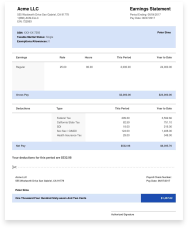
Here is an example for an Anchorage worker earning $25 per hour, 80 hours biweekly:
- Gross Pay: $2,000.00
- Federal Income Tax (est., single, no dependents): $175.00
- Social Security (6.2%): $124.00
- Medicare (1.45%): $29.00
- Alaska SUI (0.50%): $10.00
- Take-Home Pay: $1,662.00
Always check that the alaska paycheck calculator you use reflects current IRS 2026 tables and the current SUI wage base. Do this before you send pay stubs to workers.
W-4 Tuning with Your Alaska Paycheck Calculator
Alaska does not have a state-specific W-4. Your onboarding packet only needs the federal Form W-4. That shortens new hire paperwork. If you are new to the form, the W-4 vs W-2 breakdown shows when each is used.
Workers who want to change their withholding should submit an updated W-4. This comes up after a new child, a second job, or a spouse's income change. Run the new inputs through your Alaska paycheck calculator before the next pay cycle. That way the worker can see the take-home pay impact, and you can confirm the Tax Bracket math lines up. W-4 allowances no longer exist. Changes happen through dollar figures in Steps 3 and 4.
Alaska Permanent Fund Dividend and Employee W-4s
The Alaska Permanent Fund Dividend is a yearly payment to eligible Alaska residents from oil revenue. It does not run through payroll. You do not withhold on it. You do not report it on W-2s.
The PFD is still federally taxable. Some workers end up under-withheld because the dividend pushes them into a higher bracket. A simple tip: if a worker asks, direct them to adjust Form W-4 Step 4a (other income) to plan for the expected PFD. That keeps their year-end federal tax bill steady without changing anything on the payroll side.
Alaska Minimum Wage and Overtime
Alaska's minimum wage is $11.91 per hour as of January 1, 2025. A mid-year move toward $13.00 is possible based on inflation triggers. Always check the current rate before you set a new hire's pay.
Overtime is where most new Alaska employers slip. Alaska overtime rules require 1.5x pay for hours worked over 8 in a single day. That's on top of the federal rule of over 40 in a week. Whichever limit is crossed first triggers overtime. A good alaska paycheck calculator flags both thresholds for you.
Here's a simple example. A worker puts in a 10-hour shift on Friday but only 38 hours total that week. They are owed 2 hours of overtime for the daily rule. This is true even though they stayed under 40 for the week. If you schedule longer shifts on quieter days, build those OT dollars into your payroll budget before you finalize the schedule.
Some workers are still exempt from overtime. These include executive, administrative, professional, and outside sales staff who meet the federal FLSA tests. When modeling OT scenarios, a good paycheck calculator alaska employers trust will let you toggle daily versus weekly limits. If you run a hybrid pay schedule, review how to calculate semi-monthly payroll so daily OT does not slip through.
Workers' Compensation for Alaska Employers
Alaska requires workers' comp coverage for every worker, starting with your first hire. There is no small-employer exemption. The Alaska Division of Workers' Compensation is part of the Alaska Department of Labor and Workforce Development. It oversees coverage, claims, and employer compliance.
Coverage pays medical bills and partial lost wages for on-the-job injuries. You can buy a policy from a private insurer. You can also self-insure if you meet the rules and get state approval. Running uninsured triggers per-day civil fines, stop-work orders, and personal liability for any injury costs. Budget the premium into your labor cost from day one. Do not treat it as optional.
Recordkeeping and Compliance
Alaska employers must keep payroll records for at least four years. In practice, keep the following on file per worker and per pay period:
- Pay summaries
- Signed W-4s
- Timekeeping logs
- Quarterly SUI filings
- W-2s
- Any garnishment or benefit election forms
Steady pay stub management for your team makes this four-year window easy to meet.
Secure digital storage with encrypted backups and an offsite copy is cheaper and more audit-ready than paper. Sort files by worker and year. That way, a Department of Labor or IRS audit request can be answered within a day. If you switch payroll providers, export all past reports in PDF before the final cutover. Mid-transition data loss is a common and avoidable issue.
You Might Also Like
- 3 Types of Taxes Every Employer Should Know
- Taxes and Pay Stub Deductions Explained
- Verifying Employee Pay Stubs
- Pay Stub Transparency for Your Employees
- Payroll Fraud Prevention for Small Businesses
Conclusion
Alaska payroll is leaner than most states on the withholding side. But it is heavier on compliance details: daily overtime, a shared SUI split, mandatory workers' comp, and a four-year record-keeping window. Keep your payroll software updated with the current 2026 rates. Run every pay cycle through an alaska paycheck calculator to catch errors before they hit worker bank accounts. When you need clean, pro-quality pay stubs for your team, our paystub generator produces compliant, employer-ready pay stubs in minutes.



Frequently Asked Questions
Similar Articles



We’ve helped numerous individuals and businesses create professional documents! Create yours today!