What Is SUI Tax? A Beginner's Guide For 2026
By Davis Clarkson , February 27 2026

Saw "SUI" on your paycheck and have no idea what it means? Don't worry, you're not alone. If you're asking, "What is SUI tax?" you're in the right place.
SUI tax is one of those payroll terms that sounds confusing but is actually pretty simple once you break it down. In this guide, we'll explain "What is SUI tax?", who pays it, and what it means when you see it on your pay stub generator free PDF.
Key Takeaways
-
SUI stands for State Unemployment Insurance, a tax that funds benefits for workers who lose their jobs
-
In most states, only employers pay SUI tax. It is not deducted from your paycheck
-
Three states have exceptions. Alaska, New Jersey, and Pennsylvania require employees to contribute as well
-
SUI rates vary by state and range from about 0.01% to over 10%
-
SUI tax is sometimes called SUTA tax. They mean the same thing
What Is SUI Tax?
SUI tax stands for State Unemployment Insurance tax. It's a payroll tax, mostly paid by employers, that funds temporary benefits for workers who lose their jobs through no fault of their own, like layoffs. You might also see it called SUTA tax. They mean the same thing.
Think of it like an insurance policy for losing your job. The State Unemployment Tax Act (SUTA) is the law that requires it, and SUI is the actual tax employers pay. When someone gets laid off, unemployment insurance helps cover part of their income while they look for new work. The money for that comes from SUI.
The SUI abbreviation meaning is straightforward. It means State Unemployment Insurance. So if you've been wondering about the SUI tax meaning or what SUI stands for, now you know. Understanding "What is SUI tax?" is the first step to reading your earnings statement with confidence.
Who Pays SUI Tax?

In most states, only employers pay SUI tax. It's not deducted from your paycheck. Your employer handles it as part of their payroll taxes, and you don't need to do anything.
The three exceptions are Alaska, New Jersey, and Pennsylvania. If you work in one of those states, a small portion of SUI comes out of your pay. It's the state's way of collecting funds for unemployment benefits.
What Is SUI Tax on My Paycheck?
If you see "SUI" on your pay stub, it means your state requires employees to help fund unemployment insurance. This only happens in Alaska, New Jersey, and Pennsylvania. In all other states, SUI is an employer-only tax and won't appear as a deduction on your paycheck.
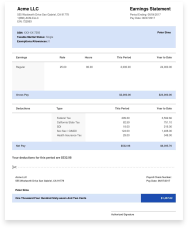
So, what is SUI on my paycheck exactly? Look under the "Deductions" or "Taxes" section of your pay stub. If you see SUI on paystub, that's the amount your state requires employees to contribute. That line represents a SUI payroll deduction mandated by state law.
If you don't see SUI listed, it's because your employer is covering the full amount on their end. Understanding the difference between net vs gross income can also help you make sense of your paycheck.
SUI Tax vs. FUTA: What's the Difference?

SUI is the state-level unemployment tax, while FUTA (Federal Unemployment Tax Act) is the federal version. Employers pay both. The FUTA rate is 6% on the first $7,000 of each employee's wages. Credits for paying SUI can reduce that to as low as 0.6%. Both taxes fund unemployment benefits.
Think of it like state vs. federal income taxes. Same concept, but different levels of government. Employers report FUTA using IRS Form 940. Also, note that SUI is not the same as UI exactly. UI is the broader term for the whole unemployment insurance program. SUI is specifically the state piece. If you need to understand the different types of taxes, we've got a guide for that too.
How SUI Tax Rates Are Calculated
SUI tax rates depend on three main factors.
- Your state's taxable wage base
- Your experience rating (history of employee layoffs)
- How long you've been in business.
The new employer rate typically ranges from 2% to 4%. For example, a Texas employer with a 2.5% rate and $9,000 wage base pays $225 per employee annually. State-by-state rates vary widely, and Florida even calls it a reemployment tax instead of SUI.
The taxable wage base is the maximum amount of an employee's salary that is subject to tax. The experience rating is basically how many of your former employees filed for unemployment. More claims mean a higher rate.
For 2026, rates are now in effect for most states. California, for instance, also has SDI (State Disability Insurance) as a separate employee-paid deduction that sometimes appears alongside SUI on pay stubs.
NJ SUI Tax Meaning
In New Jersey, both employers and employees pay SUI tax. NJ is one of only three states with employee contributions. For 2026, NJ's taxable wage base is $44,800, and employer rates range from 0.5% to 5.8%. Employees also pay a set percentage that appears as a deduction on their pay stubs.
If you work in New Jersey, that's why you see SUI deducted from your pay. It's not a mistake. You can contact the NJ Department of Labor if you have questions about your specific rate.
PA SUI Tax: What Employees Pay
Pennsylvania requires employees to pay a flat SUI rate of 0.06% for unemployment compensation (UC). Employers pay a separate, higher rate. PA's 2026 taxable wage base is $10,000 per employee. If you work in PA, you'll see this small deduction labeled "SUI" or "UC" on your pay stub.
PA does things a little differently from most states, but the amount is small. Searching for the PA SUI tax meaning? It's that flat percentage taken from each paycheck. That's also "What is SUI employee paid PA?" in a nutshell.
How To Pay SUI Tax
If you're an employer, paying SUI tax is straightforward. Register with your state's unemployment agency, get your assigned tax rate, and make quarterly payments. Employer contributions are reported and paid quarterly in most states. Most states let you file and pay online.
Need to create pay stubs that show SUI deductions correctly? Our easy-to-use paystub generator handles the calculations for you.
Is SUI Tax Deductible?
Yes. Employers can deduct SUI tax payments as a business expense on their federal tax returns. If you're self-employed, you typically report this deduction on Schedule C, line 23. Both SUI and FUTA taxes qualify as deductible business expenses. You may also want to learn about Medicare tax and other payroll deductions.
You Might Also Like
To Sum Up
Now you know "What is SUI tax?" It's simply the state-level tax that funds unemployment benefits for laid-off workers. In most states, your employer pays it entirely. If you're in Alaska, New Jersey, or Pennsylvania, you'll see a small SUI deduction on your paycheck.
Now you know what that mysterious "SUI" line means. Ready to create your first pay stub? It's easier than you think. Get started in minutes with our simple pay stub generator and see for yourself.



Similar Articles



We’ve helped numerous individuals and businesses create professional documents! Create yours today!