What Is an Earnings Statement? Importance and Key Components Explained
By Jaden Miller , January 13 2026
An earnings statement is a document that gives you details about all the money you made in a pay period. It tells you the total amount you made, what was taken out, and what’s left.
Both employees and business owners who handle payroll need to understand this document. It assists you in tracking what you earn, keeping up with tax information, and keeping your records in order.
In this article, we’ll break down what an earnings statement is, including what’s on it and how to read it. A pay stub, just like an earnings statement, is important for your finances, and you can easily make them with a pay stub generator.
Earnings Statement Definition
An earnings statement refers to a detailed document that employers give their employees in a pay period. In this document, you’ll see what you earned, including your gross income before any deductions are made. These deductions can include taxes, health insurance premiums and retirement contributions. It also displays what’s left after the deductions, which is known as your net pay.
For businesses, an earnings statement may also refer to a financial report. It shows a company’s financial health and well-being in a fiscal year or calendar year. So, it shows their total income, expenses incurred and net profit during that year. However, this type of earnings statement is more commonly known as an income statement or profit and loss statement.
Check Out: Find the right pay stub template with our online pay stub generator
Earning Statement vs Pay Stub
Many people always wonder about the earnings statement vs pay stub distinction. Both terms are used interchangeably, but have a minor difference.
An earnings statement may also refer to the document that shows a company’s financial performance at the end of a fiscal year. This is also an important financial statement, but it is usually called an income statement or profit and loss statement.
In this context, an earnings statement and a pay stub essentially mean the same thing. And that’s why many employers use both terms. They are used to show you what you earned and what gets to you after the deductions are made.
Read More: The Differences Between a Pay Stub vs Payslip: Everything You Need To Know
What Does an Employee Earning Statement Contain?
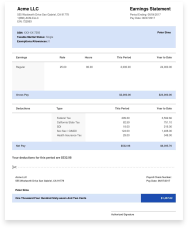
Your earning statement has some key components that give you a full picture of your pay. Here are the main components you need to know to keep your finances in order:
-
Gross Pay or Gross Earnings
This section gives you a picture of the total amount you earned before anything is deducted. It shows the base pay, overtime, bonuses, and any other forms of compensation you get. An employee’s gross earnings are calculated based on the number of hours worked and the pay rate during the pay period.
-
Net Pay or Net Earnings
Here, you’ll see the final amount that gets to you. It is also called your take-home pay. The net pay amount is the money that gets to your bank account or is written on your physical paycheck.
-
Tax Withholdings
In this section, you get a breakdown of any taxes withheld or taken out of your pay. These include federal income tax, state tax, and local taxes. The money is passed on to government agencies for you and will reflect on your year-end tax documents.
-
Deductions
Your earnings statement will also include a list of mandatory and voluntary deductions. Mandatory ones include Social Security and Medicare taxes. Optional deductions may include health insurance premiums or contributions to a retirement plan. It may also include pre-tax deductions for healthcare savings account deductions and union dues.
-
Pay Period and Pay Date
The statement will show the pay period it covers, whether that’s weekly, biweekly or monthly. It also states the pay date, which is when your payment is processed.
-
Employer Information and Employee Details
The document will also have details about both the employer and employee. For the employer, it includes the company name, address and contact details. It may also have your own details, such as your employee ID or the last four digits of your social security number.
-
Year-to-Date Totals
Most earnings statements will show you the cumulative totals for that calendar year. So, you can see your total earnings, total taxes and total deductions. Year-to-date totals are very helpful when preparing to file taxes.
-
Earnings Statement Number
Each statement tends to be given a particular number for record-keeping and reference purposes. So, you can use this number as a reference if you need to contact human resources or payroll departments.
Also Read: What Is Advice Number on Pay Stub?
Why Is Your Earnings Statement Important?
Earnings statements help both employees and employers. Knowing why they are important can give you an idea of how to use them better.
For Employees
For employees, your earnings statements can come in handy when you need proof of income. Usually, this comes up when you’re applying for a loan, renting an apartment or doing some other transaction. They also allow you to go through the details to ensure there were no mistakes.
The detailed information on these statements is also useful when tax time comes, and you need to file your taxes. Lastly, the records let you track your income and plan your finances accordingly. And if there are any disputes, they can serve as evidence of what you were paid.
For Employers and Businesses
For employers and businesses, proper earnings records are not just good practice. The law requires those records to be kept. With these important financial statements, companies can show compliance with labor laws. They can also use them to track employee wages and manage payroll taxes. Well-kept records are also useful in case of an audit and to resolve conflicts with employees about their pay.
Further Reading: Using Pay Stub for Proof of Income
How To Read an Earning Statement

Reading an earnings statement means you can look at the information on it and make sense of it. Now that you know what your earnings statement looks like, here’s how to read it:
Step 1: Check the Pay period
Start at the top, where you will see the pay period dates and the pay date. That will let you know the period that the statement covers and when you got the pay.
Step 2: Note Gross Pay
The second step is to check your gross pay and note that. This is the total amount of money you earned before deductions.
Step 3: Review the Deductions
Next, go to the deductions section. Usually, this will be divided into taxes and other deductions. Federal, state and local taxes take the first position before benefits such as health insurance and retirement plans. Each line item shows both the current pay period amount and the year-to-date totals.
Step 4: Find Net Pay
Finally, you can now look for your net pay, which is usually at the bottom of the statement. That is what you really get. Ensure that this amount is the same as what you got in your bank account or on your check. If anything seems wrong or inconsistent, you should reach out to your payroll department immediately.
Check Out: Create your easy-to-read pay stub with an online paystub generator
In Summary
Once you can understand your earnings statement, you are well on your way to proper financial management. It can help you understand your income, aids in filing taxes and is needed for several financial transactions. Whenever you get an earning statement, slow down and read it. Whether it is the first or the thousandth one, this ensures you always have accurate compensation.
Clearly, proper earnings statements or pay stubs are important for everyone. If you need help creating professional pay stubs, our pay stub maker can simplify the process. Try it out today, and let’s take all your payroll worries away.



Frequently Asked Questions
Similar Articles



We’ve helped numerous individuals and businesses create professional documents! Create yours today!