Straight Time Pay: Employer's Guide to Calculation & Compliance (2026)
By Jaden Miller , April 17 2026

Straight time pay sits at the core of every payroll run you sign off on. Get the regular rate wrong and you invite Department of Labor (DOL) audits, worker disputes, and back-wage claims. This guide covers the exact meaning and the formula with three worked examples. It also walks through FLSA rules for overtime and the mistakes that trigger DOL action. You will see how payroll accuracy keeps labor costs in check.
Key Takeaways
- Straight time pay is an employee's regular hourly rate applied to hours worked up to 40 in a workweek.
- Formula: hourly rate times regular hours worked during the pay period.
- The FLSA requires 1.5x the regular rate for nonexempt employees past 40 hours.
- Employers must retain payroll and time records for at least 3 years under 29 CFR Part 516.
- State rules like California's 8-hour daily overtime threshold can override the federal 40-hour test.
What Is Straight Time Pay?
Straight time pay is the regular hourly rate paid to a nonexempt employee for hours worked up to 40 in a workweek. Also called "straight pay," it excludes overtime premiums. The formula is simple: hourly rate times regular hours worked, calculated for every pay period.
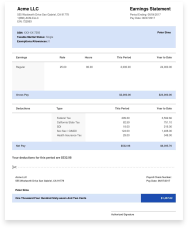
The straight-time pay definition applies to hourly employees, salaried nonexempt workers, and any independent contractor with an agreed hourly rate. What is straight-time pay in practice? It is the base pay before any premium kicks in. It is not piece-rate pay, paid time off, or commission. On the pay stub, it shows up as Regular Pay, apart from the Overtime Pay line item.
How to Calculate Straight Time Pay

To calculate straight-time pay, the formula is direct: hourly rate times regular hours worked in the workweek. These three scenarios cover most small business payroll runs:
Hourly employee. A retail associate earning an hourly wage of $18 works 38 hours this week. Straight time pay equals $18 x 38 = $684.
Salaried nonexempt. An office admin with an hourly rate equivalent of $22 works 40 hours. Straight time pay equals $22 x 40 = $880.
Multiple pay rates. An employee works 20 hours at $18 and 20 hours at $22. Use the weighted average: ($18 x 20) + ($22 x 20) = $800 across 40 hours. The regular rate of pay is $20 per hour for overtime calculations that week.
Straight Time Pay vs. Overtime Pay
The straight time vs overtime split drives every payroll choice. Straight time pay covers regular hours up to 40. Overtime pay kicks in at 1.5x the regular rate (time and a half) for every hour past 40 in the workweek.
| Pay Type | When It Applies | Rate |
|---|---|---|
| Straight time | 0-40 hours in a workweek | Regular rate of pay |
| Straight overtime | Extra hours when total stays under 40 | Regular rate of pay |
| Overtime | Hours over 40 in a workweek | 1.5x regular rate |
Tagging overtime hours as straight time is a fast route to a DOL complaint. Your payroll records must split the two on every stub.
FLSA Rules & Employee Classification

The Fair Labor Standards Act (FLSA) sets the federal floor for minimum wage and overtime. Nonexempt employees are owed time and a half past 40 hours in a workweek. Payroll taxes still apply on top of the regular rate. The 2026 exempt salary threshold holds at $35,568 per year ($684 per week). Anyone below that line is a nonexempt employee, no matter the title. California, Nevada, and Alaska add daily overtime rules. A California employee past 8 hours in a day earns overtime, even if the weekly total stays under 40.
Keep payroll registers, time cards, and wage math for at least 3 years under 29 CFR Part 516. The DOL Wage and Hour Division won over $274 million in back wages for workers in FY2023. Wrong worker tags drive a large share of those cases.
Straight Overtime: When It's Legal to Pay
Straight overtime means paying extra hours at the regular rate without a premium. It is only legal when total weekly hours stay under 40. If an employee scheduled for 35 hours works 38, those 3 extra hours can be paid at straight time. Past 40 hours, FLSA requires time and a half.
Straight time overtime is not a loophole around the FLSA. It's a label for extra hours that never cross the 40-hour line. Log planned vs. worked hours on every stub to keep audits clean.
Common Payroll Mistakes to Avoid
- Tagging nonexempt workers as exempt to skip overtime rules.
- Using the federal 40-hour rule while missing state daily overtime limits.
- Using a flat rate for multi-rate workers instead of a weighted average.
- Leaving out required bonuses or shift pay from the regular rate of pay.
Lock in the regular rate and overtime line on every stub. Use the same paystub templates across your team.
You Might Also Like
- What Is FICA Tax On My Paystub
- How To Access Pay Stubs
- Is PTO Taxed
- What Is A Payroll Tax Holiday
- Pay Stub For Tax Filing
Conclusion
Accurate straight time pay shields your business from risk. It gives workers pay stubs they can trust. Log every regular rate, overtime line, and tax withholding with a pro paystub generator that runs the math for you.



Frequently Asked Questions
Similar Articles



We’ve helped numerous individuals and businesses create professional documents! Create yours today!