Monthly Salary Meaning: What It Is and How It Works
By Jaden Miller , March 4 2026

Not sure what this term actually refers to? You're not alone. It sounds simple, but once gross pay, net pay, and payroll schedules enter the picture, things get confusing. This guide explains the monthly salary meaning in plain English so you can understand your pay in 2026 and beyond. You'll learn how it compares to hourly pay and how to calculate yours. If you need to create pay records, our pay stub generator free pdf tool makes it simple.
Key Takeaways
- Your monthly salary is the fixed amount you earn each month before taxes and deductions
- Calculate it by dividing your annual salary by 12 (for example, $60,000/year = $5,000/month)
- Monthly pay differs from hourly pay because you receive the same amount regardless of hours worked
- Not every state allows monthly pay schedules for all worker types
What Is Monthly Salary Meaning?
Monthly salary meaning refers to the fixed amount of money you earn each month from your employer. It's calculated by dividing your annual salary by 12. For example, a $60,000 annual salary equals a $5,000 monthly salary before taxes and deductions are subtracted.
One detail trips people up: your monthly salary usually refers to gross pay, not take-home pay. Gross pay is the full number before anything gets taken out. Net pay is what lands in your bank account. It's lower because taxes, health insurance, and retirement funds get deducted. So what is monthly pay in practical terms? It's the gross figure on your pay stub, not the deposit in your account. For a deeper look at the difference, check out our guide on net vs gross income.
How Monthly Payroll Works

Getting paid monthly means your employer runs payroll once a month. You receive 12 paychecks per year. Most companies pay on the same date each month, like the last business day.
Your employer calculates your base salary for the month. Then they subtract federal and state taxes, Social Security, health insurance, and retirement funds. What's left is your net pay. You get it via direct deposit, a check, or mobile wallet. Salaried employees on monthly payroll often see the same gross amount each period.
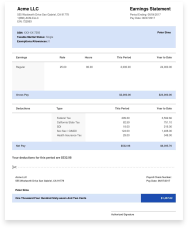
Your pay stub shows all of this: gross pay at the top, deductions in the middle, net pay at the bottom. If you're a salaried employee, the gross number stays the same every month. Your employment contract spells out your payroll schedule and pay period dates.
Monthly Salary Meaning vs Hourly Pay
If you earn a fixed amount every month no matter how many hours you work, you're salaried. If you're paid per hour, you're hourly. The biggest gap is overtime. The Fair Labor Standards Act (FLSA) says hourly workers earn 1.5x their rate past 40 hours per week. Most salaried workers are exempt and don't get overtime pay.
- Salaried: Same paycheck every month. Full compensation package (benefits, retirement, paid time off).
- Hourly: Pay varies by hours worked. Eligible for overtime after 40 hours per week.
Benefits of Getting Paid Monthly

You know exactly how much hits your bank account each month. This makes budgeting easier since your income matches monthly bills like rent and utilities. Salaried workers on a monthly pay schedule often get better benefits, too. That can include health insurance, retirement funds, and paid vacation. Fewer paychecks also means fewer pay stubs to track. Plus, if you ever need proof of residency using a pay stub, monthly statements are clean and simple.
Disadvantages of Getting Paid Monthly
The biggest downside? That 30-day gap between paychecks. Rent is due on the 1st. Your car payment hits on the 15th. Groceries are a weekly cost. And one paycheck has to cover it all. A helpful tip: when your paycheck arrives, divide it into four weekly allowances. Set aside money for fixed bills first, then split the rest into weekly spending amounts.
Why Do Some Companies Pay Monthly?
Companies pay monthly to reduce payroll processing costs and simplify accounting. Running payroll once a month instead of biweekly cuts admin work in half. This is common at law firms, universities, government agencies, and financial services companies.
So why do companies pay once a month instead of more often? Fewer payroll runs mean lower fees. Monthly pay also lines up with monthly financial reporting. This schedule is also standard in European companies, making it common at multinational corporations operating in the U.S.
How to Calculate Your Monthly Salary
The concept becomes clearest when you see the math. Take your annual salary and divide by 12.
- Example 1: $60,000/year ÷ 12 = $5,000/month (gross)
- Example 2: $48,000/year ÷ 12 = $4,000/month (gross); after ~20% in deductions, net pay is around $3,200
- Example 3 (hourly): $25/hour à 173.33 avg hours/month = roughly $4,333/month
Taxes, health insurance, and retirement funds cut your gross pay by 20% to 35%. Check the "Gross Pay" line on your pay stub to verify your monthly salary matches what you expect. Want to learn how your adjusted gross income appears on tax forms? That's worth a quick read, too.
Need to document your monthly income? A paystub generator can help you create professional pay records in minutes.
Is Monthly Pay Allowed in Every State?
No, not every state allows monthly pay for all workers. States like California and New York require more frequent pay for hourly employees. Texas and Illinois allow monthly pay but only for certain employee types, usually salaried workers. Check your state's Department of Labor guidelines to be sure.
You Might Also Like
- How to Access Your Amazon Pay Stub
- Understanding ADP Pay Stubs
- What Is an Advice Number on a Pay Stub?
- How to Get Uber Pay Stubs
- Income Tax Provisions Explained
Conclusion
The monthly salary meaning is straightforward: it's your annual pay divided by 12, paid once a month. The key is understanding the difference between gross pay (the full amount) and net pay (what you take home after deductions).
Ready to create your first pay stub? It's easier than you think. Get started in minutes with our easy-to-use paystub generator. No experience needed.



Frequently Asked Questions
Similar Articles



We’ve helped numerous individuals and businesses create professional documents! Create yours today!