VTO Meaning: What Voluntary Time Off Is and How to Use It in Your Business
By Jaden Miller , October 27 2026

Sales slowed last week and you still paid a full crew to stand around. That's the problem voluntary time off (VTO) solves. This guide will cover the VTO meaning small business owners actually need: both versions of the term, the payroll impact, the legal limits you can't cross, and a simple framework for deciding whether a VTO policy belongs in your business.
Key Takeaways
- VTO stands for Voluntary Time Off (unpaid leave) or Volunteer Time Off (paid community service).
- The voluntary time off meaning: employer-offered unpaid leave during slow business periods.
- This approach saves payroll without triggering layoffs or furloughs.
- Paid volunteer programs work as employee retention and culture benefits.
- Federal and state laws limit how "voluntary" forced time off can really be.
- Every VTO instance should be documented on the employee's pay stub for clean records.
- What Does VTO Mean?
- Choosing Between Voluntary and Volunteer Time Off for Your Business
- VTO vs PTO: What's the Difference for Payroll?
- When Should Your Business Offer VTO?
- Pros and Cons of Offering VTO in Your Business
- Legal Rules Every Employer Must Follow
- Should You Add a VTO Program? A Quick Decision Guide
- How to Build a VTO Policy for Your Business
- Conclusion: VTO as a Staffing Tool for Your Business
What Does VTO Mean?
What does VTO stand for? It means either Voluntary Time Off or Volunteer Time Off. The first type is unpaid leave an employer offers when staffing exceeds demand. The second type is paid leave for community service. Both are optional for employees. Both belong in your written policy if you use them.
Understanding what is voluntary time off helps you manage overstaffing situations without resorting to layoffs and furloughs.
For most small business owners, the question of "what is VTO time off" comes up during overstaffed shifts. Voluntary time off lets a non-exempt employee clock out early or skip a shift without using PTO and without pay. It's a payroll lever, not a benefit. Volunteer time off, by contrast, is a paid perk that funds employees to spend work hours at a 501(c)(3) of their choice. The shared acronym confuses everyone, so spell out which version your policy covers.
Choosing Between Voluntary and Volunteer Time Off for Your Business

The unpaid version fits operations-heavy businesses that face slow shifts and want to cut staffing costs without layoffs. The paid version fits established businesses using community involvement and corporate social responsibility as employee retention tools. Most small employers start with the unpaid option because it solves an immediate cost problem rather than adding a paid benefit. Nonprofit organization partnerships can enhance volunteer programs when you're ready for that stage.
The unpaid model fits shift-based operations, like warehouses and retail, where volume swings day to day. On the paid side, Salesforce gives employees seven paid volunteer days a year. In SHRM's 2024 Employee Benefits Survey, 49% of employers offered community volunteer programs and 28% offered paid time off to volunteer. The volunteer time off meaning in 2026 often ties to employer branding and work-life balance initiatives. Pick the version that matches your stage: cash-flow flexibility first, culture investment second.
VTO vs PTO: What's the Difference for Payroll?
PTO is paid leave the employee has already accrued. The unpaid VTO option reduces gross wages for that pay period. It never touches the PTO bank. The paid VTO option is tracked separately from PTO. This keeps accrual balances accurate on each pay stub.
If you're new to PTO mechanics, our guide on whether PTO counts toward overtime explains how paid leave interacts with hours worked. The PTO tax treatment breakdown covers how each payout shows up on payroll.
| Type | Paid? | Source | Pay Stub Impact |
|---|---|---|---|
| PTO | Yes | Accrued bank | Hours from PTO bank |
| Unpaid VTO | No | None | Reduced regular hours |
| Paid VTO | Yes | Employer-funded | Separate line item |
When Should Your Business Offer VTO?

Offer it when scheduled labor exceeds workload. Slow seasons, weather closures, and post-launch lulls all create these moments. It works best when you have non-exempt employees who can absorb a short unpaid shift. The cost savings should justify the scheduling work.
Run the math before you offer it. If you have a $22-per-hour worker scheduled for an 8-hour shift you don't need, that's $176 in gross wages. Add roughly $14 in employer payroll taxes. Multiply across several workers and a few slow shifts a month. The savings cover the admin cost of tracking VTO requests.
What is VTO at work, in practical terms? It's a controlled alternative to layoffs. It keeps trained staff on your roster. The VTO meaning for staffing requirements: flexibility without job security concerns. This approach helps with workload management during slow business periods while protecting employee wellbeing.
Pros and Cons of Offering VTO in Your Business
The upside is real. So is the downside if you don't manage it well.
Pros for the employer:
- Cuts payroll cost during slow periods without losing trained staff.
- Avoids the legal and morale fallout from layoffs.
- Gives employees who want extra time off a way to take it.
- Improves scheduling flexibility week to week.
- Supports employee benefits programs without adding fixed costs.
Cons for the employer:
- Can feel mandatory if managers push it. This kills morale.
- Adds scheduling and payroll-coding work for your HR department.
- Creates productivity gaps if the wrong shift is cleared.
- Frequent use signals demand problems your team will notice.
Legal Rules Every Employer Must Follow
It must be genuinely voluntary. If you have 100 or more full-time employees, mandatory time off can trigger the federal WARN Act, which requires 60 days of written notice before a mass layoff or plant closing. Under WARN, a layoff longer than six months, or cutting a worker's hours by more than 50% in each month of a six-month period, counts as an employment loss.
In California, if you send a non-exempt worker home after they report for a shift and they worked less than half of it, you owe reporting time pay. This equals half the scheduled hours (minimum two hours, maximum four) at their regular rate. A worker who leaves early by their own choice is not owed it. New York (call-in pay of up to four hours at minimum wage) and Massachusetts (three hours at minimum wage for shifts of three hours or more) have their own reporting pay rules.
Review the pay stub laws for your state. Make sure your VTO documentation meets local notice and itemization requirements. Labeling forced time off as "voluntary" does not get you out of these rules.
Note that VTO differs from protected leave under the FMLA, which gives eligible employees of covered employers unpaid, job-protected leave for qualifying family and medical reasons.
Should You Add a VTO Program? A Quick Decision Guide
Add a program if your business has predictable slow periods. You also need a non-exempt workforce. The cash-flow benefit should outweigh the administrative load.
Skip it if your team is already understaffed. Skip it if payroll is mostly salaried. Skip it if you operate in a state with strict reporting-time pay rules that complicate sending workers home.
Ask yourself five questions before rolling it out:
- Do I have repeatable slow shifts?
- Are most of my workers non-exempt?
- Do I operate in a state with call-in pay rules?
- Is cash flow tighter than recruiting?
- Would my best employees actually take an unpaid hour?
If you answer yes to three or more, you have a real use case. The VTO meaning for your business comes down to whether it solves a recurring staffing problem.
How to Build a VTO Policy for Your Business
Build your policy around six items:
- Written eligibility rules
- A clear request process
- An approval workflow
- A payroll code for the absence
- An employee communication plan
- A record-keeping system
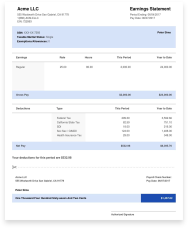
The same pay stub management practices you already use for regular payroll apply here. Document each VTO instance on the employee's pay stub. This makes income gaps easy to explain later.
A clean pay stub showing reduced hours protects both sides. The employee can show a lender or landlord that the gap was voluntary. You have an audit trail that proves the time off wasn't disciplinary or retaliatory. Use a reliable paystub generator to keep these records consistent across your workforce.
Conclusion: VTO as a Staffing Tool for Your Business
It is a staffing tool, not a perk. Used well, it trims payroll during slow weeks. It keeps trained employees on your team. It helps you sidestep the bigger cost of layoffs.
Used carelessly, it creates legal exposure and morale problems. Document every instance. Follow state reporting-time rules. Keep the policy in writing.
The VTO meaning for small business owners: a flexible way to manage labor costs without sacrificing your workforce. Generate compliant pay stubs for your team in minutes so your VTO records are clean from day one.
You Might Also Like
- Does PTO Count Towards Overtime?: how paid leave interacts with overtime calculations on your payroll.
- Is PTO Taxed?: tax treatment of paid time off payouts and accruals.
- What Does Exempt Employee Mean?: why exempt vs non-exempt status changes how you handle voluntary time off.
- Managing Employee Pay Stubs: best practices for keeping pay stub records accurate and audit-ready.
- Pay Stub Laws: state-by-state requirements for what your pay stubs must show.



Frequently Asked Questions
Similar Articles



We’ve helped numerous individuals and businesses create professional documents! Create yours today!