What Does Exempt Employee Mean? A Simple Guide (2026)
By Jaden Miller , March 4 2026
If someone just told you you're an "exempt employee" and you have no idea what that means, don't worry. You're not alone. It sounds like one of those confusing work terms that nobody ever explains. Here's the good news: once you understand what does exempt employee mean, it's pretty simple. This guide breaks it all down in plain English. If you need accurate pay stubs that reflect your classification, we've got you covered.
Key Takeaways
- An exempt employee doesn't get overtime pay and earns a set salary regardless of hours worked
- You must pass three federal tests to qualify: salary level, salary basis, and job duties
- The current federal minimum salary threshold is $684/week ($35,568/year) as of 2026
- Your pay stub shows a flat salary amount each period if you're exempt
- Some states like California and New York set higher thresholds than the federal minimum
What Does Exempt Employee Mean? (The Basics)
An exempt employee is a worker who doesn't receive overtime pay, no matter how many hours they work. Instead, they earn a fixed salary each pay period. The term "exempt" means they're excluded from overtime and minimum wage protections under the Fair Labor Standards Act (FLSA).
So whats an exempt employee in everyday terms? Think of it like a flat-rate phone plan versus pay-as-you-go. With a flat-rate plan, you pay the same amount every month no matter how much you use your phone. That's basically how exempt employee pay works. You get the same paycheck whether you work 35 hours or 55 hours in a week.
The exempt employee meaning comes from the FLSA, a federal law passed in 1938. This law sets the rules for minimum wage and overtime pay. When your employer classifies you as "exempt," they're saying your job meets specific rules that exclude you from overtime protections. Understanding your net vs gross income is also helpful when reviewing your pay.
Still wondering what does it mean to be an exempt employee on a practical level? Hang on. There are benefits too, which we'll get to shortly.
What Does a Nonexempt Employee Mean?
A nonexempt employee qualifies for overtime pay. They earn time and a half (1.5 times their regular rate) for every hour past 40 in a week. Most hourly workers in the United States are nonexempt under federal labor law.
Understanding what does exempt employee mean also helps you grasp what nonexempt means. Nonexempt doesn't mean "less important." It just means the FLSA's overtime and minimum wage rules DO apply to you. A nonexempt or hourly worker must use time tracking to log hours each day. Their employers must pay at least the federal minimum wage of $7.25/hour (though many state laws require more). If this is your first job, you're likely nonexempt, and that's normal.
What Does Exempt Employee Mean vs. Nonexempt?
The main difference is overtime. A salaried employee who is exempt gets a fixed salary no matter how many hours they work. They don't get overtime pay. Nonexempt employees are paid hourly (or salaried with overtime) and must track their hours. They get time and a half for working past 40 hours per week.
Here's a simple comparison so you can see it all at once:
| Feature | Exempt Employee | Nonexempt Employee |
|---|---|---|
| Overtime pay | No | Yes (1.5x after 40 hrs/week) |
| Pay structure | Fixed salary | Hourly or salary + overtime |
| Hour tracking | Usually not required | Required |
| Minimum wage applies | No | Yes |
| 40-hour workweek rule | Doesn't apply | Applies |
The Law Behind It All: FLSA Explained Simply
The Fair Labor Standards Act is the federal law that determines who gets overtime and who doesn't. The Department of Labor (DOL) enforces it.
To really understand what does exempt employee mean under the law, here's the key number. As of 2026, the federal salary threshold is $684 per week ($35,568 per year). Earn less than that? You're almost certainly nonexempt regardless of your job title.
You might have heard about a proposed rule to raise this threshold to $1,128 per week. That 2024 DOL rule was blocked by a federal court in November 2024. The $684/week figure remains the current standard. Understanding the different types of taxes can also help you make sense of your pay.
One more thing: some state laws set their own (higher) thresholds. For example, California requires $70,304/year for exempt status in 2026. New York sets it at $1,199.10/week. Washington state requires $1,541.70/week. Always check your state's Department of Labor for the rules that apply to you.
How Do You Know If You're an Exempt Employee? (The 3 Tests)
You're likely an exempt employee if you pass three tests set by the Department of Labor. First, you earn at least $684 per week ($35,568/year). Second, you receive the same salary every pay period regardless of hours. Third, your job duties involve executive, professional, or administrative responsibilities.
Once you understand what does exempt employee mean from a legal perspective, these three tests will make a lot more sense. Let's walk through each one.
Test 1: The Salary Level Test
Do you earn at least $684 per week before taxes? That's the federal minimum for exempt status. If your answer is no, you're nonexempt. Simple as that.
Test 2: The Salary Basis Test
Do you get paid the same amount every pay period, no matter how many hours you actually worked? If your employer docks your pay when you work fewer hours, you might not meet this test.
Test 3: The Job Duties Test
Does your job involve executive, professional, or administrative responsibilities? This is the trickiest test because it's about what you actually do, not your job title. Your employer can't just call you a "manager" and make you exempt if your daily work doesn't match.
If you answered yes to all three, you're likely classified as an exempt employee.
What Types of Jobs Are Exempt?
Not sure what are exempt employees in practice? These are white collar roles that fall into five main categories. Here are real examples of each.
Executive Exemption
The executive exemption covers people who manage a department or team. They must supervise at least two full-time employees. They also have authority over hiring and firing. Think store managers at major retailers who run the team and make staffing calls.
Professional Exemption
The professional exemption applies to jobs that need advanced knowledge or a specialized degree. This includes lawyers, accountants, engineers, and doctors. The key is that the work requires independent judgment and specialized education.
Administrative Exemption
The administrative exemption covers office workers whose main duties relate to business operations. HR managers, financial analysts, and marketing directors often fall here. The work must involve discretion on major matters. Learn more about what HR does when processing employment decisions.
Computer-Related Exemption
The computer-related exemption applies to software engineers, systems analysts, and programmers who earn at least $27.63 per hour. If you're a developer at a tech company earning a solid salary, you likely fall under this white-collar exemption.
Outside Sales Exemption
The outside sales exemption covers employees who primarily make sales or get orders away from the employer's place of business. Unlike other exemptions, there is no minimum salary requirement for this category.
Is Being an Exempt Employee a Good Thing?
It depends on your situation. Exempt employees enjoy stable paychecks. They often receive better benefits like health insurance, 401k benefits, and paid time off. However, they don't earn overtime pay. Working 50 or 60 hours a week won't increase their pay. You may also want to check if your PTO is taxed.
Here's a quick breakdown:
Pros: Stable, predictable income. Better benefits packages. Often comes with more autonomy and flexibility.
Cons: No overtime pay, ever. You might work more than 40 hours without extra compensation. Your employer can ask for extra time without paying more.
Neither status is automatically better. Now that you understand what does exempt employee mean for your paycheck, you can decide what matters most to you.
Don't Panic: Common Exempt Employee Mistakes
Knowing what does exempt employee mean is one thing, but mistakes happen often. Misclassification is common. An employer gives someone a title like "Assistant Manager" but the person doesn't supervise anyone or make hiring calls. Just because your title says "Manager" doesn't mean you meet the duties test for employee classification.
If you think you've been misclassified, here's what to do. Ask your HR department for your FLSA classification in writing. Employers must classify every employee. If you earn under $684/week but are listed as exempt, you may be owed back pay for unpaid overtime. Misclassification penalties can be steep for employers who get it wrong. The same applies if your actual job duties don't match any exemption category.
How Exempt Status Shows Up on Your Pay Stub
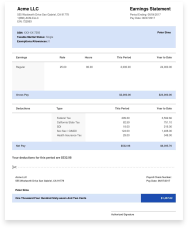
Now that you know what does exempt employee mean, here's something most guides skip. Your exempt status affects what your pay stub looks like. If you're exempt, your pay stub shows a flat salary amount each pay period. You won't see an hourly rate or hours worked.
Nonexempt employees will see hours worked times their hourly rate, plus any overtime. Need a pay stub that shows your classification? Our easy-to-use paystub templates walk you through every step.
Quick Checklist: Do You Have Everything?
Now that you have a clear understanding of the meaning of exempt employee, run through this quick checklist before you go:
- You know your FLSA classification (ask HR if you're unsure)
- Your salary meets the $684/week federal threshold (if classified as exempt)
- You understand which job duties category you fall under
- You've reviewed your pay stub for accuracy
- You've checked whether your state has a higher salary threshold
You Might Also Like
- How to Access Pay Stubs
- What Is an Earnings Statement?
- How to Get Pay Stubs from a Previous Employer
- Employment Verification Letter Guide
- Understanding Medicare Tax
- How to Spot and Stop Payroll Fraud
Conclusion
Now you know what does exempt employee mean, and it's not as hard as it sounds. It comes down to three tests: how much you earn, how you're paid, and what kind of work you do. If you meet all three criteria set by the FLSA, you're exempt from overtime rules.
The most important thing is knowing your own classification. Check with your HR department, review your pay stub, and make sure everything lines up. Ready to create your first pay stub? It's easier than you think. Get started in minutes no experience needed.



Similar Articles



We’ve helped numerous individuals and businesses create professional documents! Create yours today!