Retail Payroll: A 2026 Guide for Small Business Owners
By Jaden Miller , May 14 2026

Few tasks eat more of a small retail owner's week than the wage and tax cycle. Shifts change each week. Weekend pay rates pile on. Workers come and go fast. The year-end hiring rush adds more strain. All of this sits on top of standard tax work. The job quietly burns hours each pay period. It can also lead to fines when something slips. That is why owners turn to tools like a pay stub generator to keep records flowing.
This guide shows you how to run retail payroll cleanly in 2026. You will learn what makes it unique. You will see how to handle overtime when shift differentials apply. We cover the 2026 rules, time tracking, costs, and the steps that keep your team on track.
Key Takeaways
- Retail payroll has more moving parts than most fields. Hours shift each week, shift pay layers on, and workers turn over fast.
- Overtime uses the weighted average rate when shift differentials apply, not the base wage.
- State minimum wages for 2026 run from $7.25 (TX) to $17.00 (CA). Owners with stores in many states must track each one.
- A healthy retail payroll-to-sales ratio sits at 10 to 25%. The exact number depends on your segment.
What Makes Retail Payroll Unique
The work looks simple at first. In real life, the change is what makes it hard. Hourly schedules shift each week. Shift pay layers on top of base wages. Turnover often hits 60% or more, per Bureau of Labor Statistics data. The retail sector in the U.S. has about 15 million workers. Most work fewer than 30 hours a week. That mix is what makes retail payroll more error-prone than the salaried pay runs in an office.
The cost adds up. Manual payroll runs about $13,938 per year for a small business in this sector. That figure adds in time entry errors, off-cycle fixes, fines, W-2 reprints, and manager hours. The IRS does not go easy on mistakes. It issued 4.4 million civil tax fines in FY2024. For a small retail owner, that risk is real. It is also the reason you must get this right before you scale.
Hourly Pay, Overtime & Shift Differentials in Retail Payroll

Under the Fair Labor Standards Act, non-exempt retail workers earn time and a half (1.5x their regular rate). This kicks in past 40 hours in a workweek. That part is simple. The hard part is shift differentials. Your hourly workers may earn extra for weekend, night, or holiday shifts. When they do, the FLSA says overtime must use the weighted average rate, not the base wage.
Here is how that looks. A worker earns $15 per hour base. They work 45 hours in a week. Of those, 16 hours carry a $2 weekend differential.
- Straight-time pay: (29 × $15) + (16 × $17) = $435 + $272 = $707
- Weighted average rate: $707 ÷ 45 hours = $15.71
- Overtime premium: 5 OT hours × ($15.71 × 0.5) = $39.28
- Total gross: $707 + $39.28 = $746.28
Run that math wrong, and you underpay each overtime worker on weekend shifts. Stretch that out over 50 weeks, and you have a wage claim. This is why accurate time tracking matters. Your system must handle weighted-average overtime cleanly.
Retail Payroll Compliance for 2026
Compliance is where most small firms pick up fines. The federal minimum wage stays at $7.25 per hour. It has not moved since 2009. Most states now go above it. For retailers in many states, the state rate matters more than the federal floor.
2026 Minimum Wage in Top Retail States
| State | 2026 Minimum Wage |
|---|---|
| California | $17.00 |
| Washington | $16.66 |
| New York | $16.50 |
| Illinois | $15.00 |
| Florida | $13.00 |
| Texas | $7.25 |
Several cities set their own rates above the state level. Los Angeles, Seattle, and New York City are common cases. If you run stores across cities, your payroll software must handle wage rules per location.
Beyond minimum wage, FLSA labor laws set a 3-year rule for payroll records. These cover hours worked, wages paid, deductions, and pay periods. IRS rules add four years for tax withholding records. California needs four years of itemized wage statements. State final-pay deadlines are also strict. California pays out fired workers right away. Other states allow until the next regular pay date.
5 Common Retail Payroll Mistakes to Avoid
- Wrong overtime math when shift differentials apply (use the weighted average rate)
- Missing state final-pay deadlines for terminated workers
- Treating seasonal workers as independent contractors instead of W-2 staff
- Failing to update tax withholding when workers transfer between state locations
- Not tracking hours for borderline salaried-exempt workers
These five errors drive most small-retailer wage claims and fines.
Time Tracking & Automation in Payroll for Retail

Manual time entry is the top source of payroll errors in retail. The fix is simple. Link time tracking to your payroll software so hours flow in on their own. Most modern point of sale systems have a time clock built in. It syncs with payroll and cuts out the manual entry that drives most errors.
Predictive scheduling laws are also growing. California, New York City, Oregon, Philadelphia, and Seattle now require advance notice of schedules for retail workers. The notice is typically 14 days. There is penalty pay for last-minute changes. Auto-link your schedule and payroll runs to stay compliant. The goal is simple. Capture hours at the source. Feed them into payroll. No manual re-entry.
Employee Self-Service and Pay Transparency
Self-service portals cut the HR load that comes with retail's high turnover. Workers pull their own pay stub, W-2, and direct deposit setup. They do not route each request through you or a manager. That is faster for them. It also frees your time for real store work. Clear pay docs cut wage disputes too. Workers who see how their hours, differentials, and deductions add up rarely escalate questions.
How to Manage Retail Payroll Step-by-Step
Running it cleanly comes down to a steady process. Here is the workflow that scales from one to fifty workers.
- Choose your payroll model. A spreadsheet only fits at one or two workers. Past that, use payroll software like ADP, Paychex, Gusto, or QuickBooks. You can also use a professional employer organization. They handle tax filing, deposits, and multi-state rules.
- Set up time tracking. Connect your POS or time clock directly to payroll. Manual time entry creates the most costly errors.
- Verify worker class. Full-time, part-time, seasonal, or 1099 contractor: each has its own tax and benefit effects. Wrong class is one of the most fined payroll errors.
- Run the pay period close. Approve timesheets. Review overtime flags. Confirm shift differentials. Process the run.
- Send out pay stubs and pay. Direct deposit handles most workers. Print or digital pay stubs document each paycheck.
- Archive payroll records. Keep three years for FLSA and four for tax. Sort them by worker and pay period.
Pre-Payroll Checklist
Before every payroll run, confirm:
- Time tracking has synced for all locations
- Active vs. terminated worker roster is current
- Overtime flags reviewed
- New hire tax forms (W-4, state equivalents) on file
- Shift differentials applied correctly
- Final approval before processing
Retail Payroll-to-Sales Ratio: The Metric That Tells You If You're Overstaffed
Payroll-to-sales ratio is the most useful labor cost metric for retail owners. Few people talk about it. The formula:
(Total labor costs ÷ Total sales) × 100
Industry benchmarks vary by segment:
- Grocery and high-volume retail: 10–15%
- Specialty retail and boutiques: 15–25%
- Quick-service restaurants: 25–30%
- Full-service restaurants: 30–35%
If your total labor cost runs above your segment mark, your team is too big for your sales. The fix sits in three places. Scheduling (too many staff in slow hours). Overtime control (too many hours at 1.5x). Headcount fit (more workers than your sales support). Track this each month. When the ratio drifts, you catch the issue before it eats your margin.
Managing Seasonal and Part-Time Staff
Retail's seasonal hiring cycle is huge. The National Retail Federation says 400,000 to 500,000 seasonal workers join the industry each holiday season. For a small business owner, that means fast onboarding for part-time staff. You must also keep the class and docs clean.
The top error most retailers make is the 1099 contractors tag for seasonal workers. They do it to cut paperwork. Unless the worker sets their own schedule and methods, they are W-2 seasonal staff. The wrong class brings back taxes, fines, and unemployment risk. Onboard seasonal hires just like regular hourly staff. Use a W-4, state tax form, I-9, direct deposit setup, and a slot in your time tracking system. Watch the hours mark too. Workers past 30 hours per week may earn benefits under your local rules.
Pay Stubs for Retail Employees: When a Generator Fits Your Workflow
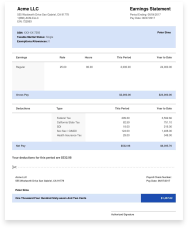
Even with payroll software running well, retail owners often hit cases where a stand-alone pay stub generator is the right tool. New hires need a stub before your first full pay period closes. Seasonal workers need docs for apartment applications. A terminated worker asks for a lost-stub reissue six months later. Or you pay a 1099 contractor and need clean records outside your main payroll system.
A pay stub generator handles those off-cycle cases. You do not need to spin up a full payroll run. It makes accurate stubs with itemized earnings, deductions, and net pay. That is what workers need for proof of income, job checks, or their own records. Looking for reliable pay documentation? Our pay stub templates make payroll paperwork simple.
You Might Also Like
- Walmart Paystub Portal
- Dollar General Pay Stub (DGME)
- Family Dollar Pay Stub Guide
- Target Paystub Access
- Kroger Paystub Guide
Conclusion
Retail payroll rewards owners who get the basics right. Clean overtime math. Current compliance. Linked time tracking. Solid documentation. The owners who treat payroll as a process, not a monthly fire drill, spend less time on fixes. They also dodge the fines that quietly drain small retailers.
Pick a payroll system that handles the heavy work. That means compliance, tax filing, and multi-state rules. Keep your retail payroll-to-sales ratio under your segment mark. Use a paystub generator to fill the documentation gaps. Those gaps show up for new hires, seasonal workers, and off-cycle situations. Your workers get accurate records. You save hours each pay period. Your business runs cleaner.



Frequently Asked Questions
Similar Articles



We’ve helped numerous individuals and businesses create professional documents! Create yours today!