Spread of Hours Pay: 2026 NY Employer Compliance Guide
By Jaden Miller , May 14 2026

If your business employs anyone in New York, the spread of hours rule is one of the easiest ways to fail a NYDOL audit. It applies to ordinary workdays that quietly cross the 10-hour mark, and most payroll software does not flag it automatically. This guide covers what spread of hours pay is, the trigger conditions, how it differs from federal overtime, the higher-wage exception, the hospitality rule, and how the payment should appear on pay stubs.
Key Takeaways
- Spread of hours pay applies when a workday spans more than 10 hours from start to finish, including unpaid breaks.
- Non-exempt employees in New York are owed one extra hour at the state minimum wage when triggered.
- The Fair Labor Standards Act (FLSA) has no equivalent rule; this is a New York wage and hour rule only.
- Hospitality employers (restaurants, hotels) owe spread pay regardless of how much an employee earns.
- The payment must appear as a separate line item on the pay stub to support compliance.
What Is Spread of Hours Pay?
Spread of hours pay is a New York wage rule requiring employers to pay non-exempt employees one extra hour at minimum wage whenever a workday spans more than 10 hours from start to finish, including unpaid breaks. It is separate from overtime and enforced by the New York State Department of Labor.
The rule sits in 12 NYCRR 142-2.18 (Miscellaneous Industries) and 12 NYCRR 146 (Hospitality Wage Order). It covers non-exempt employees regardless of pay structure: hourly, salaried, tipped, commission. Exempt executives and bona fide professionals are not covered.
The shortcut for the spread of hours meaning is simple. Any workday that runs past 10 hours, edge to edge, costs you one extra hour at minimum wage. In New York City, Long Island, and Westchester, that is $16.50. Across the rest of New York, it is $15.50.
Employer action: Build a daily spread check into payroll review with accurate timekeeping and time tracking.
Employee check: Look for a "Spread of Hours" line on your pay stub.
When Spread of Hours Pay Applies

The 10-hour test measures the span of the workday, not the hours worked. Start the clock at first punch-in and stop at final punch-out. Every minute between counts, including unpaid lunch.
Example: an employee clocks in at 7:00 AM, takes a two-hour unpaid lunch, and clocks out at 5:30 PM. Spread is 10.5 hours. Only 8.5 hours of actual work occurred, but the rule still triggers.
Split shifts and double shifts work the same way. Two short shifts on the same work schedule, separated by a long gap, can produce a spread well over 10 hours even when paid hours stay low.
2026 NY Minimum Wage Reference
| Region | Minimum Wage | Spread Pay (1 hour) |
|---|---|---|
| NYC, Long Island, Westchester | $16.50 | $16.50 |
| Rest of New York State | $15.50 | $15.50 |
Verify rates with the New York State Department of Labor before each payroll cycle.
Federal vs. NY Law: Why FLSA Doesn't Cover Spread
The Fair Labor Standards Act does not include a spread of hours provision. FLSA's overtime calculation only requires overtime pay at 1.5x the regular rate for hours over 40 in a workweek. New York layered the spread of hours rule on top of that federal baseline through state wage orders.
Spread of hours pay is not overtime pay. If an employee works more than 40 hours AND has a spread day, you owe both. Treating spread as overtime, or vice versa, will fail an NYDOL audit fast.
The Higher-Wage Exception: When Spread Pay Isn't Required
Under 12 NYCRR 142-2.17, Miscellaneous Industries employees earning enough above the basic minimum hourly wage may not be owed extra spread pay. The test: total weekly wages must equal or exceed (regular hours + overtime hours + spread hours) × applicable minimum wage.
Example: an NYC employee works 45 hours plus one spread hour at minimum wage. The floor is (40 × $16.50) + (5 × $24.75) + (1 × $16.50) = $805.50. Any worker already earning above that floor meets the test.
This exception does not apply to hospitality. The next section explains why.
The Hospitality Industry Rule (Restaurants, Hotels)
The Hospitality Wage Order (12 NYCRR 146) is stricter. If your business is in the restaurant industry or hotel industry, spread of hours pay applies regardless of how much your employees earn. There is no higher-wage exception.
Tipped employees and non-tipped employees are both covered. The extra hour must be paid at the full state minimum wage, with no tip credit applied. For a Manhattan restaurant, that is a flat $16.50 added to any workday over 10 hours, owed to dishwashers, servers, and salaried shift leads alike.
How Spread of Hours Pay Appears on a Pay Stub
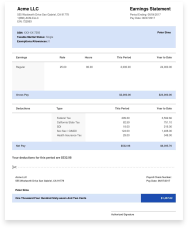
Spread pay must show as a separate line item on the pay stub, not bundled into regular wages or other payroll deductions. The line typically reads:
Spread of Hours: 1.0 hr @ $16.50 = $16.50
A clean, dedicated line creates the audit trail you need. During NYDOL or NYC Department of Consumer and Worker Protection investigations, vague or missing entries are treated as wage theft. A compliant pay stub is your proof of payment, and a quick refresher on how to read a pay stub helps employees confirm the entry on theirs.
Conclusion
Spread of hours pay is a small payment with outsized compliance risk, and missing it is one of the more common payroll mistakes NY employers make. For solid payroll compliance, audit the trigger (more than 10 hours of spread), pay an extra hour of pay at current minimum wage, apply the higher-wage exception correctly outside hospitality, and document the payment on every pay stub it appears on. Modern payroll software can flag the trigger, but you still own the documentation. Generate clean, compliant stubs every cycle with our paystub generator and rely on PayStubs.net to keep the records that protect your business.
You Might Also Like



Frequently Asked Questions
Similar Articles



We’ve helped numerous individuals and businesses create professional documents! Create yours today!