Off Cycle Payroll: Employer Guide for 2026
By Jaden Miller , April 21 2026

Also called off-cycle payroll.
You promised the sales team a bonus this week. Your next regular payroll is 12 days out. A new hire's start date slipped past the last cutoff. An employee just quit, and your state requires the final paycheck within 24 hours. These are the moments when off cycle payroll stops being optional. For a small business owner, the question isn't whether to run it. It's how to run it without creating tax, compliance, or cash flow problems. This guide covers the mechanics, the 2026 federal and state rules, and the choices that keep the cost down.
Key Takeaways
- Off cycle payroll is any payroll run that happens outside your regular pay schedule. Bonuses, missed hours, terminations, and corrections are the most common triggers.
- Federal bonus tax withholding stays at 22% in 2026. It rises to 37% above $1M per employee.
- Some states (CA, CO, MA, AZ) need faster final-paycheck timing. Audit your state rules each year.
- Most payroll providers charge a per-run fee, so run off cycle only when the business case justifies it.
- Records are a must. Every off cycle payment needs a proper pay stub for the employee and your files.
What Is Off Cycle Payroll?
Off cycle payroll is any payroll run done outside your company's regular pay schedule. Employers use it for final paychecks, error fixes, bonuses, expense refunds, or state-required exit timing. Every off cycle run still has to withhold taxes, apply deductions, and make a proper pay stub.
Your regular payroll schedule covers every employee for a set pay period on a fixed date. That schedule can be weekly, biweekly, semimonthly, or monthly. A biweekly payroll, for example, might run every other Friday covering the prior two weeks. Off cycle runs exist for everything that can't wait for the next Friday. The mechanics are the same. You calculate gross pay, withhold taxes, apply payroll deductions, and make a pay stub. The timing is flexible. The trigger comes from the employer, not the calendar.
Common Reasons for Off Cycle Payroll

Off cycle payroll runs fall into three buckets: fixes, planned payments, and compliance-driven payments.
Corrections. A payroll error is the most common trigger. Think of a forgotten overtime entry, a wrong tax amount, or a paycheck missed due to an HRIS sync failure. When the amount is big, an off cycle fix is faster than waiting. It's also better for employee trust.
Planned payments. Sign-on bonuses, performance bonuses, commission payouts, and expense refunds often need to hit before month-end. That's important for accounting. Say you promised a bonus this week. Your next regular payroll is 12 days out. An off cycle run is the right move.
Compliance-driven payments. Terminations are the highest-stakes trigger. Federal law doesn't set one termination-pay deadline, but several states do. When an employee resigns or is fired, their final paycheck may be owed within hours or days. That includes regular wages, any earned but unused PTO, and termination pay. Severance pay and retention bonuses paid mid-period also fall into this bucket.
Real example: you close a Q1 deal on a Wednesday and promise a $2,500 spot bonus by Friday. Your regular payroll ran on Monday. Waiting 11 days undercuts the moment. An off cycle payroll run gets it there on time.
Types of Off Cycle Payments
Off cycle payroll covers a range of payment types. The most common:
- Bonus payment: performance, sign-on, retention, or spot bonuses.
- Commission payout: sales commissions paid outside the normal cycle.
- Expense reimbursement: mileage, travel, gear, or remote-work stipends.
- Severance pay: payments when an employee leaves.
- On-demand payment or payroll advance: early wage access for employees who need funds before payday.
- Payroll correction: a fix for a prior-period error.
- Final paycheck: last wages plus unused PTO for a departing employee.
Tax Implications and Compliance (2026)

Tax treatment is where most employers get tripped up on payroll compliance. Off cycle payments still trigger full withholding. That covers federal income tax, FICA, state income tax, and any local taxes. What can differ is the method for federal supplemental income tax withholding.
Federal Withholding on Off Cycle Payments
The IRS calls bonuses, commissions, and most one-off payments "supplemental wages." As of 2026, the flat withholding rate for those wages is 22% on the first $1 million per employee per year. Anything above that threshold jumps to 37%. You have two methods:
- Flat method: withhold 22% on the off cycle payment by itself, separate from regular wages. It's simple and good for one-off bonuses.
- Aggregate method: add the off cycle payment to the employee's latest regular wages. Calculate withholding on the combined amount using their normal W-4. Subtract what was already withheld. It's more accurate if the employee's rate is below 22%, but it takes more work.
FICA (Social Security and Medicare) is withheld the same way as on any regular run. There's no exception for off cycle payments.
State Termination-Pay Laws
Federal labor laws are silent on final-paycheck timing, but state payroll laws are not. Four examples of how rules vary:
| State | Final Paycheck Rule (at termination) |
|---|---|
| California | Due immediately if discharged; within 72 hours if the employee quits without notice |
| Colorado | Next scheduled payday, or within 6 hours of request if immediate |
| Massachusetts | Day of discharge if involuntary; next regular payday if voluntary |
| Arizona | Within 7 working days or next regular payday, whichever is sooner |
Some states updated these rules in 2024 and 2025. Audit your state's rules at least once a year. Same-day pay duties are easy to miss when the law moves.
Other Compliance Items
Wage garnishment orders still apply to off cycle payments. Skip them, and you create direct legal risk. 401(k) and benefit deductions depend on your plan document. Some apply to bonuses, some don't. Check before you process.
Benefits of Off Cycle Payroll
For a small business owner, running off cycle well is a strength, not a cost. The benefits:
- Error recovery without losing trust. When a payroll error happens, fixing it the same week shows your company takes fair pay seriously.
- State rules on exits. Same-day pay laws apply whether you're ready or not. Off cycle skill is how you stay legal.
- Faster reward payout. A bonus paid within days of the win sets the tone. Paid 12 days later, it's just a line item.
- Flex for odd events. New-hire sign-on bonuses, moving stipends, and urgent expense refunds all benefit from off cycle timing.
- Pro signal. Employees notice when their employer can handle pay changes. It helps keep staff.
Best Practices for Managing Off Cycle Payroll
Many off cycle runs without a policy get costly and error-prone. The fix is a written process.
Write Your Off Cycle Payroll Policy
Write down what triggers an off cycle run at your company. Common triggers: bonuses above a threshold, exits, errors above 25% of normal pay, or payments required by law. Set who can approve (payroll manager, CFO, or owner). Set a service level. For example: errors above $X get a same-week off cycle run. Errors below $X roll into the next regular payroll.
4-Step Approval Workflow
- Request. Employee, manager, or HR sends a request through your HRIS form or a standard email or, for distributed teams, remote workforce management software that already tracks hours, schedules and approvals in one place.
- Verify. Payroll confirms the trigger (error threshold, exit, legal order, approved bonus).
- Approve. Supervisor, CFO, or owner signs off per your policy.
- Process. Payroll runs it, withholds taxes, and sends the employee a note with a proper pay stub.
Most major payroll software (ADP, Gusto, QuickBooks Payroll) automates steps 3 and 4 once your rules are set up. Steps 1 and 2 still need a human.
Decision Framework
Before approving an off cycle payroll run, ask four questions:
- Is the amount material (more than 25% of the employee's normal pay)?
- Is it legally required (final paycheck, state-mandated timing)?
- Will the delay damage trust (promised bonus, sign-on payment)?
- Can it wait one pay period without consequence?
Yes to any of the first three, or no to the fourth, means run it off cycle. Anything else rolls into the next regular payroll.
Recordkeeping and Documentation
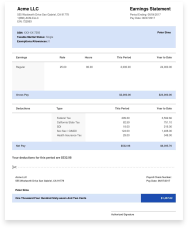
Log every off cycle run: date, employees paid, reason, approver, and amount. Make a proper pay stub for each employee. The stub should show gross pay, tax withholding, deductions, net pay, and updated YTD totals. Post the run to your general ledger the same day. Federal rules require at least three years of payroll records. California requires four. If your payroll software can't make a stub for a one-off manual payment, a tool like PayStubs.net fills the gap with proper, branded paperwork.
How Long Does Off Cycle Payroll Take?
Most payroll providers can run an off cycle payroll the same day or within one business day. Direct deposit adds another 1-2 business days through standard ACH, or same-day with a rush ACH fee. Printed checks can be handed over right away, which is why they're common for urgent final pay.
For a same-day ACH payment, most providers cut off requests by mid-morning. Miss the window, and the payment lands the next business day. Plan for that in your approval workflow.
Challenges and Risks of Off Cycle Payroll
Off cycle payroll is a useful tool, but it carries costs most employers miss.
- Per-run fees. Most payroll providers charge $5 to $50 per off cycle run, plus $5 to $15 for same-day ACH. Run two a month, and that's $240 to $780 a year on top of your base plan.
- Missed garnishments. Wage garnishment orders still apply on off cycle runs. Skip them, and you face legal risk. In some states, the employer is liable for the missed amount.
- Benefits and deduction sync failures. If your HRIS and benefits platform aren't fully tied together, 401(k) and benefit deductions may not pull on their own. Manual review is needed.
- Higher error risk. Off cycle runs are often rushed. Shortcuts show up as wrong tax rates, missed deductions, or the wrong net pay. Errors are more common on rushed runs than on scheduled runs.
- Cash flow pressure. Many off cycle runs split up your payroll cash outflow and make planning harder.
You Might Also Like
- What Is a Pay Period?: how pay periods work and why the schedule matters for payroll timing.
- Garnishment on a Pay Stub: a practical look at court-ordered withholding that still applies to off cycle runs.
- Is PTO Taxed?: how unused PTO is taxed when it hits a final paycheck.
- ADP Pay Stub Guide: reading pay stubs from a major payroll provider.
- How Many Pay Periods in a Year?: pay frequency choices and what they mean for your payroll cadence.
Conclusion
Off cycle payroll is a handy tool for small business owners. It isn't something to avoid, and it isn't something to overuse. Run it when the business case is clear. Good examples include an error worth fixing, an exit driven by state law, or a bonus that needs to land on time. Keep the cost down with a written policy, a clear approval flow, and steady records. When your payroll software can't make a pay stub for a manual or one-off run, use a good paystub generator. It creates accurate employer records in minutes.



Frequently Asked Questions
Similar Articles



We’ve helped numerous individuals and businesses create professional documents! Create yours today!