Does PTO Count Towards Overtime? Employer's 2026 Guide
By Jaden Miller , April 22 2026

You're running payroll for the week. One worker took Wednesday off with PTO, then clocked 42 hours over the other four days. Does PTO count towards overtime in that math? The answer shapes your labor costs, your paycheck math, and your risk under federal law. Get it wrong and you face a Department of Labor back-wages claim. Get it right and payroll runs clean. This guide covers the FLSA rule, three pay examples, state wrinkles, and how to track it all on your pay stubs at PayStubs.net
Key Takeaways
- Under federal law, PTO does not count toward the 40-hour overtime threshold because it is not "hours worked."
- Overtime is owed only when real worked hours top 40 in a workweek.
- Miscounting PTO as worked hours can trigger FLSA liability: back wages plus added damages.
- California and a few other states add daily overtime rules, but those still leave PTO out of the math.
What Counts as "Hours Worked" Under the FLSA
Before you can answer whether PTO counts toward overtime, you need two federal terms. Under the Fair Labor Standards Act (FLSA), overtime is 1.5x the regular rate. It kicks in when a nonexempt worker clocks beyond 40 hours in a single workweek. That's time and a half, owed on worked hours only.
Paid time off (PTO) is the umbrella term for vacation days, sick leave, personal days, and holiday pay. It's pay for hours the worker did not work. The Department of Labor is clear: paid non-work time is not the same as real work time. That single rule drives every answer below.
Does PTO Count Towards Overtime? The Direct Answer

No. Under the FLSA, PTO does not count towards overtime because it is not "hours worked." Overtime is owed only when real worked hours top 40 in a workweek. A worker who takes 8 hours of PTO and works 36 hours gets paid for 44 hours but is owed zero overtime.
Here's the breakdown with real numbers. Monday: 8 hours PTO. Tuesday through Friday: 9 hours worked each day. Total paid hours: 44. Total worked hours: 36. Because worked hours didn't cross 40, you owe zero overtime. You pay 36 hours at the regular rate plus 8 PTO hours at the regular rate.
You can run payroll the other way if you choose. The FLSA is a floor, not a ceiling. You can write a PTO policy that answers "does PTO count towards overtime" with a yes for your firm. Federal law doesn't require it. But if your handbook says PTO counts, you must honor that policy for every nonexempt worker on your team.
Does PTO Count Towards Overtime Under Federal Law?
The FLSA (Section 7) requires 1.5x the regular rate for every hour a nonexempt worker clocks over 40 in a workweek. The Department of Labor's reading of "hours worked" leaves out PTO, vacation, sick leave, and holiday pay. None of those are real work time. They are paid non-work time, tracked apart on your payroll.
One freshness note for 2026: the FLSA salary cutoff for exempt status is $684 per week. Salaried workers earning less than that are nonexempt and eligible for overtime, no matter the job title.
The liability angle matters for your bottom line. If the DOL finds you miscounted overtime by treating PTO as worked hours, you can owe back wages plus added damages. The damages equal the unpaid overtime, so it's a 2x cost on every missed hour.
Overtime Calculation Examples When PTO Is Involved

Three cases at a $20 per hour regular rate answer the "does PTO count towards overtime" question in numbers.
| Scenario | Worked Hours | PTO Hours | Overtime Owed | Total Pay |
|---|---|---|---|---|
| 1. PTO only, under 40 worked | 32 | 8 | 0 hrs | $800 |
| 2. PTO plus over 40 worked | 44 | 8 | 4 hrs at 1.5x | $1,080 |
| 3. Holiday week, PTO plus extra hours | 42 | 8 (holiday) | 2 hrs at 1.5x | $1,060 |
The logic stays the same: overtime kicks in only when real worked hours cross 40. In Scenario 1, total paid hours are 40 but worked hours are 32. No overtime. In Scenario 2, the 8 PTO hours don't add to the overtime base. The 4 worked hours above 40 do. Scenario 3 is the same math; the "holiday" label on the PTO doesn't change the rule.
What Counts as Hours Worked (and What Doesn't)
Use this list when you're building your time-tracking setup.
| Counts as Hours Worked | Does NOT Count as Hours Worked |
|---|---|
| On-site work | PTO (all categories) |
| Mandatory training sessions | Vacation days |
| On-call time with restrictions | Sick leave |
| Travel between job sites during work hours | Holiday pay |
| Authorized overtime | Family and Medical Leave Act (FMLA) leave |
| Short breaks (under 20 min) | Meal breaks (30 min or longer, uninterrupted) |
| Waiting time while engaged to work | Jury duty |
Left column hours feed your overtime calculation. Right column hours get paid (per your policy) but stay out of the 40-hour math.
State-Specific Rules That Can Change the Answer
Federal law is the floor. A handful of states add rules on top of it, and California is the one most likely to catch firms off guard.
California has a daily overtime rule. Workers earn 1.5x for every hour over 8 in a day. They earn 2x for every hour over 12. The weekly 40-hour trigger is the same as the federal rule. Key point: PTO is still left out of "hours worked" for both daily and weekly math. The question "does PTO count towards overtime" gets the same no under California law as it does under the FLSA. If you work in the state, factor in California payroll tax rules too, which shape your total payroll cost.
New York, Colorado, Oregon, Washington, Massachusetts, and Connecticut run paid leave programs beside your PTO policy. These don't change how overtime is figured, but they add rule layers. Use this three-step check before you finalize any payroll call:
- Federal: Apply the FLSA 40-hour rule and the exempt/nonexempt split.
- State: Check your state's Department of Labor for daily OT limits, paid leave rules, or meal-break rules.
- Internal: Review your own PTO policy and employee handbook for anything more generous than the legal floor.
Best Practices for Tracking PTO and Overtime
Clean records are your best defense against a payroll dispute. Miscounting PTO is one of the most common payroll mistakes small business owners make, so build the process on purpose. Three habits that keep you out of trouble:
Track PTO apart from worked hours. Your time-tracking system should have clear buckets for regular hours, PTO hours, and overtime hours. Never blend them in one column. If your payroll hours report lumps them together, you've lost sight of the overtime math.
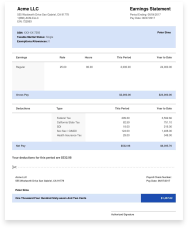
Show three line items on every pay stub. When a pay period has both PTO and overtime, list them apart. Use three lines: regular hours at straight time, PTO hours at the regular rate, and overtime hours at 1.5x. This stops worker confusion and gives you a solid audit trail. Our paystub templates include these line items pre-built so you don't have to redo them every pay period.
Keep records for three years. Under FLSA Section 11(c), employers must keep time records, payroll records, and wage math for at least three years. Backup documents (time cards, schedules) must be kept for two years. Store PTO balances, time-off requests, and overtime math in a system you can pull from fast if the DOL asks. Your employee handbook should spell out the PTO rule and the overtime policy in plain words.
Common Misconceptions Employers Get Wrong
Three payroll myths that trip up small business owners:
Myth 1: "If total paid hours top 40, I owe overtime." False. Only real worked hours count toward the 40-hour mark. Paid hours that include PTO, vacation, or holiday pay can top 40 without setting off any overtime under federal law.
Myth 2: "Company policy can waive overtime for workers who put in 45 hours." False. The FLSA is the floor. You cannot contract around it, and nonexempt employees cannot waive their right to overtime pay.
Myth 3: "Salaried workers are always exempt from overtime." Not always. For 2026, the salary cutoff is $684 per week. Anyone earning less is nonexempt no matter the job title, and the duties test must also be met.
Conclusion
Does PTO count towards overtime under federal law? No: PTO isn't "hours worked," and overtime only attaches to real work time over 40 hours. Track worked hours and paid time off in split buckets. Apply the 40-hour rule only to real work. Keep three years of records to stay in line with the FLSA, and check your state's daily overtime rules if you work in California.
Ready to clean up how PTO and overtime show on your employees' pay stubs? Use our paystub generator to build crisp pay docs with split lines for regular, PTO, and overtime hours, done right every time.
You Might Also Like



Frequently Asked Questions
Similar Articles



We’ve helped numerous individuals and businesses create professional documents! Create yours today!