Time and a Half: What It Means and How To Calculate It (2026)
By Jaden Miller , February 16 2026

The practice of paying different hourly rates for specific work periods is something most employees experience during their careers. Time and a half is one of those terms that sounds simple. However, it can feel confusing when you're figuring out your actual pay.
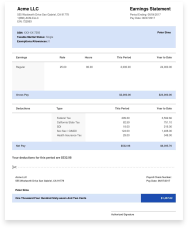
This guide breaks it all down in plain English with real examples so you can understand your time-and-a-half pay, how it works, and whether you qualify. Checking your paystub is the best way to make sure you're getting paid correctly.
Key Takeaways
- Time and a half means getting paid 1.5 times your regular hourly rate for overtime hours
- Federal law requires this after 40 hours in a workweek
- Calculation is simple: multiply your hourly rate by 1.5
- Not every worker qualifies; it depends on exempt vs. non-exempt classification
- Some states, like California, have additional daily overtime rules
- Key Takeaways
- What Does Time and a Half Mean?
- How Does Time and a Half Work?
- Is Overtime Time and a Half?
- Who Qualifies for Time and a Half?
- How To Calculate Time and a Half for Hourly Employees
- How To Calculate Time and a Half for Salaried Employees
- Time and a Half at Common Hourly Rates
- How Bonus Pay Affects Time and a Half
- Common Time and a Half Mistakes (And How To Avoid Them)
- You Might Also Like
- The Bottom Line
What Does Time and a Half Mean?
Time and a half means you get paid 1.5 times your regular hourly rate for overtime hours. For example, your overtime rate would be $30 per hour if you normally earn $20 per hour. It is the standard overtime pay rate under federal law.
What's time and a half in simple terms? Think of it like a 50% bonus on every extra hour you work. The time and half meaning is straightforward: one times your pay, plus half on top.
Regular Hourly Rate x 1.5 = Overtime Rate
How Does Time and a Half Work?


Time and a half pay kicks in when a non-exempt employee works more than 40 hours in a single workweek. Your employer multiplies your regular hourly rate by 1.5 for every hour beyond 40. The Fair Labor Standards Act requires this for most hourly and some salaried workers.
A "workweek" is any fixed 168-hour period (seven 24-hour days). Your employer picks the start day. Only hours actually worked count. The paid time off and sick days do not count as hours worked for overtime purposes.
What is time-and-a-half pay in practice? If you work 45 hours at $20 per hour, you earn $800 for the first 40 hours plus $150 for 5 overtime hours at $30. Your time and half pay total is $950.
2026 update: The One Big Beautiful Bill Act (2025) established a new tax deduction for overtime pay, which taxpayers can apply from 2025 through 2028. Consult a tax professional about eligibility.
Is Overtime Time and a Half?
Yes, overtime is time and a half for most employees in the United States. Federal law requires employers to pay 1.5 times the regular rate for hours worked beyond 40 per week. Some states, like California, also require overtime after 8 hours in a single day.
Is overtime always time and a half? Not quite. California requires double time (2x) after 12 hours in a day. But for most workers, overtime and time in half (as some people call it) are the same thing.
Who Qualifies for Time and a Half?

The key factor is your classification as "exempt" or "non-exempt" under the FLSA. Here's what those terms mean.
Non-Exempt Employees (You Qualify)
If you're paid hourly, you almost certainly qualify. Most hourly employees are non-exempt, meaning your employer must pay overtime after 40 hours. Some salaried workers earning below the threshold also qualify.
Exempt Employees (You Don't Qualify)
To be exempt, you must pass both a salary test and a duties test. The three main categories are:
- Executive exemption
- Administrative exemption
- Professional exemption
The 2025 salary threshold is $1,128 per week ($58,656 per year). Earn less as a salaried worker? You're likely non-exempt. The Department of Labor plans to update this every three years starting July 2027.
Employee misclassification is common. If you think you should be getting overtime but aren't, look into it. What is paid time and a half? It's your legal right as a non-exempt employee.
State-Specific Overtime Rules
Some states go further with state overtime laws:
- California: Daily overtime after 8 hours, double time after 12
- Alaska: Daily overtime after 8 hours
- Colorado: Daily overtime after 12 hours
- Nevada: Daily overtime after 8 hours (if rate is less than 1.5x minimum wage)
Check your state's labor laws to make sure you're getting everything owed.
How To Calculate Time and a Half for Hourly Employees
Here are the steps:
- Find your regular hourly rate.
- Multiply by 1.5 for your overtime rate.
- Count overtime hours (anything over 40 per week).
- Calculate: Overtime rate x overtime hours, then add regular pay.
Example: What is time and a half for $20 an hour?
- Regular rate: $20/hr
- Overtime rate: $20 x 1.5 = $30/hr
If you worked 47 hours
- Regular pay: 40 x $20 = $800
- Overtime pay: 7 x $30 = $210
- Total gross pay: $1,010
Time and a half for 20 an hour is $30 per hour. What is time and a half for $21 an hour?
$21 x 1.5 = $31.50.
Need pay documentation? Our paystub generator creates professional pay stubs in minutes.
How To Calculate Time and a Half for Salaried Employees
Salaried workers can get overtime too. What does getting paid time and a half mean for a salaried employee? Convert your salary to an hourly rate first.
- Divide the annual salary by 52 for weekly pay.
- Divide by 40 for your hourly rate.
- Multiply by 1.5 for overtime.
Example: $52,000/year salary.
- Weekly: $52,000 / 52 = $1,000
- Hourly: $1,000 / 40 = $25/hr
- Overtime rate: $25 x 1.5 = $37.50/hr
- 45-hour week: $1,000 + (5 x $37.50) = $1,187.50
This only applies to non-exempt salaried workers. If your annual salary exceeds $58,656, you're likely exempt. If you need a clear record of your earnings, check out our pay stub templates to keep your documentation organized.
Time and a Half at Common Hourly Rates
Here's a quick reference table:
| Regular Rate | Overtime Rate | Extra Per OT Hour |
| $15.00/hr | $22.50/hr | +$7.50 |
| $16.50/hr | $24.75/hr | +$8.25 |
| $18.00/hr | $27.00/hr | +$9.00 |
| $20.00/hr | $30.00/hr | +$10.00 |
| $21.00/hr | $31.50/hr | +$10.50 |
| $22.00/hr | $33.00/hr | +$11.00 |
So, at the regular rate of $22/hr, the time and a half is $33. Time and a half for 22 an hour means $11 extra per overtime hour. What is time and a half for $22 an hour? $33. The calculation for "What's time and a half for $22 an hour" and "22 an hour time and a half" produces the same result.
What's time and a half of 22? It works out to $33.
16.50 time and a half comes out to $24.75 per hour.
How Bonus Pay Affects Time and a Half
Bonuses can change your overtime calculation. There are two types:
- Nondiscretionary Bonuses (Promised Ahead of Time): These must be included in your regular rate for overtime.
- Discretionary Bonuses (Surprise Bonuses): These don't affect overtime.
Example: You earn $20/hr with a $100 nondiscretionary bonus this week, working 45 hours.
Add the bonus to your base ($800 + $100 = $900).
New regular rate: $900/40 = $22.50/hr.
Overtime rate: $22.50 x 1.5 = $33.75/hr for those 5 overtime hours.
Common Time and a Half Mistakes (And How To Avoid Them)
1. Misclassification: Some employers incorrectly label workers as exempt. If your role doesn't meet the duties test, you may be misclassified. This payroll compliance issue carries fines up to $1,000 per violation.
2. Poor Time Tracking: Not recording every hour worked means lost overtime hours. Keep your own records.
3. Ignoring State Laws: States like California require daily overtime. Don't assume the 40-hour workweek rule is the only one.
4. Not Checking Your Pay Stub: Your pay stub should show regular hours, overtime hours, your overtime rate, and total gross pay. If the numbers don't add up, talk to your employer. Employees at large retailers like Walmart can check their overtime details through their employer's pay portal.
5. Audit Red Flag: The Department of Labor looks for inconsistent time records and large numbers of exempt employees in roles that typically don't qualify.
You Might Also Like
- Walgreens Employee Portal and Paystub Guide
- Dollar General DGME Paystub Portal
- Family Dollar Pay Stub Access
- Amazon Pay Stub Guide for Employees
- ADP Paystub Login and Access
- Pay Stubs Explained: A Beginner's Complete Guide (2026)
- Net vs Gross Income: A Simple Guide for Beginners (2026)
- medicare tax: A Simple Guide for Beginners (2026)
The Bottom Line
Now you know what time and a half means, when it applies, and how to calculate it for hourly or salaried positions. The most important step? Check your pay stub to confirm you're getting paid correctly.
Ready to create your first pay stub? It's easier than you think. Get started in minutes with our easy-to-use paystub generator.



Frequently Asked Questions
Similar Articles



We’ve helped numerous individuals and businesses create professional documents! Create yours today!