Semi-Monthly Meaning: What It Is and Why It Matters (2026)
By Jaden Miller , February 16 2026

New employees who hear about "semi-monthly pay schedules" on their first day of work need to understand what these time arrangements entail. Don't worry! The semi-monthly meaning is simpler than you think, and studying these principles will help you feel more confident when managing your paycheck schedule.
The following guide explains the semi-monthly meaning in simple terms. You'll learn how it compares to biweekly pay, how to calculate your paycheck, and how it impacts your health insurance and tax obligations. No confusing jargon, no assumptions. Just clear answers from your trusted paystub generator.
Key Takeaways
-
Semi-monthly meaning: you get paid twice a month, usually on the 1st and 15th, for a total of 24 paychecks per year
-
Semi-monthly is not the same as biweekly, which pays every two weeks and results in 26 paychecks per year
-
The annual salary remains unchanged regardless of which pay schedule you choose.
-
The fixed monthly pay dates of semi-monthly pay allow users to develop basic budget systems that manage their standard monthly costs.
- Key Takeaways
- What Does Semi-Monthly Mean? The Semi-Monthly Meaning Explained
- Semi-Monthly vs Bi-Weekly: What’s the Difference?
- Wait, Isn't Bi-Monthly the Same Thing?
- How To Calculate Semi-Monthly Pay
- Semi-monthly meaning: Pros and Cons
- What Does Semi-Monthly Mean for Health Insurance?
- Does Your Pay Schedule Affect Your Taxes?
- How To Budget on a Semi-Monthly Pay Schedule
- Other Pay Schedules Beyond the Semi-Monthly Meaning
- You Might Also Like
- Final Thoughts
What Does Semi-Monthly Mean? The Semi-Monthly Meaning Explained
Semi-monthly means you get paid twice a month, usually on the 1st and 15th, or the 15th and the last day of the month. This results in 24 paychecks per year. Your employer will distribute your annual salary into 24 equal portions, each paid on a specific date.
Your monthly salary needs to be split into two equal parts. For example, your monthly earnings of $4,000 would result in two equal payments of $2,000, which you would receive on the 1st day and the 15th day of each month. So what does semi-monthly pay mean in practice? Simply that your salary arrives in two installments each month.
What is semi-monthly pay, exactly? It's one of the most common pay schedules in the United States. According to the Bureau of Labor Statistics, about 19.8% of U.S. private businesses use a semi-monthly pay schedule. What does semimonthly mean compared to other terms? It means the exact same thing; "semimonthly" is just the one-word spelling.
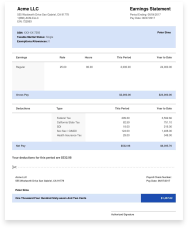
Your pay stub will show the pay period dates alongside your gross pay (total earnings before deductions) and your net pay (the amount you take home).
The essential information about this topic appears in "What is semi-monthly meaning?". You get paid twice a month. What is semimonthly? The two words share the same meaning, but they have distinct spellings.
Is semi-monthly twice a month? Yes, exactly. The semi-monthly meaning is the same whether you spell it as two words or one.
Semi-Monthly vs Bi-Weekly: What’s the Difference?

Semi-monthly pay gives you 24 paychecks per year on fixed dates (like the 1st and 15th), while biweekly pay gives you 26 paychecks every two weeks on the same day.
Example: On a $50,000 salary, semi-monthly paychecks are $2,083.33, and biweekly paychecks are $1,923.08.
People frequently confuse these two terms. So, the difference between biweekly and semimonthly pay will be explained in this brief summary.
| Feature | Feature | Bi-Weekly |
| Paychecks per year | 24 | 26 |
| Pay dates | Fixed (e.g., 1st and 15th) | Same day every 2 weeks |
| Paycheck size ($50k salary) | $2,083.33 | $1,923.08 |
| Pay date consistency | Dates stay the same, day of week changes | Same day, dates change |
| Best for | Salaried employees, monthly budgeting | Hourly employees, overtime tracking |
Is semi-monthly the same as bi-weekly? No. The bi-weekly vs semi-monthly difference comes down to frequency. One schedule gives you 26 paychecks, and the other gives you 24. When comparing them, the key difference is that bi-weekly pays on the same weekday, while the other pays on fixed dates.
People also search for bi-weekly vs semi-monthly to understand which is better for budgeting. The short answer: semi-monthly is easier for monthly bills, while bi-weekly gives you two bonus paychecks per year.
The United States has 43% of its businesses operating on a biweekly schedule, which stands as the leading payment frequency. Some state labor laws even require employers to pay at a minimum frequency, so your employer's choice may depend on where you work. Walmart hourly staff receive wages through biweekly payments, a common practice among large retailers.
Financial services and tech companies distribute semi-monthly salaries to their salaried staff members. However, retail and construction organizations pay their hourly workers on a biweekly schedule, according to real-world examples.
Wait, Isn't Bi-Monthly the Same Thing?
Not exactly. The term Bi-monthly often creates confusion because it can refer to either "twice a month" or "every two months" based on the situation. Semi-monthly always means twice a month (24 times per year). The payroll system operates with two preferred payment terms, which include "semi-monthly" and "biweekly".
The term "bi-monthly" exists as a word that has two possible interpretations because dictionaries show both definitions. The confusion about bi-monthly vs bi-weekly, bimonthly vs biweekly, and bi-monthly vs bi-weekly has likely occurred to many people. And if you searched for biweekly vs bimonthly, the answer is below.
The following list provides a fast solution to resolve the semi-monthly vs bi-monthly confusion:
| Term | What It Means | How Often |
| Semi-monthly | Twice a month | 24 times/year |
| Biweekly | Every two weeks | 26 times/year |
| Bi-monthly | Twice a month OR every two months | Depends on context |
| Semi weekly | Twice a week | 104 times/year |
What is bi-monthly pay, and does it exist in the majority of workplaces? It usually means the same as semi-monthly pay. The majority of HR departments choose "semi-monthly" payment schedules because this method helps staff members understand their payment timing clearly. And bimonthly vs semimonthly? The terms in payroll operations refer to identical concepts.
The comparison between biweekly vs semiweekly and bimonthly vs semimonthly stands as a separate evaluation from the original assessment. Semi-weekly vs bi-weekly is a big gap. Semi-weekly means twice per week, while biweekly means every two weeks.
How To Calculate Semi-Monthly Pay

The process to determine your semi-monthly paycheck amount remains simple.
Take your annual salary and divide by 24:
Semi-monthly pay = Annual salary / 24
The yearly salary of $60,000 results in weekly earnings of $2,500 before any payroll deductions take place.
What does biweekly pay mean by comparison? The biweekly payment method requires you to divide $60,000 by 26, which results in $2,307.69 as your regular paycheck amount.
Daily Rate
Do you want to learn what your daily compensation would be? There are about 10.83 workdays in a semi-monthly pay period (260 workdays per year / 24). So if your semi-monthly paycheck is $2,500:
$2,500 / 10.83 = $230.84 per day.
Hourly Rate
For your hourly rate, divide by 86.67 hours per semi-monthly period (2,080 annual work hours / 24). With a $2,500 semi-monthly paycheck:
$2,500 / 86.67 = $28.85 per hour.
Semi-monthly meaning: Pros and Cons
You now understand the semi-monthly meaning, so we can evaluate its positive aspects together with its less desirable elements.
For Employers
Fewer payroll processing runs (24 vs 26 per year) reduce the administrative burden on the HR department. Benefit deductions align neatly with monthly premiums. Cash flow planning is easier with fixed payroll dates.
However, overtime pay calculation becomes more complicated because pay periods do not align with the typical workweek schedule. Payroll payments must be processed before weekends when pay dates fall on those days, according to direct deposit. The payroll service provider ADP delivers to businesses an automated solution that handles their complete payroll processing requirements.
For Employees
The main advantage is receiving bigger individual paychecks. Predictable dates make financial planning easier. The 1st and 15th paycheck schedule works best for paying monthly expenses, including rent.
The downside is that you get paid less frequently. You get paid 24 times instead of 26 times with biweekly, which occurs every two weeks. No "extra paycheck" months. Hourly employees may see slightly different amounts each period since workdays vary.
What Does Semi-Monthly Mean for Health Insurance?
With semi-monthly pay, your health insurance premiums are split evenly across your two monthly paychecks. For example, your semi-monthly paycheck may receive a $200 deduction because your monthly health insurance premium amounts to $400. The same rules apply to dental insurance, vision coverage, and 401(k) retirement savings plans.
This makes benefit deductions simpler to understand. Every paycheck has the same deduction amount, so you always know what to expect. Tax withholding works the same way; your employer adjusts the per-paycheck amount based on your annual salary so it all balances out by year-end.
Does Your Pay Schedule Affect Your Taxes?
No, your pay schedule does not affect your total tax bill. Taxes are based on your annual income, not how often you get paid. Your employer will modify your paycheck withholding amount to match your payment schedule, which includes weekly, biweekly, or semi-monthly payments for maintaining your annual payment total.
So, is it better to get paid weekly or biweekly for taxes? It makes no difference. The IRS bases its payment calculations on your yearly earnings instead of how often you receive payments. If you need to file tax forms like a W-2, your pay schedule won't change anything on that form either.
How To Budget on a Semi-Monthly Pay Schedule
The semi-monthly meaning has a practical advantage for budgeting. You always know when your paycheck arrives. Here's a simple strategy.
-
1st Paycheck: Cover rent or mortgage, major bills, and loan payments
-
15th Paycheck: Handle utilities, subscriptions, groceries, and savings contributions.
-
Set Up Autopay: Since your pay dates never change, schedule automatic bill payments to match.
Quick tip: If you just started a semi-monthly pay schedule, give yourself two months to adjust. It takes a cycle or two to get your bill payments aligned with your paycheck dates.
Need a professional pay stub for a rental application or loan? The easy-to-use pay stub generator guides users through each process of the system.
Other Pay Schedules Beyond the Semi-Monthly Meaning
Semi-monthly is just one option. Here's how all the pay schedules compare, including bi-weekly vs bi-monthly and other setups:
| Schedule | Frequency | Paychecks/Year |
| Weekly | Every week | 52 |
| Biweekly | Every 2 weeks | 26 |
| Semi-monthly | Twice a month | 24 |
| Monthly | Once a month | 12 |
Biweekly is the most popular in the U.S., especially for hourly workers using payroll software. Higher-paid staff members receive monthly schedules, a practice that remains uncommon in most organizations. The employee portals of various employers, including Walgreens and Amazon, enable staff members to view their individual pay schedule information.
You Might Also Like
- Pay Stubs Explained: A Beginner's Complete Guide (2026)
- Net vs Gross Income: A Simple Guide for Beginners (2026)
- medicare tax: A Simple Guide for Beginners (2026)
Final Thoughts
The semi-monthly meaning is straightforward. You get paid twice a month on set dates, earning 24 paychecks per year. This payment schedule operates independently from biweekly pay, which consists of 26 checks throughout the year. This will not impact your tax situation or your yearly compensation. Now that you understand the semi-monthly meaning, managing your money on this schedule is simple.
Ready to create your first pay stub? It's easier than you think. Get started in minutes with our simple pay stub generator; no experience needed.



Frequently Asked Questions
Similar Articles



We’ve helped numerous individuals and businesses create professional documents! Create yours today!