Employment Verification Letter: A Simple Guide (2026)
By Jaden Miller , February 11 2026
Someone just asked you for an employment verification letter, and now you’re wondering what that even looks like? Don't worry. This is one of those things that sounds more complicated than it actually is.
An employment verification letter is a short document that confirms where you work, your job title, and how long you've been there.
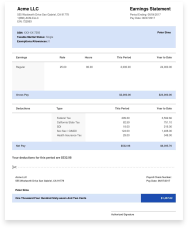
In this guide, we'll cover what an employment verification letter is, when you need one, and how to write or request one. You'll also find a ready-to-use paystub generator to help you create pay documentation quickly.
Key Takeaways
- This letter confirms your job status, title, and employment dates for a third party
- Common reasons you'll need one: renting an apartment, applying for a loan, or starting a new job
- Most employers provide one within 1 to 3 business days through HR
- Always print it on the company letterhead and include a signature for it to be official.
- Key Takeaways
- What Is an Employment Verification Letter?
- When Do You Need an Employment Verification Letter?
- What To Include in Your Letter
- How To Write One Step by Step
- How To Request One From Your Employer
- Verification Letter vs. Proof of Income Letter
- Common Mistakes To Avoid
- You Might Also Like
- Conclusion
What Is an Employment Verification Letter?
An employment verification letter is a document issued by an employer that confirms a person's job status, title, employment dates, and, sometimes, salary. It is also called a proof of employment letter or letter of employment. Employers, HR departments, or managers typically write and sign this letter.
Think of it like a receipt for your job. When someone needs proof that you work there, this document does the talking. So, "What is a letter of employment in practice?" It's simply another name for the same thing.
You might also hear it called an employment letter, a verification of employment letter, an employee verification letter, or even just a work letter. Other names include a job verification letter and an employer verification letter.
The key point is that a letter of employment verification confirms your employment status to a third party. It's not the same as a reference letter or a performance review. Think of a verification letter as pure facts, nothing more.
When Do You Need an Employment Verification Letter?

You may need this letter when applying for a mortgage, renting an apartment, or going through a background check for a new job. It's also common when applying for a visa through USCIS or qualifying for government programs like SNAP or TANF. Landlords, lenders, and government agencies request them regularly.
Here are the most common situations:
- Renting a Home: Your landlord may want proof of employment before signing the lease.
- Loan or Mortgage Applications: Banks and lenders need an income verification letter before approving credit.
- New Job Background Checks: A hiring manager may verify your employment history
- Immigration: USCIS may require documentation for visa or green card applications.
- Government Assistance: Agencies verify your status for benefits eligibility.
If you're a first-timer getting one of these requests, don't panic. Needing proof of income isn't unusual. It's a standard part of many everyday processes.
What To Include in Your Letter
A good employment verification form covers specific details. Here's what should be in your document:
- Employee's full legal name
- Current job title and department
- Employment start date (and end date, if applicable)
- Status (full-time, part-time, or former employee)
- Salary or pay rate (only if authorized and requested)
- Company name, address, and phone number
- Printed on official company letterhead
- Signature of an authorized representative (HR manager, supervisor)
One Important Note: Never include private data like a Social Security number. Some states also have laws about what salary information employers can share.
For example, several states now ban salary history questions. Check your local rules before adding pay details to a verification of employment form or employee verification form.
How To Write One Step by Step

If you're the employer or you work at a small business with no formal HR, you might need to write this yourself. Here's how to do it step by step, using an employment verification letter template as your starting point.
- Use company letterhead. Print on official stationery with the company logo and contact info.
- Add the date. Put the current date at the top.
- Address the recipient. If you know who is requesting it, address them directly. Otherwise, use "To Whom It May Concern."
- State the purpose. Write one sentence confirming the employee's status.
- Include the details. Add the employee's name, title, dates of employment, and salary if requested.
- Sign it. Include your name, title, and signature.
Here's a simple employment verification letter sample you can follow:
[Company Name]
[Company Address]
[Phone] | [Email]
[Date]
To Whom It May Concern,
This letter confirms that [Employee Name] has been employed at [Company Name] as a [Job Title] since [Start Date]. Their current annual salary is [Amount]. [Employee Name] works [full-time/part-time] and is currently in good standing.
If you need additional information, please contact me at [Phone/Email].
Sincerely,
[Your Name]
[Your Title]
This sample employment verification letter works for most situations. You can also find versions online designed for specific needs.
For instance, an employment verification letter template free is widely available if you need a no-cost starting point. An employment verification letter template, Word version, may work better if you prefer Microsoft Word formatting. Other formats include a letter of employment template or an employment letter template.
Looking for a different employment verification letter example? Adjust the details for a former employee by adding the end date and removing the current salary.
The same basic structure applies to related documents. A proof of employment letter template follows the same layout. You can also check out an employment letter sample or a letter of employment sample for other formats.
A proof of employment letter sample is handy if the person asking wants income details.
How To Request One From Your Employer
Contact your HR department or direct manager. Let them know exactly what the other party needs, such as job title, dates, or salary info. Most employers can provide this document within one to three business days.
Here are a few tips to make the process smoother:
- Know what's needed. Ask the requester if they need salary info or just job title and dates.
- Put your request in writing. Email your HR department so there's a record.
- Allow enough time. Give your employer at least a few business days.
- Small business? If there's no formal HR, draft the letter yourself and ask your employer to review and sign it.
Many large employers now use tools like The Work Number by Equifax or ADP. If your company uses one of these, the process may be even faster.
Verification Letter vs. Proof of Income Letter
This is a question that comes up a lot. A proof of income letter specifically verifies your salary or wages, while an employment verification document confirms your job status, title, and dates. Sometimes one document covers both, but lenders and landlords may ask for each one on its own. Pay stubs and W-2 forms also serve as income proof.
Here's a quick comparison:
| Document | What It Confirm | Common Uses |
| Employment verification document | Job title, dates, status | Lease applications, background checks |
| Proof of income letter | Salary, wages, earnings | Loan applications, credit approval |
| Income verification letter | Same as proof of income | Mortgage, government programs |
If someone asks for proof of income, they usually want to see real numbers. A basic letter alone might not be enough. You may also need to provide pay stubs, tax returns, or bank statements.
Common Mistakes To Avoid
Even a simple document can go wrong if you're not careful. Here are the most common mistakes:
- Including a Social Security number: Keep all sensitive data out.
- Forgetting to Sign It: An unsigned document won't be accepted by most institutions.
- Using an Informal Tone: Stick to professional, factual language.
- Leaving Out Employment Dates: This is one of the most requested details.
- Not Getting Employee Consent: Always confirm that the worker has agreed to share their info.
You Might Also Like
- How to Access Your Walgreens Employee Portal
- Dollar General Pay Stub Portal Guide
- CVS Workbrain Login for Employees
- Amazon Pay Stub Access Guide
- Family Dollar Pay Stub Portal
- Adjusted Gross Income on W2: A Beginner's Guide (2026)
- EIN Lookup: How to Find Your EIN Number (2026 Guide)
- How to Find EIN Number: A Simple Guide (2026)
Conclusion
An employment verification letter is one of those things that feels scary until you see how simple it really is. Now you know what goes in it, when you'll need one, and how to write or request it. Keep copies of your important employment records, including pay stubs and tax forms, so you're always prepared.
Need to create professional pay documentation quickly? Our free pay stub templates walk you through every step, no experience needed.



Frequently Asked Questions
Similar Articles



We’ve helped numerous individuals and businesses create professional documents! Create yours today!