What Does Annual Salary Mean? Employer Guide (2026)
By Jaden Miller , October 28 2026

You're writing an offer letter or running payroll. At some point, the question what does annual salary mean turns real. It starts to drive choices for your business. Get the number wrong on a pay stub and you've got disputes, rule issues, and W-2 fixes at year-end.
This guide breaks down what does annual salary mean from the employer's side. You'll learn how to set the figure. You'll see how to log it on pay stubs. You'll also see how it flows through payroll taxes to your W-2 forms.
Key Takeaways
- Annual salary is the set gross pay an employer agrees to over a 12-month span, stated before payroll taxes and other cuts.
- It's not the same as annual income, which also covers bonuses, overtime pay, and commissions.
- Turn an hourly rate into annual salary by times 40, then times 52 weeks.
- Annualized salary is the full-year figure used for part-time staff, seasonal roles, and mid-year hires.
- Clear pay stubs turn the annual salary figure into the take-home pay workers see each pay period.
What Does Annual Salary Mean?
Annual salary is the set gross pay an employer agrees to for a 12-month span. The figure is stated before payroll taxes and other cuts. You spell it out in the offer letter. It shows up on every pay stub. It drives perks like 401(k) matches. It applies to salaried staff, not hourly workers.
For your business, the annual salary number is more than a line in a contract. It's the anchor for payroll, perks, and year-end tax forms. Track it on a calendar year (January through December). Or use a fiscal year that fits your books. Either way, the figure stays set for the span you've agreed to.
The salaried vs hourly worker split comes down to what you can plan on. A salaried role pays the same gross amount each pay period, no matter the hours worked. An hourly role times a rate by real hours, which makes payroll vary. Putting someone on salary locks in a stable yearly number. That keeps your plans simple and the worker's money life simple too.
Gross vs. Net Annual Salary

The annual salary you quote is always gross yearly pay. Net yearly pay is what lands in the worker's bank after all cuts. How big that gap is depends on the worker's taxes, state, and benefit picks. On every pay stub, it shows up as a gross vs net income split.
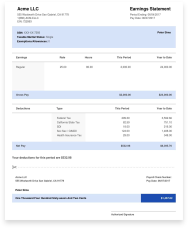
Here's a clear example. A worker with a $52,000 yearly salary earns $2,000 in biweekly gross pay. Each pay stub takes that $2,000 and cuts:
- FICA: $153 (6.2% Social Security + 1.45% Medicare)
- Federal tax: ~$156 (2026 IRS withholding tables, single filer, standard W-4)
- State tax: ~$80 (varies by state)
- Health plan: $120
- 401(k) (5%): $100
Net pay lands around $1,391 per period, or about $36,166 as net yearly pay. The headline salary is $52,000. The take-home is closer to $36K. This simple example takes every tax on the full $2,000. If the health plan and 401(k) come out pre-tax, the tax lines shrink a little and take-home rises. Getting this split right on every stub keeps workers sure of their pay. It also guards your business in any audit or dispute.
How to Calculate Annual Salary
The basic formula to calculate annual salary starts from the hourly rate. Times the hourly rate by hours per week, then by 52 weeks. For a typical full-time role: $25/hour × 40 hours × 52 weeks = $52,000 yearly salary. That's your hourly rate to annual salary swap in one line.
Now apply it to a real employer case. You hire a salaried worker at $60,000/year. Here's the 2026 split your payroll system runs:
- Gross yearly: $60,000
- Social Security (6.2%): $3,720 (taken on wages up to the 2026 wage base of $184,500)
- Medicare (1.45%): $870
- Federal tax: ~$5,020 (2026 IRS withholding tables, single filer, standard W-4; varies by W-4 picks)
- State tax: varies
Net take-home lands around $50,390 before state tax and extras like health plans or 401(k). Your business also matches the 6.2% Social Security and 1.45% Medicare as the employer share. That's $4,590 in employer FICA on top of the $60,000 salary. Add FUTA (usually $42 per worker: 0.6% of the first $7,000 when you get the full state credit) and your state jobless tax.
The Social Security wage base changes most years. Bake that into your payroll system each year. For any worker earning below $184,500, the 6.2% applies to their full salary. Above that line, only Medicare goes on. Setting a salary near the cap? Factor the employer-side match into your true cost of hire.
What Is Annualized Salary?

Annualized salary is a full-year figure firms use for part-time, seasonal, or mid-year hires who won't work the full 12 months. A teacher's aide hired in September at $48,000/year is annualized at $48,000 even though they'll only earn about $16,000 that calendar year. It's handy for perks, offer letters, and pay matching.
For small business owners, the annualized salary math comes up most often with new hires mid-year. Say you bring someone on July 1 at a $60,000/year rate. They'll work six months of 2026. So their split-year salary is $60,000 × (6/12) = $30,000. Log $60,000 as the annualized salary on the offer letter. Report the $30,000 they really earn on the W-2.
This matters for perks too. 401(k) match, PTO buildup, and bonus rules often scale with the annualized figure. Not the part-year amount. Your payroll system needs both numbers. That way, the right amount hits each pay stub and the right total shows up at year-end. When in doubt, write the annualized rate in the offer letter. Let the pay period math handle the rest.
Annual Salary vs. Annual Income
Annual salary vs annual income sounds like a word game. For employers, it's a real bookkeeping split. Base salary is the set contract amount. Annual income (or total yearly pay) is all the worker truly earned. That covers base salary plus bonuses, overtime pay, tips, and any other taxed wages.
A $60,000 base salary worker who picks up $5,000 in bonuses and $2,000 in overtime ends the year with $67,000 of yearly income. Their W-2 Box 1 includes that full figure (less pre-tax deductions like 401(k) contributions), not just the base. Looking at adjusted gross income for tax forms? AGI comes from income, not salary. This keeps offer letters clean. It also guards you during audits, since you're not pumping up the salary number with extra pay.
What Does Annual Salary Mean for Your Business?
Zoom out from the meaning: what does annual salary mean for day-to-day work at a small business? It's the base of nearly every payroll choice you make. Here are three spots it shows up for small business owners:
Offer Letters and Salary Talks
The job contract locks in the gross yearly figure. Salary talks point to this number. Not net pay. Not total pay. Log it with care. Any gap between what you quoted and what shows on the pay stub creates fights you don't have time for.
Rules and Record-keeping
Every pay stub your business issues needs to show the split. That means gross pay, payroll cuts, Social Security, Medicare, federal and state tax, and net pay. Those line items match back to the annual salary figure. They feed straight into year-end W-2 forms. Clean stubs are also what workers hand landlords, lenders, and the IRS when they need to prove income.
Benefits Setup
401(k) matches and other salary-based perks run as a share of annual salary. A 5% 401(k) match on a $60,000 salary is $3,000/year, spread across pay periods. If the salary figure is wrong, every downstream number is wrong.
The key point is that annual salary ties straight to records. Need clean, legal pay stubs across every worker? A tool like PayStubs.net built for small firms gives you a simple start. Our paystub generator handles the payroll tax math. It shows gross-to-net in a clear way. It keeps your records ready for audits. That one form bridges the salary number and the real money in your workers' accounts, tax bracket by tax bracket.
You Might Also Like
- How to Access Pay Stubs
- How to Get W2 From Previous Employer
- Pay Stub vs Payslip
- Is PTO Taxed?
- 3 Types of Taxes
Conclusion
Annual salary is the pre-tax, agreed figure your business sets for a 12-month span. It's the base for payroll, perks, and year-end forms. Get the number right in the offer letter. Log it well on every pay stub. Treat it as apart from annual income or total pay.
Need clean, steady pay stubs for your team? Use our paystub generator to make pay records with built-in tax math. Your set annual salary stays the same every pay period.



Frequently Asked Questions
Similar Articles



We’ve helped numerous individuals and businesses create professional documents! Create yours today!