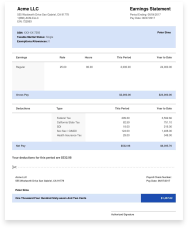
Read a Canadian pay stub top to bottom in four blocks. First comes gross pay and hours worked.
Next are statutory deductions: CPP or QPP, EI, and income tax. Then any other deductions, such
as benefits, followed by net pay. Check the year-to-date column last, since it is the field
most often missing.
These are the lines your employees will ask you about, so it's worth knowing each one cold.
Gross Pay
Total earnings before anything comes off. That includes regular hours, overtime, commissions,
and bonuses. For hourly staff, the stub should show the rate and the hours so the math is
checkable. If an employee disputes their pay, this is the first line you'll both look at.
CPP and EI
Canada Pension Plan and Employment Insurance are the two statutory deductions every Canadian
employer handles. Both are a percentage of eligible earnings. Both stop once the employee hits
that year's annual maximum. You're not just withholding these. As the employer, you pay your
own share on top.
Federal and Provincial Income Tax
Two separate withholding streams apply here, and the amounts depend on the employee's TD1 forms
and where they work. An employee who moves provinces mid-year will see this line shift. That
often catches people off guard, so flag it before they call you about it.
Other Deductions
Anything beyond the statutory items sits here: benefit premiums, union dues, RRSP amounts,
garnishments. Each one needs its own line rather than a lumped "deductions" total. Employees
have a right to see what was taken and why.
Net Pay and Year-to-Date
This is the number your employee actually checks first, and the one they'll question if it
looks off. Running totals since January 1 sit alongside it, and that's the field skipped most
often. Stubs missing those totals get rejected for mortgage and rental applications. Your
employee then comes straight back to you for a corrected copy.