Is Overtime Calculated Weekly or Biweekly? (2026 Guide)
By Jaden Miller , June 3 2026

If you run biweekly payroll, one assumption can cost you real money. Many think overtime kicks in after 80 hours in the two-week pay period. It doesn't. So is overtime calculated weekly or biweekly? The answer is weekly, every time. It doesn't matter how often you cut checks. This guide explains how overtime actually works and when it starts. You will see how to calculate it and stay compliant. You can use full payroll software or a simple pay stub generator.
Key Takeaways
- Overtime is calculated weekly, never by the biweekly pay period, even when you pay every two weeks.
- The Fair Labor Standards Act (FLSA) sets the overtime threshold at 40 hours in a single workweek. You cannot average hours across two weeks.
- Overtime is paid at time and a half the employee's regular rate of pay.
- Only hours actually worked count toward overtime. Vacation, sick, and holiday hours do not.
Is Overtime Calculated Weekly or Biweekly?
Wondering is overtime calculated weekly or biweekly? It is calculated weekly, not biweekly. This is true even if you run a biweekly pay period. Across the United States, the FLSA requires overtime on a weekly basis. The trigger is hours worked beyond 40 in a single workweek. You cannot average two weeks together. Each workweek stands on its own when you calculate overtime.
Here is the rule that trips up most employers. Say an employee works 45 hours in week one and 35 hours in week two. The pay period total is 80 hours. It might look like no overtime is due. Wrong. You still owe 5 hours of overtime for week one, because that week crossed 40. The light week does not cancel it out. That distinction should show clearly on the biweekly pay stub you issue.
One more wrinkle: a workweek does not have to line up with your pay period. Your biweekly period might run the 1st through the 14th. But a single seven-day workweek can straddle the end of one period and the start of the next. Track overtime by the workweek, not the pay period dates.
When Does Overtime Start?

Overtime starts once a non-exempt employee works more than 40 hours in one workweek. Only hours actually worked count toward that threshold. Vacation, sick, and holiday hours do not. Some states, like California, also require daily overtime past eight hours in a single day. Others, including Illinois and Wisconsin, follow the federal weekly rule, so review California's payroll rules or your own state's requirements.
Your workweek is any fixed, recurring period of 168 hours (seven consecutive 24-hour days). You set when it starts, but once you set it, keep it consistent. It also helps to know exactly how many pay periods are in a year for your schedule. Biweekly payroll produces 26 of them.
Watch the paid-leave trap. Say an employee works 38 hours and takes 8 hours of holiday pay. That is 46 paid hours but only 38 hours worked. No overtime is owed. Paid leave is not "hours worked." Healthcare employers should also know the 8 and 80 rule. This is an FLSA alternative that uses a 14-day window for hospital staff. Public safety agencies may instead use the Section 7(k) exemption. This sets overtime over a longer work period.
How to Calculate Overtime on Biweekly Payroll
If you are still asking is overtime calculated weekly or biweekly, the math itself settles it. Calculating overtime on biweekly payroll comes down to four steps, repeated for each workweek in the period.
- Total each workweek separately. Add up hours for week one, then week two. Never combine them.
- Find hours over 40. Anything above 40 in a single week is overtime.
- Figure the regular rate of pay. This includes the hourly rate plus nondiscretionary bonuses, shift premiums, and piece rate earnings, not just base wage.
- Pay time and a half. Multiply overtime hours by 1.5 times the regular rate, the rate often called time and a half.
Here is a realistic 2026 example. A worker earning $18 per hour puts in 45 hours in a workweek. Regular pay is 40 × $18 = $720. The overtime rate is $27 per hour, so 5 overtime hours add $135. Total for that week is $855.
Real scenarios make this concrete. A restaurant line cook at $16 per hour works 47 hours during a busy holiday week. Even if she works only 33 hours the next week, you owe 7 overtime hours at $24 for that first week. A warehouse worker at $19 per hour hits 50 hours in a peak week. That earns 10 overtime hours at $28.50. It adds an extra $285 to that check. Running these numbers against ready-made pay stub templates keeps the math consistent.
Who Qualifies for Overtime: Exempt vs Non-Exempt

Non-exempt employees, typically hourly workers, are entitled to overtime. Exempt salaried employees generally are not. They stay exempt only if they meet both a salary threshold and a duties test set by the Department of Labor.
Do not assume that paying a salary makes someone exempt. Understanding what exempt employee status actually means matters here. The DOL salary threshold has changed in recent years and remains subject to updates. Verify the current figure on DOL.gov before you classify anyone. Misclassifying a non-exempt worker as exempt is one of the most expensive payroll mistakes a small business can make.
How Overtime Shows Up on a Pay Stub
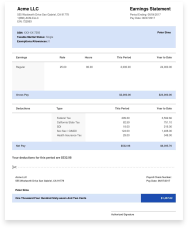
A correct pay stub lists overtime as its own line, usually labeled "OT" or "Overtime," separate from regular hours. You should see regular hours (40) and overtime hours listed on their own rows, each with its rate. They sit right alongside the standard payroll deductions every stub carries.
Check that the overtime rate is exactly 1.5 times the regular rate shown. Confirm the overtime hours match what the employee actually worked. Clean, itemized stubs are not just good practice. They are your evidence if the DOL Wage and Hour Division or an employee ever questions a paycheck.
Compliance Risks and How to Avoid Them
Getting overtime wrong is costly. The penalties include back pay for unpaid overtime. You may also owe an equal amount in liquidated damages. Add potential DOL Wage and Hour Division action. These add up fast across multiple employees and multiple pay periods. They rank among the most common payroll mistakes employers face.
The fix is simple: track hours by the workweek, not the pay period. Set an alert in your timekeeping system when any employee hits 35 hours in a single week. That buffer gives you time to adjust the schedule or approve the overtime on purpose. Keep accurate records for every workweek so your payroll matches your stubs.
You Might Also Like
- How Many Pay Periods Explained: The Pay Period Basics
- Semi-Monthly Pay: What It Means
- How to Calculate Gross Weekly Pay
- Monthly Salary Meaning and How It Works
- Net vs Gross Income: Key Differences
Conclusion: Is Overtime Calculated Weekly or Biweekly?
So, is overtime calculated weekly or biweekly? For your business, the bottom line is straightforward: overtime is calculated weekly, never biweekly. Evaluate each workweek on its own, never average two weeks together, and pay time and a half on every hour past 40. Track hours week by week, classify employees correctly, and keep itemized records so your pay stubs hold up under scrutiny. Need to produce accurate, professional documentation for your team? Use our paystub generator to create compliant pay stubs with overtime calculated correctly, every time.



Frequently Asked Questions
Similar Articles



We’ve helped numerous individuals and businesses create professional documents! Create yours today!