Payroll for Charities: A Complete 2026 Guide
By Jaden Miller , August 18 2026

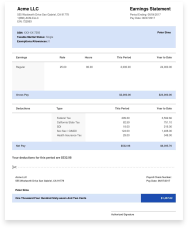
Running payroll for charities is where good intentions meet hard IRS rules. Your charity may be tax-exempt, but that status does not cover payroll taxes. A missed deposit or a misclassified worker can trigger penalties your mission budget cannot absorb. Most charities run lean, with a small finance team, tight grant dollars, and no room for rework. Below is what you owe, how to set payroll up the right way, and which forms and deadlines apply. A reliable pay stub generator helps keep those records audit-ready.
Key Takeaways
- Tax-exempt does not mean payroll-tax-free. Charities still withhold and remit FICA on employee wages.
- 501(c)(3) organizations are exempt from FUTA. 501(c)(4), (c)(6), and (c)(7) groups are not.
- Allocate staff payroll across program, administrative, and fundraising functions for Form 990.
- Key deadlines: W-2 and 1099-NEC by January 31, Form 941 each quarter, and Form 990 five months and 15 days after your fiscal year ends.
- Accurate pay stubs protect your charity at audit and give staff proof of income.
What Is Payroll for Charities?
Payroll for charities, sometimes called payroll for nonprofits, is the work of paying staff and meeting the tax and reporting duties that come with it. The rules apply to any charitable organization with paid staff. The tax-exempt status the IRS grants a 501(c)(3) covers corporate income tax. It does not free the charity from its duties as an employer. If your charity pays staff, you withhold income tax, withhold and match FICA, file payroll tax returns, and report wages each year. The same rules that govern a small business govern your charity, with a few breaks on top.
The real difference is context. A charity answers to funders, a board, and the public. That makes payroll accuracy a matter of trust, not just rules. Clean records signal good stewardship. The nonprofit sector employs millions of people. They work at food banks, faith-based groups, youth programs, animal shelters, and community health centers. Each one runs payroll under these same federal rules. Whether you pay one part-time coordinator or fifty staff, the duties scale with you. Build the process right from the first hire.
A Note for UK Charities
If you handle payroll for charities in the UK rather than a US nonprofit, the framework differs. You register as an employer with HMRC, run payroll under PAYE, and follow Charity Commission guidance. Gift Aid is handled apart from staff pay. The rest of this guide focuses on US rules for 501(c) groups.
Do Charities Pay Payroll Taxes?

Yes. Tax-exempt status covers income tax, not payroll tax. Charities must withhold and remit FICA (7.65% Social Security and Medicare) and federal income tax on employee wages. The key break: 501(c)(3) groups are exempt from FUTA, but 501(c)(4), (c)(6), and (c)(7) groups are not. State SUTA rules vary.
Here is the part of payroll for charities that matters most for your budget. Every employee's wages are subject to FICA. It splits into Social Security at 6.2% and Medicare at 1.45%. That is 7.65% withheld from the worker and a matching 7.65% paid by your charity. Social Security applies up to a yearly wage base that the IRS resets each year. Medicare has no cap. High earners owe an extra 0.9% Additional Medicare Tax that you withhold but do not match. You also withhold federal income tax based on each worker's Form W-4. This sits on top of the usual payroll deductions, and most states want income tax withheld too. Plan for the employer match as a real line item. On a $50,000 salary, your charity's FICA share alone runs about $3,825 a year.
Federal unemployment tax is where charities catch a real break. A 501(c)(3) is exempt from FUTA entirely. Other exempt types owe it like any employer. That includes 501(c)(4) social welfare groups, (c)(6) trade associations, and (c)(7) social clubs. State unemployment tax (SUTA) is separate. Most states let a 501(c)(3) pick one of two methods: standard contributory or reimbursable. Under the reimbursable option, you repay the state only for benefits your former employees actually claim. Churches and some religious groups may also opt out of FICA in certain cases. Take a food bank with eight paid staff. It withholds and matches FICA, skips FUTA, and likely picks the reimbursable SUTA route to control cost.
How to Set Up Payroll for Charities
Setting up payroll for charities follows a clear order. Get each step right at the start and the monthly run becomes routine.
- Obtain an EIN. Apply for an Employer Identification Number from the IRS before you hire. It is free, takes minutes online, and identifies your charity on every payroll filing and deposit.
- Register for state payroll taxes. Sign up with your state for income tax withholding and unemployment tax. If you work in more than one state, register in each one where employees physically work. That includes remote staff, since the state where the work happens sets the rule.
- Classify every worker correctly. Decide whether each person is an employee or an independent contractor before their first payment. The next section covers the test. Get it wrong and you owe back taxes and penalties.
- Collect onboarding forms. Have each new hire fill out Form W-4 for federal withholding, any state withholding form, and Form I-9 to verify work eligibility. Keep these on file from day one. Auditors and grant reviewers expect to see them.
- Set a pay schedule and payment method. Choose weekly, biweekly, or semimonthly, and offer direct deposit to cut check-handling costs and speed up payday. A steady schedule helps staff budget and keeps your records clean. If you offer benefits such as a 403(b) plan (the nonprofit version of a 401(k)), set up those deductions here too.
- Enroll in EFTPS before your first run. Sign up for the IRS Electronic Federal Tax Payment System. It is free, lets you schedule deposits ahead of time, and gives instant proof. This heads off the most common cash-flow mistake charities make. A paper check that arrives late can draw a penalty of 2% to 10% of the deposit.
- Run payroll, remit, and document. Each period, work out gross pay, withhold taxes, pay net wages, and deposit the withheld amounts on schedule. Issue a pay stub for every payment using ready-made pay stub templates. Miss a deposit deadline and a small charity's payroll turns into a costly problem fast. Automate it where you can.
A small example shows how light this can be. A church with one full-time pastor and a part-time admin runs two paychecks a pay period. It withholds FICA and income tax, deposits through EFTPS, and hands each staff member a clear pay stub. The whole cycle takes minutes once the setup is done.
Employees vs. Independent Contractors

Worker classification is where charities slip up most, and getting it wrong is the single costliest payroll mistake. Correct employee classification protects you from back taxes and penalties. The IRS weighs three things: who controls the work, who controls the money side, and how lasting the working relationship is. A program coordinator you supervise daily is an employee. A graphic designer you hire for one campaign is usually a contractor.
Two cautions for charities. First, executive pay must meet the reasonable compensation standard. Charities report top pay on Schedule J of Form 990, so record how you set salaries using board minutes or a salary comparison. Overpay and the IRS can levy excise taxes on both the person and the charity's managers. Second, never label staff as 1099 contractors to dodge the employer FICA match. The IRS flags this pattern. If a worker is reclassified, you owe back taxes, the FICA you skipped, and penalties going back years. When a worker's status is truly unclear, file Form SS-8 and let the IRS decide rather than guessing.
Payroll Tax Forms and Deadlines
Payroll for charities means filing the same core forms as any employer, plus the yearly Form 990. A simple calendar keeps you from missing a date. Use this table as your baseline.
| Form | Purpose | Deadline |
|---|---|---|
| Form W-2 / W-3 | Report employee wages and withholding | January 31 |
| Form 1099-NEC | Report contractor payments of $600 or more | January 31 |
| Form 941 | Quarterly federal payroll tax return | April 30, July 31, October 31, January 31 |
| Form 940 | Annual FUTA return (non-501(c)(3) only) | January 31 |
| Form 990 | Annual information return | 15th day of the 5th month after fiscal year-end |
For a calendar-year charity, the Form 990 deadline lands on May 15. The version you file depends on size. Charities with gross receipts under $50,000 file the 990-N postcard. Those under $200,000 (and under $500,000 in assets) may file the 990-EZ. Larger charities file the full Form 990. The IRS now wants most of these returns e-filed. Set up e-filing rather than mailing paper. If your fiscal year does not match the calendar, count five months and 15 days from your year-end to find your date. File Form 8868 if you need a six-month extension.
One rule deserves a highlight. Miss Form 990 for three years in a row and the IRS revokes your tax-exempt status on its own. Getting it back is possible but slow and paperwork-heavy. Set a recurring reminder and protect the status your charity depends on. If you do miss an employment-tax deadline, file and deposit as soon as you can. Penalties grow with time, and the IRS may waive them for good cause.
Allocating Payroll Costs by Program
For most charities, payroll is the largest expense, so payroll for charities is as much about how you split each salary as how you pay it. Grant funders and Form 990 both require functional expense reporting. That means assigning each salary across three buckets: program services, management and general, and fundraising. A generic payroll run will not produce this view, so build it into your process.
The method is simple once staff track their time. Assign each person's pay to functions based on the work they actually do. Say a program coordinator spends 70% of their hours on a meals outreach program and 30% on admin. Then 70% of their salary posts to program expense and 30% to management and general. Apply the same logic to anyone who works across functions.
Two habits keep this clean. First, have staff who split their time log it. Even a rough percentage updated each quarter helps your numbers hold up under a grant review. Second, reconcile your totals against your payroll records every period rather than scrambling at year-end. The full Form 990 reports these categories on its Statement of Functional Expenses. The work you do each pay period feeds straight into your annual return.
If you can, choose payroll or accounting software that lets you tag wages by program or grant as you enter them. That turns functional reporting into a by-product of payroll, not a separate year-end project. Good allocation does more than satisfy auditors. It shows funders that a healthy share of their dollars reaches your mission. That is what they want to see before they renew, and it keeps restricted grants from being questioned later.
Best Payroll Software for Charities
The right payroll for charities tool depends on your size and how much you want to handle in-house. As you weigh options, put the features that actually matter for a charity first:
- Nonprofit pricing or discounts. Many providers offer reduced rates for registered 501(c)(3) organizations.
- Fund and grant allocation. Look for the ability to tag wages by program or grant so functional reporting is built in, not bolted on.
- Tax-exempt setup. The platform should handle the FUTA exemption and reimbursable SUTA correctly.
- Integrations. Sync with your accounting and time-tracking tools to cut manual entry.
Several well-known platforms fit charities well. The table below shows where each tends to fit:
| Platform | Best Fit for Charities | Strength |
|---|---|---|
| Gusto | Small to midsize charities | Simple interface, nonprofit-friendly pricing |
| QuickBooks Payroll | Charities already using QuickBooks | Tight accounting integration |
| ADP | Larger or multi-state charities | Deep HR and compliance features |
| OnPay | Budget-conscious nonprofits | Low cost, direct nonprofit support |
Gusto is popular with smaller charities for its clean interface, automated tax filings, and nonprofit-friendly pricing. QuickBooks Payroll is the natural choice if your charity already runs its books in QuickBooks. Wages and functional categories flow straight into your accounting. ADP scales to larger charities that need deep HR features and multi-state support. Rippling is worth a look if you want HR and nonprofit payroll software in one platform. OnPay is a simple, lower-cost option that supports nonprofits directly and handles the FUTA exemption without a workaround. Whichever you consider, compare current pricing, ask about a nonprofit discount, and confirm each handles tax-exempt setup and fund allocation before you commit.
There is also the build-versus-outsource question. Keeping payroll in-house with software gives you control and lower fees. That works when one staff member can own it and the headcount is small. The trade-off is that the duty for accuracy and deadlines stays with you. The choice to outsource payroll usually comes down to capacity. Handing it to a payroll service or a professional employer organization (PEO) costs more. In return, it offloads the filings, deadlines, and payroll tax compliance risk. That can be worth it when your team is stretched, your board wants the risk reduced, or you operate across several states. For many charities, software handles it well until growth or complexity makes outsourcing the better trade.
Payroll for Charities: Common Mistakes to Avoid
A few common payroll mistakes show up again and again, and each carries a real cost:
- Paying volunteers a stipend without a W-2. Regular stipends can make a "volunteer" an employee in the eyes of the IRS. That triggers reclassification, back taxes, and unpaid withholdings the charity now owes.
- Misclassifying fundraising staff as 1099 contractors. Done to avoid the FICA match, this is a pattern the IRS actively flags. The bill for back taxes and penalties usually dwarfs the match you tried to save.
- Missing the three-year Form 990 rule. Three missed filings in a row mean automatic loss of tax-exempt status. After that, donations may stop being deductible, and winning it back is costly.
- Skipping state payroll registration. Hire a remote employee in another state and you owe that state's payroll taxes. Many charities miss this until a notice and penalty arrive.
- Mishandling overtime and minimum wage. Charities are not exempt from the Fair Labor Standards Act. Treating hourly staff as salaried to skip overtime, or paying below minimum wage, opens you up to wage claims and back pay.
You Might Also Like
- QuickBooks Payroll for Pay Stubs
- What Is a W-2 Form and Who Needs One
- How to Estimate Quarterly Taxes for 1099 Income
- Understanding a Biweekly Pay Stub
- California Payroll Tax Explained
Conclusion
Payroll for charities comes down to a few habits. Remember that tax-exempt status does not cover payroll taxes. Classify every worker correctly, split salaries by function, and never miss a filing deadline. Get those right and payroll becomes a steady, low-stress part of running your charity rather than an audit risk. The system only works as well as your records, so keep them clean and consistent. Need to produce professional pay records for your staff? Use a reliable paystub generator to create accurate pay stubs in minutes.



Frequently Asked Questions
Similar Articles



We’ve helped numerous individuals and businesses create professional documents! Create yours today!