What Is Net Salary? A Business Owner's Guide (2026)
By Jaden Miller , September 18 2026

If you run payroll for your team, getting net salary right isn't optional. One mistake can lead to underpaid staff, compliance issues, and a loss of trust. So what is net salary, exactly? It's the amount your employees take home after every deduction is pulled from their gross pay. This guide covers how to calculate net salary, which deductions apply, and what you owe as an employer in 2026. A reliable pay stub generator can help you record these figures each pay period.
Key Takeaways
- Net salary is the employee's take-home pay after all required and optional deductions are pulled from gross pay
- Calculate it by subtracting pre-tax deductions, taxes (federal, state, FICA), and post-tax deductions from gross pay
- Employers must calculate and record net salary on every pay stub
- 2026 FICA rates: 6.2% Social Security (up to $176,100 wage base) plus 1.45% Medicare
- Misclassifying deductions or missing W-4 updates are the most common payroll errors
What Is Net Salary?
Net salary is the amount an employee takes home after all deductions are pulled from gross pay. These include federal and state income taxes, Social Security, Medicare, and chosen benefits like health insurance or retirement plans. It's also called net pay or take-home pay.
For your employees, net salary is the number that matters most. It's what lands in their bank account each pay period. They use it to pay rent, cover bills, and plan their budget. As a business owner, you need to get this right on every paycheck. "What is my net income?" is one of the most common questions staff ask. Getting it right from the start saves time.
What Is Net Salary vs. Gross Pay?

Gross pay is the total amount an employee earns before any deductions. Net salary is what remains after those deductions are applied. For a deeper look, see our guide on net vs. gross income.
Here's a quick example. An employee earning $60,000 per year has a gross monthly pay of $5,000. After federal and state taxes, FICA, and benefit deductions totaling about 30%, their net monthly income is about $3,500. The net monthly income meaning is simple: it's what hits the employee's bank account each month.
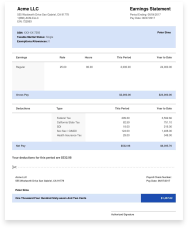
Both figures appear on every pay stub you issue. Gross pay shows what you're paying. Net salary shows what the employee receives. If you're budgeting labor costs, account for both, plus your employer-side tax costs.
How to Calculate Gross Pay
Before you can find net salary, you need to know gross pay.
For salaried staff, divide the annual salary by the number of pay periods in a year. For hourly workers, multiply the hourly rate by the hours worked in each pay period. Add overtime at 1.5 times the regular rate for hours beyond 40 in a workweek.
| Pay Schedule | Periods Per Year | $60,000 Salary Per Period |
|---|---|---|
| Weekly | 52 | $1,153.85 |
| Biweekly | 26 | $2,307.69 |
| Semi-monthly | 24 | $2,500.00 |
| Monthly | 12 | $5,000.00 |
Your pay schedule affects how deductions are figured each cycle, so stay consistent. Not sure which schedule works best? Our guide on how many pay periods in a year covers the pros and cons of each option.
Deductions That Reduce Net Salary

To fully grasp what is net salary, you need to know which deductions come out of gross pay. These fall into two groups: required ones set by law and optional ones the employee picks.
Mandatory Deductions
These are non-negotiable. Every employer must withhold and remit them:
- Federal income tax: Based on the employee's Form W-4 filing status, dependents, and extra withholding picks
- State income tax: Rates vary by state. Nine states (Alaska, Florida, Nevada, New Hampshire, South Dakota, Tennessee, Texas, Washington, Wyoming) have no state income tax
- Social Security tax: 6.2% of gross wages up to the 2026 wage base of $176,100
- Medicare tax: 1.45% of all gross wages, plus 0.9% on earnings over $200,000 for single filers
- Local taxes: Some cities and counties impose additional payroll taxes
- Wage garnishments: Court-ordered deductions for child support, unpaid debts, or tax levies
Social Security and Medicare together make up FICA (Federal Insurance Contributions Act) tax. For more on Medicare, see our Medicare tax guide. As the employer, you also match the 6.2% Social Security and 1.45% Medicare from your own funds.
Voluntary Deductions
These are benefits your employees choose to participate in:
- Health, dental, and vision insurance premiums
- 401(k) or other retirement plan contributions
- Health Savings Account (HSA) or Flexible Spending Account (FSA) deposits
- Life and disability insurance premiums
- Union dues
- Charitable payroll deductions
Pre-Tax vs. Post-Tax Deductions
Not all deductions affect net salary the same way. Pre-tax deductions lower taxable income before taxes are figured. Post-tax deductions come out after taxes.
Pre-tax deductions include 401(k), health insurance premiums, and HSA deposits. These lower taxable income, which means less federal income tax, state income tax, and FICA owed. That helps both you and your employees. To find these figures on tax forms, check our guide on adjusted gross income on W-2.
Post-tax deductions include Roth 401(k), wage garnishments, and some insurance premiums. These don't lower the tax bill. The employee pays taxes on the full gross amount first.
The order matters. Apply pre-tax deductions before figuring taxes. Then apply taxes to the adjusted gross. Then subtract post-tax deductions. Getting this wrong inflates the tax bill and cuts net salary.
How to Calculate Net Salary Step by Step
To calculate net salary, start with gross pay and subtract pre-tax deductions like health insurance and 401(k). Then subtract federal income tax, state income tax, and FICA from the adjusted amount. Last, subtract any post-tax deductions. The result is the employee's net salary for that pay period.
Here's the formula:
Net Salary = Gross Pay − Pre-Tax Deductions − Taxes − Post-Tax Deductions
Follow these five steps:
- Determine gross pay for the pay period (salary ÷ periods, or hours × rate)
- Subtract pre-tax deductions (health insurance, traditional 401k, HSA)
- Calculate taxes on the adjusted gross amount (federal, state, FICA)
- Subtract post-tax deductions (Roth 401k, garnishments)
- The result is net salary, the amount deposited into the employee's account
Once you know what is net salary for a given pay period, verify the paycheck before it goes out. The monthly net income meaning is the same figure viewed on a monthly basis. These steps work the same for salaried and hourly workers.
Net Salary Calculation Example: Employer Perspective
Here's a real example. You've hired a part-time worker at $18 per hour, working 35 hours per week on a biweekly pay schedule.
Gross pay per pay period: $18 × 35 hours × 2 weeks = $1,260
| Deduction | Rate/Amount | Per Pay Period |
|---|---|---|
| Federal income tax (12% bracket) | 12% | $131.04 |
| State income tax (Texas) | 0% | $0.00 |
| Social Security (employee) | 6.2% | $78.12 |
| Medicare (employee) | 1.45% | $18.27 |
| Health insurance (pre-tax) | Flat | $85.00 |
| 401(k) contribution (pre-tax, 3%) | 3% | $37.80 |
| Total deductions | $350.23 | |
| Net salary | $909.77 |
Now here's what is net salary from the employer's side. You don't just pay the employee $1,260 gross. You also owe employer-matching FICA contributions:
| Employer Cost | Rate | Amount |
|---|---|---|
| Employer Social Security match | 6.2% | $78.12 |
| Employer Medicare match | 1.45% | $18.27 |
| Total employer-side cost | $96.39 |
Total cost to your business per pay period: $1,260 + $96.39 = $1,356.39. Your employee takes home $909.77 of that.
Why Net Salary Matters for Your Business
Correct net salary numbers affect your business in real ways. When employees see the right figures on their pay stubs, it builds trust. When those numbers are wrong, it leads to disputes and lost confidence. Every detail on the earnings statement should be right.
Net salary also matters when staff need proof of income for leases, car loans, or home loans. If your pay stubs don't show the right net pay, the process stalls. A proper employment verification letter on hand can speed things up.
From a planning view, knowing the true cost of each worker (gross pay plus employer taxes and benefits) helps you budget well. Your labor costs go well beyond what is net salary alone.
Employer Responsibilities for Net Salary Compliance
As an employer, you must calculate net salary right and document it well. Knowing what is net salary on paper means nothing if your records are wrong.
Withholding: You must withhold the correct amount based on each W-2 employee's Form W-4. When an employee submits a new W-4, update their withholding right away. Delays can result in IRS penalties.
Tax remittance: Federal payroll taxes must be sent on time. This can be semi-weekly or monthly based on your total tax bill. State rules vary. Late payments trigger penalties and interest.
Pay stub rules: Most states require itemized pay stubs showing gross pay, each deduction, and net salary. Even where it's not required, detailed stubs protect your business. Our paystub templates make it easy to create the right records.
Record-keeping: The IRS requires payroll records for at least 4 years. The DOL requires at least 3 years. Keep records of every pay period, including gross pay, deductions, and net salary for each worker.
Common payroll mistakes that skew net salary:
- Mixing up pre-tax vs. post-tax benefits, which inflates tax withholding
- Not updating withholding after employees submit new W-4 forms
- Missing state-specific tax rules (especially for remote workers in multiple states)
You Might Also Like
- What Is Advice Number on Pay Stub
- Pay Stub vs. Payslip: What's the Difference?
- Is PTO Taxed? What You Need to Know
- How to Show Proof of Income If Paid in Cash
- Where to Find HSA Contributions on W-2
Conclusion
Knowing what is net salary is key to running good, compliant payroll. It's the amount your workers take home after all deductions. Getting it right protects both your team and your business. Stay current with 2026 tax rates, keep W-4 records up to date, and list every deduction on each pay stub.
Need to create pay stubs for your employees? Use our paystub generator to produce correct, compliant pay records in minutes.



Frequently Asked Questions
Similar Articles



We’ve helped numerous individuals and businesses create professional documents! Create yours today!