Wyoming Tax Calculator: 2026 Employer Payroll Guide
By Jaden Miller , June 2 2026

You ran your payroll through a paycheck calculator. The take-home number looks great. But for a business owner, that number tells only half the story. It shows what your employees keep after federal income tax and FICA. It says nothing about the taxes you owe as the employer. Those are the costs that trip up new Wyoming businesses.
This guide breaks down what a Wyoming tax calculator shows you. It also covers the employer-only taxes it leaves out, plus the 2026 rules that keep you in the clear.
Key Takeaways
- Wyoming has no state income tax. A Wyoming tax calculator nets out only federal income tax and FICA for your employees.
- You still owe SUTA (0.9% to 8.5%, on the first $33,800 of wages in 2026) and FUTA on top of that.
- Workers compensation is required in Wyoming, even with one employee. It runs through the state fund.
- You file Wyoming payroll taxes each quarter through the WYUI portal.
What Does a Wyoming Tax Calculator Show You?
A Wyoming tax calculator shows take-home pay after federal income tax and FICA. It can do this because Wyoming has no state income tax. For employers, that means it covers the employee side. It does not cover your own taxes. Those include state unemployment insurance (SUTA), federal unemployment tax (FUTA), and workers compensation.
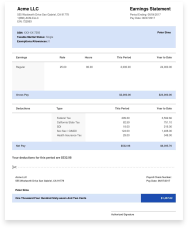
Wyoming is one of just nine states with no state income tax. No city adds a local income tax either. So there is no income tax at the state level for your team to plan around. Setup is simple. There is no state withholding form to fill out. On a pay stub, the "State Income Tax" line reads $0. Federal income tax and FICA still show up.
Wyoming State charges no personal income tax, and that keeps the overall tax burden low. The savings add up. A single filer earning $75,000 takes home about $61,300 in Wyoming, after federal income tax and FICA. That beats what the same worker keeps in a high-tax state like California, where state income tax takes another cut.
The Payroll Taxes Behind Every Wyoming Paycheck

Your workers still owe federal income tax and FICA on every paycheck. That is the part a paycheck calculator models.
Federal Income Tax Withholding
Federal income tax comes out based on each worker's Form W-4. The form captures wages, filing status, and dependents. For 2025, the standard deduction is $15,750 for single filers. So an employee earning $75,000 owes about $7,949 in federal tax. That is an effective rate near 10.6%. One tip for your team: pre-tax 401(k), HSA, and FSA payroll deductions lower taxable wages. That trims federal tax and lifts take-home pay.
FICA: Social Security and Medicare
You and your worker split these two taxes. Social Security is 6.2% from the employee and 6.2% from you. It applies up to the annual wage cap ($184,500 in 2026). Medicare adds 1.45% from each side, with no wage cap at all. High earners owe a bit more. Wages above $200,000 for single filers, $250,000 for joint filers, or $125,000 for married filing separately carry an extra 0.9% Medicare surtax. That surtax comes from the employee's pay only. You do not match it.
Employer Taxes Wyoming Requires in 2026
These taxes never show up on an employee's stub. They are yours alone. They are also the most common compliance gap for Wyoming businesses.
State Unemployment Insurance (SUTA)
Wyoming's state unemployment insurance (SUTA), also called SUI, runs from 0.9% to 8.5%. It applies to the first $33,800 of each worker's wages in 2026. Your SUTA tax rate depends on your industry and your history. New employers get a starter rate based on their industry. Employers with three or more years on the books get a rate based on their own benefit ratio. Skip registration and you pay the top 8.5% rate. You owe this tax once you pay more than $1,500 in wages in a calendar quarter. You manage all of it through Wyoming's WYUI portal.
Federal Unemployment Tax (FUTA)
FUTA is the federal tax most owners forget. The rate is 6% on the first $7,000 of each worker's wages. But a 5.4% credit for paying state unemployment on time drops your real rate to just 0.6%. You report and pay it once a year on Form 940.
Workers Compensation
Coverage becomes required the moment you hire your first employee. Wyoming runs a state-only system. You must buy workers compensation through the state fund, not from a private insurer. The fund is run by the Department of Workforce Services.
Need solid records for every employee you cover? Our pay stub templates make accurate payroll paperwork simple.
Using a Wyoming Tax Calculator to Run Accurate Payroll

You file Wyoming payroll taxes each quarter. Q1 is due April 30, Q2 by July 31, Q3 by October 31, and Q4 by January 31. You file and pay unemployment insurance through the WYUI portal. You must also report each new hire within 20 days of their start date.
If a due date lands on a weekend or holiday, it rolls to the next business day. To file, register as a Payroll Service on the WYUI site. Then upload your ICESA wage file and pay by ACH debit when you file. New hires and rehires go to the Wyoming New Hire Reporting Center within that 20-day window. Run each pay period through the calculator first. Then carry those figures onto your employees' pay stubs and your quarterly reports.
Conclusion
Wyoming's lack of a state income tax makes employee withholding simple. But it does not make you exempt. SUTA, FUTA, and workers compensation are still on your plate. All of it files quarterly through the state. Clean records also make tax preparation easier at year-end. Run your numbers, hit your deadlines, and document every paycheck. Need to generate professional pay stubs for your team? Use a reliable paystub generator to create accurate pay documentation in minutes.
You Might Also Like



Frequently Asked Questions
Similar Articles



We’ve helped numerous individuals and businesses create professional documents! Create yours today!