What Is Social Security Wages on W2? 2026 Employer Guide
By Davis Clarkson , March 19 2026

Understanding what is social security wages on w2 is a compliance requirement: every pay period you withhold Social Security taxes from your employees' wages and match them as employer. Miscalculate inclusions or exclusions and you risk over-withholding complaints, under-reporting penalties, or inaccurate W-2s. This guide covers what Social Security wages are, what's in and out, how to calculate them from pay stubs, and the 2026 wage base.
Key Takeaways
- Social Security wages are employee earnings subject to 6.2% SS tax; you withhold and match as employer
- The 2026 Social Security wage base is $184,500: withholding stops once an employee hits this threshold
- Box 3 on the W-2 reports SS wages and often differs from Box 1 due to 401(k) deferrals
- Cross-check each employee's year-end pay stub YTD against W-2 Box 3 before filing
What Is Social Security Wages on W2: Definition and FICA Rules
Social Security wages are employee earnings subject to Social Security tax withholding under FICA — 6.2% each on wages up to $184,500 in 2026. As employer, you're required to withhold and match this tax regardless of whether the employee will ever collect benefits.
Many employers ask what are social security wages on w2 versus gross wages — the distinction is which inclusions and exclusions apply. Social Security wages are one of two FICA taxes alongside Medicare; the SS portion is reported in Box 3 of each employee's W-2.
What Is Included in Social Security Wages?
Most compensation you pay counts as Social Security wages:
- Hourly wages and salaries
- Bonuses and commissions
- Tips over $20/month (when reported to you)
- Sick pay and paid time off
- Payments in-kind (goods or services in place of wages)
- Elective 401(k) contributions
That item trips up many employers: 401(k) deferrals reduce Box 1 wages but not Box 3 Social Security wages. You still withhold SS tax on the full pre-deferral amount.
What Is Excluded From Social Security Wages?
Certain payments are exempt from SS withholding and reduce your SS wage calculation:
- Reimbursed business travel expenses (at or below IRS-approved rates)
- Employer-paid health or accident insurance premiums
- Employer HSA contributions
- Employer contributions to qualified retirement plans
- Workers' compensation benefits
- Tips under $20/month
How to Calculate Social Security Wages
To calculate social security wages, start with the employee's gross pay and subtract excluded items such as employer HSA contributions and reimbursed travel expenses. The result is the SS wage amount. Multiply by 6.2% for the employee's share; you owe a matching 6.2% as the employer.
Here's how to figure social security wages step by step from a pay stub:
- Find gross pay on the employee's pay stub
- Subtract only legitimate exclusions (employer HSA, reimbursed travel)
- Remaining amount = SS wages
- Multiply by 6.2% for employee share; match it as employer
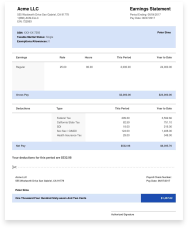
Knowing how to calculate social security wages from paystub records matters when you manually verify payroll or troubleshoot a discrepancy. Social security wages on pay stub appear labeled "OASDI" or "SS Tax" on most statements. The YTD figure on the final pay stub of the year should match Box 3 on the W-2. You can calculate social security wages from paystub data using this same process for any pay period. Platforms like ADP, Gusto, and Rippling handle the math automatically.
Need accurate pay stubs for your team? Our pay stub templates include built-in FICA calculations.
What Is Social Security Wages on W2: Box 3 vs Box 1

Box 3 of Form W-2 is where SS wages are recorded, while Box 1 shows federal income tax wages. These figures often differ because some deductions reduce Box 1 but not Box 3.
Example: An employee earning $70,000 who defers $5,000 to a 401(k):
- Box 1: $65,000 (federal income wages after 401(k) reduction)
- Box 3: $70,000 (SS wages — 401(k) deferrals do not reduce this)
Understanding what is social security wages on w2 matters for W-2 accuracy: using Box 1 instead means under-reporting. Before issuing W-2s, cross-check each employee's YTD SS wages against Box 3 — discrepancies signal a payroll error. The SSA uses Box 3 to calculate each employee's future benefits.
The 2026 Social Security Wage Base
For 2026, the Social Security wage base is $184,500. Earnings above this amount aren't subject to SS tax. The limit adjusts annually:
| Year | SS Wage Base |
|---|---|
| 2021 | $142,800 |
| 2023 | $160,200 |
| 2024 | $168,600 |
| 2025 | $176,100 |
| 2026 | $184,500 |
For high earners, this cap matters. A software developer earning $190,000 hits the $184,500 cap mid-year — stop withholding and matching at that point. Employee SS tax at the cap: $11,439 ($184,500 × 6.2%), matched by you. Medicare taxes (2.9% combined) continue with no annual cap throughout the year. Verify the current cap at ssa.gov/oact/cola/cbb.html.
You Might Also Like
- Adjusted Gross Income on W2
- Net vs Gross Income
- Pay Stub for Tax Filing
- W4 vs W2: What, Where, and When to Use Them
- Walmart W2 for Former Employees
Conclusion
Understanding what is social security wages on w2 is a payroll compliance foundation. Accurate SS wage calculation protects your business from penalties and ensures your employees' future benefit records reflect their actual earnings. Need to generate professional pay stubs for your employees with accurate SS wage calculations? Use our paystub generator to create compliant pay documentation in minutes.



Frequently Asked Questions
Similar Articles



We’ve helped numerous individuals and businesses create professional documents! Create yours today!