OASDI Meaning: What Is OASDI Tax on Paycheck?
By Davis Clarkson , December 18 2025

The OASDI meaning on your paycheck is the Social Security tax taken out to help fund future Social Security benefits. Both employees and employers pay this tax, and it helps provide financial support for millions of Americans.
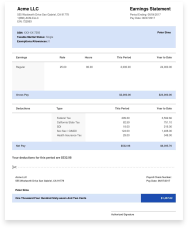
Many employees often ask, “What is OASDI deduction on my paycheck stub?” Understanding OASDI meaning, how it works, and the contribution limits can help you track your benefits. A paystub template usually includes a labeled field where OASDI appears with other taxes.
This article explains “What is OASDI tax on paycheck?” and how it affects your earnings. You’ll also find out if the tax is mandatory, who is exempt from paying it, and how it differs from federal tax.
Understanding OASDI Meaning
OASDI is the Social Security tax taken from your wages. It is part of the Social Security program and is listed as OASDI tax or Social Security tax on your check stub or W-2. Below is what you need to know about the OASDI tax:
Old Age Survivors and Disability Benefits Basics, and Why it Appears on Your Paycheck
OASDI means Old Age, Survivors, and Disability Insurance. It is one of the key federal insurance contributions administered by the Social Security Administration. The deduction is based on an employee’s earned income and appears on most eligible employees' pay stubs. Pay stubs also show figures, such as gross income, net income, FTD, and YTD.
Also, some pay stubs show GTL payroll amounts. The GTL represents taxable Group Term Life insurance benefits. It is not a deduction; it is part of your taxable wages and is reported similarly to OASDI-related wages.
The OASDI federal tax helps.
-
Build future Social Security benefits, including retirement and disability support.
-
Protect the families of deceased workers.
What OASDI Means on W-2 Forms
If OASDI taxes are withheld from your wages, the tax will be indicated on your W-2. You may find it in Box 4 of your W-2, labeled "Social Security Tax Withheld."
How Does OASDI Tax Work on Your Paycheck
OASDI tax works by taking a small percentage of your wages to provide financial support for old-age, survivors, and disability benefits. Below is what you need to know:
OASDI Tax in Payroll and OASDI Tax Rates
The current OASDI tax rate is 6.2 percent of an employee’s earned income. The tax law divides the payment between the employer and its employees. This means the employer deducts half the tax from the employee's paycheck while the employer pays the other 6.2 percent to support the program. Together, the two payments make up the 12.4 percent required under the Federal Insurance Contributions Act (FICA taxes).
However, self-employed workers follow a different rule. They pay both shares because they act as both employer and employee. They pay 12.4% OASDI under the Self-Employment Contributions Act (SECA) plus 2.9% Medicare. This is a total of 15.3% FICA tax.
Cost of Living Adjustment and Wage Base
Employees pay OASDI taxes only up to a certain taxable maximum each year, officially called the contribution and benefit base. This means once your wages exceed the annual income limit, no further OASDI tax is withheld on your check stub. For earnings in 2026, the limit is $184,500. Individuals earning this amount or larger would contribute $11,439. The employers will also contribute the same amount. For the self-employed, the OASDI tax rate remains 12.4%.
Paying OASDI Taxes Each Pay Period
Employers withhold the payments directly from your paycheck and send them to the federal government. These payments are recorded under the employee's Social Security number (SSN). This record helps the SSA track your work history and insured status. An employee’s insured status matters because it affects whether they can get benefits in the future.
Is OASDI Tax Mandatory or Can You be Exempt?
OASDI tax is mandatory for most workers; however, you may be exempt from paying the tax. Below is what you need to know.
When Is OASDI Tax Applied to Your Paycheck?
The tax is mandatory for workers who;
-
Work in full-time, part-time, or temporary jobs covered by the Social Security program.
-
Earn wages from covered employment.
-
Are self-employed.
Who Is Exempt from Paying Old Age, Survivors, and Disability Insurance Tax?
Some OASDI exemptions include;
-
Certain religious groups with approved objections.
-
Foreign government employees working in the United States.
-
State government employees who participate in a local pension plan instead.
-
Some railroad workers are covered under the Railroad Retirement Act instead of Social Security.
-
Non-resident aliens under visa categories
Who Gets OASDI Benefits
The OASDI tax deduction benefits eligible old-age, survivors and people with disabilities. The more you pay the taxes, the higher your benefits.
The OASDI tax benefits;
-
Retired or disabled workers.
-
Survivors of deceased workers.
-
Eligible workers who have reached retirement age.
-
Workers who are unable to work due to long-term illness or injury as part of the disability insurance program.
-
Families of deceased workers. They may receive monthly payments to support them financially.
How Employers Report OASDI Federal Tax

Employers are responsible for withholding OASDI tax from employee wages each pay period. It is also mandatory that they contribute their share of the tax. Employers' reporting responsibilities include:
1. Reporting OASDI Taxes to the Government
Both employee and employer shares of OASDI federal tax are forwarded to the federal government. This is one way the Social Security program is financed.
2. Reporting OASDI on Form 941 Each Quarter
Additionally, employers are required to report OASDI taxes on their quarterly payroll tax forms. This is done through Form 941, Employer's Quarterly Federal Tax Return. Correct reporting helps track each employee's contributions. This record serves as a basis for the granting of old age, survivors, and disability insurance benefits.
Also, some pay stubs show GTL payroll amounts. The GTL represents taxable Group Term Life insurance benefits. It is not a deduction, but rather part of your taxable wages and is similar to how OASDI-related wages are reported.
3. Following IRS Rules to Avoid Penalties
Furthermore, employers need to adhere to IRS regulations to avoid paying fines. They are under a legal obligation to settle any unpaid OASDI taxes. In case an employee has more than one job, each employer will report the wages and deduct taxes separately. This ensures that the taxable maximum income is not exceeded.
4. Showing Withheld OASDI tax on Form W-2
Some employers provide these reports on Form W-2, showing total OASDI taxes withheld. This helps employees verify their contributions. Proper payroll withholding and reporting protect workers’ future Social Security benefits. It can also ensure you comply with federal tax laws.
Is OASDI Tax the Same as Federal Tax and Social Security Tax?
OASDI is the formal name for the Social Security tax. However, it is different from the federal tax or federal income tax (FIT). They are both shown as separate deductions on your pay stub.
Also, OASDI tax is calculated as a percentage of wages, up to the taxable maximum. But your total income and filing status will determine how much you owe in federal income taxes. While federal tax can change based on pay stub deductions, credits, or exemptions, OASDI tax is fixed by law for covered wages.
Many employees often ask, “What is FWT on paystub?" FWT means Federal Withholding Tax. It may appear on your pay stub as Federal Income Tax, but it means the same thing. They refer to the amount of money withheld from your paycheck and sent to the IRS as a prepayment of your annual federal income tax liability.
Final Thoughts
Understanding OASDI on paycheck gives you insight into how your earnings support your Social Security benefits. This tax is mandatory and can keep individuals financially secure in the long term. Keeping track of your OASDI contributions and limits can help you better manage your personal finances and plan for the future. A certified financial planner can help you maximize your Social Security benefits. When your pay stubs accurately show your OASDI deductions, you can understand how you and your family can get the benefits you deserve.
You can easily create accurate pay stubs that reflect your OASDI deductions in just minutes. Our paystub maker lets you easily create accurate paystubs that reflect your income and deductions. Generate yours in minutes and stay on top of your earnings.



Frequently Asked Questions
Similar Articles



We’ve helped numerous individuals and businesses create professional documents! Create yours today!