How to Calculate Vacation Pay: Employer Guide (2026)
By Jaden Miller , June 2 2026

Every pay period, you owe your employees accurate vacation pay. Get the math wrong and you risk fines and payroll headaches. The fix is one clear method that fits both hourly and salaried staff. This guide shows you how to calculate vacation pay step by step. You'll get the accrual methods, the state payout rules, and what you owe when a worker leaves. Keep every figure logged cleanly with PayStubs.net.
Key Takeaways
- Hourly vacation pay equals the hourly rate times accrued vacation hours. Salaried pay equals annual salary divided by 52, then times the weeks of vacation.
- Set a clear vacation accrual rate and apply it every pay period so balances stay current.
- Seven states treat earned vacation as wages you must pay out when a worker leaves.
- "Use it or lose it" policies are illegal in California and several other states.
- Show vacation hours and vacation pay on every pay stub to keep clean records.
What Is Vacation Pay?
Vacation pay is the pay employees earn for approved time off. You fund it as the employer. People also call it paid vacation time, or paid time off (PTO). It builds up as workers log hours or finish pay periods. No federal law requires it. So each business sets its own vacation pay policy within state law.
How to Calculate Vacation Pay for Hourly Employees
To calculate vacation pay for hourly employees, multiply the hourly rate by accrued vacation hours. Say a worker earns $19 an hour and has 40 hours saved up. You owe $760. The vacation pay calculation is that simple. Those accrued hours come from your accrual rate applied to every hour on the clock.
Your vacation accrual rate is the time you grant divided by the hours worked in a year. Two weeks, or 80 hours, across 2,080 work hours gives 0.0385 hours per hour worked. Apply that rate each period to keep the accrued vacation time current.
How to Calculate Vacation Pay for Salaried Employees

For salaried staff, the vacation pay formula starts with a weekly rate. Divide the annual salary by 52. Then multiply by the weeks of vacation you offer. A manager who earns $62,400 a year makes $1,200 a week. So two weeks of vacation equals $2,400. To value one day, divide the weekly pay by the days worked. This keeps salaried employee vacation in line with annual pay.
Vacation Pay Accrual Methods Explained
Most businesses pick one of three accrual methods. Your choice depends on your pay schedule and how closely balances should track hours worked.
| Method | How It Works | Best For |
|---|---|---|
| Per Hour Worked | A fraction of an hour for each hour worked | Hourly, variable shifts |
| Per Pay Period | A fixed amount each biweekly period | Salaried schedules |
| Annual Lump Sum | The full balance granted up front | Small teams |
Per-hour accrual is the most precise for hourly crews. A lump sum is simpler, but it risks a large payout when someone leaves early. Payroll platforms like Gusto and TriNet can automate accrual for you. Still, the math is simple enough to run on your own.
How to Prorate Vacation Pay for New Hires

When an employee starts mid-year, prorate vacation days for the time left. Divide the annual vacation days you offer by 12. Then multiply by the months that remain. A full-time hire who joins in July earns about half a year's worth. For part-time staff with variable hours, per-hour accrual gives them prorated vacation on its own. They earn time only on the hours they work.
Is Vacation Pay Required by Law?
No federal law requires vacation pay. State vacation laws set the payout rules instead. Seven states treat earned vacation as wages you must pay out when a worker leaves: California, Colorado, Massachusetts, Illinois, Montana, Nebraska, and North Dakota. Florida, Texas, and Arizona generally let employers use "use it or lose it" policies, with some limits.
The U.S. Department of Labor defers to state law here. As of 2026, Colorado and Illinois have added payout rules. The California Labor Commissioner still treats earned vacation as a vested benefit that workers can't lose. If you operate there, track California payroll tax rules too.
How to Calculate Unused Vacation Pay at Termination
When an employee leaves, find the unused vacation payout. Multiply their leftover vacation hours by their final rate of pay. Say a worker on your 12-person landscaping crew quits with 32 unused hours at $22 an hour. You owe $704. In payout states, that sum is due with the final paycheck. So confirm the balance first.
Recording Vacation Pay on Employee Pay Stubs
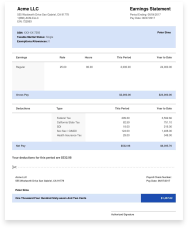
Every pay stub should show vacation clearly. List year-to-date vacation hours, vacation pay for the period, and the PTO balance left. Clean stubs protect you in an audit. They also settle employee questions before they turn into disputes. In your payroll accounting, accrued vacation is a current liability under the matching principle, so you owe it even before you pay it.
Watch for three common payroll mistakes. First, forgetting the overtime premium in a final payout. Second, leaving the accrual rate the same after a raise. Third, applying "use it or lose it" where it's banned.
Conclusion
Knowing how to calculate vacation pay comes down to three habits. Apply your accrual rate every period. Know whether your state requires a payout when a worker leaves. Record vacation clearly on each pay stub. Get those right and you stay compliant while spending less time on payroll. When you're ready, build polished records with our pay stub generator. Or start from a ready-made pay stub template.
You Might Also Like



Frequently Asked Questions
Similar Articles



We’ve helped numerous individuals and businesses create professional documents! Create yours today!