Supplemental Pay: How to Tax & Pay Employees in 2026
By Davis Clarkson , June 2 2026

When you cut your first bonus check or run overtime through payroll, the tax withholding rules shift. Get supplemental pay wrong and you'll either short the IRS or over-withhold. Then come the "why is my check smaller?" emails. The Bureau of Labor Statistics puts this at about 3.1% of total employee compensation. Even a small business hits it often. This guide walks through what counts, how 2026 payroll taxes work, and how each payment should show up on the stubs you create with a pay stub generator.
Key Takeaways
- Supplemental pay covers wages outside an employee's regular base pay. That includes bonuses, commissions, overtime, severance, back pay, and more.
- The 2026 IRS flat rate is 22% on amounts up to $1 million per employee per year. A mandatory 37% applies above $1 million.
- Employers can use the flat rate method (separate check) or the aggregate method (combined with regular wages).
- Each payment should appear as its own line item on the employee's pay stub for clean records.
What Is Supplemental Pay?
Supplemental pay is any wage an employee gets outside their base pay. That covers bonuses, commissions, overtime, severance, back pay, and shift differentials. The IRS treats these wages as a separate type of cash compensation. Employers must apply a 22% flat rate or fold the amount into a regular paycheck.
In payroll software, you'll see it labeled as supplemental wages or additional compensation. Some platforms call it additional pay. The tax treatment doesn't change. If a payment isn't tied to the standard rate and pay period, it's usually in this category.
Types That Qualify as Supplemental Pay

Most small business payrolls touch this category more often than owners realize. Here are the main types the IRS recognizes:
- Bonuses: performance, retention, signing bonus, holiday, and nonproduction bonuses (year-end and profit-sharing payouts).
- Commissions: sales-based payments, whether weekly, monthly, or per deal.
- Overtime pay: under 2026 Fair Labor Standards Act rules, non-exempt staff who work over 40 hours in a week earn at least time and a half their rate.
- Severance pay: payouts on termination or layoff.
- Back pay: wages owed for past work, often after a payroll error or settlement.
- Retroactive pay: corrections paid to make up an underpayment from a prior period.
- Accumulated sick leave: unused sick leave paid out at separation (regular sick days don't count).
- Shift differentials and premium pay: extra pay for nights, weekends, or hazardous shifts.
- Equity pay: RSUs and stock options when they vest or pay out in cash.
What Does NOT Qualify
Plenty of payments feel "extra" but aren't supplemental for tax purposes:
- Regular salary or hourly wages tied to a standard schedule.
- Standard paid time off (PTO), holiday, and sick pay used during a normal pay period. Only payouts at separation qualify.
- Expense reimbursements issued under an accountable plan.
Misclassifying a payment can lead to under-withholding and a payroll headache at year-end.
Regular Pay vs Supplemental Pay

Regular pay is the base pay you can predict: the salary or hourly amount on every check. Everything else falls into the supplemental bucket. For a refresher on the basics, see our guide to gross vs net pay differences. Here's a quick comparison:
| Factor | Regular Pay | Supplemental Pay |
|---|---|---|
| Frequency | Each pay period | One-time or variable |
| Federal withholding | Form W-4 brackets | 22% flat OR aggregate |
| FICA treatment | Standard | Standard (no exception) |
| Pay stub line | Salary / Hourly | Bonus, OT, Commission, Sev |
| Examples | $4,000/mo salary | $1,000 year-end bonus |
Quick rule: if the payment isn't part of the standard recurring paycheck, it's almost certainly supplemental.
How Supplemental Pay Is Taxed in 2026
As of 2026, supplemental wages are taxed at flat rate of 22% by the IRS. That covers amounts up to $1 million per employee per year. A mandatory 37% applies above that threshold. Employers can pick the flat rate method or the aggregate method. FICA tax on the paystub (Social Security 6.2% plus Medicare 1.45%) still applies in both cases.
These rates have been stable since the 2018 TCJA. Still, check IRS Publication 15 before running payroll for a new tax year. State supplemental rates are separate. Many states publish their own flat rate.
Two Withholding Methods
Flat rate method. Pay the supplemental amount on a separate check. Or list it as a separate line item not mixed with regular wages. Withhold a flat 22% for federal tax withholding. Example: a $1,000 bonus paid alone = $220 in tax withheld, plus FICA (7.65% = $76.50). The employee nets about $703.50 before any state tax.
Aggregate method. Add the amount to the employee's regular wages for that pay period. Use the W-4 brackets to set the tax, just like a normal paycheck. For more on these line items, see payroll deductions explained. Example: a worker earns $3,000 plus a $1,000 bonus. They get taxed as if they earned $4,000 that period. That can push part of it into a higher bracket.
Same employee, same year-end tax bill. Only the timing of the withholding differs.
What Your Employees Will Ask
Expect this one: "Why was my bonus taxed more?" It wasn't. The 22% flat rate just feels higher than the rate on a regular check. But it's a timing thing, not a higher tax. When they file at year end, the totals match up to their real bracket. Telling your team this up front saves a follow-up meeting.
Showing These Wages on Your Employees' Pay Stubs
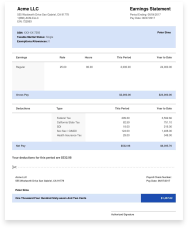
Each payment should show up on its own line in the earnings section. Label it BONUS, COMMISSION, OT PAY, or SEV based on the type. The federal tax line will show the bigger flat-rate amount when you use the flat method. That's just what you want. Clean splits make the math easy to defend in an audit. They're also easy to explain when a worker asks. Running these amounts through pay stub templates that handle split line items keeps your records audit-ready from day one.
HR Considerations for Small Business Owners
A few practices keep this category from creating friction:
- Talk before the check hits. Tell staff about a coming bonus, commission, or severance payment. Mention the 22% flat tax rate so the smaller take-home doesn't shock them.
- Write down each call. Keep notes on which method you used, what rate applied, and why. Looking at common payroll mistakes before year-end helps catch issues before audits.
- Check state tax on its own. State supplemental rates often differ from the 22% federal rate. On the West Coast, see our California payroll tax guide.
Practical Scenarios for Small Business Owners
Scenario 1: Year-end $2,000 bonus. You give a salaried worker a $2,000 holiday bonus on a separate check. Flat method: $2,000 × 22% = $440 in federal tax. Add $153 FICA (7.65%). Net check before state tax: $1,407. The pay stub shows a clean BONUS line.
Scenario 2: Sales rep with monthly commission. Your rep earns $4,000 base plus a $1,200 commission. Run the commission alone at 22% and you withhold $264. Run it aggregate and the W-4 brackets set the tax on $5,200. Either is fine. Pick the method that keeps your records the same across the team.
You Might Also Like
- Medicare Tax: How It's Calculated and Reported
- What Is Social Security Wages on W-2?
- Adjusted Gross Income on W-2 Explained
- Working 2 Jobs: How Do You File a W-2?
- Pay Stub vs Payslip: What's the Difference?
Conclusion
Supplemental wages are one of the small payroll bits that trip up growing firms. The 2026 rules haven't changed: 22% up to $1M, 37% above. But record-keeping rules keep getting strict. Need a clean stub for that next bonus or commission check? Use a paystub generator that handles split line items. Your records, and your team, will stay on the same page.



Frequently Asked Questions
Similar Articles



We’ve helped numerous individuals and businesses create professional documents! Create yours today!