What Is Social Security Tax Withheld? 2026 Employer Guide
By Jaden Miller , March 24 2026

As a business owner, you must withhold Social Security tax from every employee paycheck. Get this wrong, and the IRS can hold you personally liable. Social Security tax is one of two payroll taxes under FICA (Federal Insurance Contributions Act). A reliable paystub generator helps your records show correct withholding. This guide covers the 2026 tax rate, wage base, and reporting rules. You'll also learn what is social security tax withheld for your team.
Key Takeaways
- The Social Security tax rate is 6.2% for employees and 6.2% for employers, totaling 12.4% in 2026
- The 2026 wage base is $184,500. Stop withholding once an employee's earnings reach this limit
- Employers must report and deposit Social Security tax via Form 941 and EFTPS
- On pay stubs, what is social security tax withheld appears as OASDI or FICA SS
- Late deposits or failure to withhold can trigger trust fund recovery penalties
What Is Social Security Tax Withheld?
Social Security tax withheld is the 6.2% payroll tax taken from employee wages under FICA. Employers must take this amount from each paycheck. They also pay a matching 6.2% from their own funds. These funds support retirement benefits, disability benefits, and survivorship benefits through the Social Security Administration. Social Security is one of two FICA taxes on your paystub. The other is Medicare.
The program's full name is Old-Age, Survivors, and Disability Insurance (OASDI). It uses a pay-as-you-go system. Current workers fund benefits for over 68 million Americans each month. The primary insurance amount each person gets depends on their lifetime earnings record.
What Is the Social Security Tax Rate in 2026?
The Social Security tax rate in 2026 is 6.2% for employees and 6.2% for employers. That's 12.4% total. This rate applies to earnings up to the $184,500 wage base. Self-employed workers pay the full 12.4% through self-employment tax on Schedule SE.
Business owners often ask what is the tax rate on social security. The social security rate has stayed at 6.2% per side since 1990. Only the wage base changes each year. Here's how the Social Security tax percentage has looked in recent years:
| Year | SS Tax Rate (Each Side) | Wage Base | Max Employee SS Tax |
|---|---|---|---|
| 2024 | 6.2% | $168,600 | $10,453.20 |
| 2025 | 6.2% | $176,100 | $10,918.20 |
| 2026 | 6.2% | $184,500 | $11,439.00 |
FICA also includes Medicare tax at 1.45% each (2.9% total). There's an extra 0.9% Medicare tax on earnings over $200,000. When asking what percentage is social security tax versus Medicare: 6.2% goes to Social Security and 1.45% goes to Medicare from each paycheck.
Who Pays Social Security Tax?
Employers and employees split the cost equally. You withhold 6.2% from each employee's gross taxable wages. You also pay an employer match of 6.2% from your own funds. That adds up to 12.4% per employee. These amounts show as payroll deductions on every pay stub you issue.
Nearly all W-2 workers pay this tax. Self-employed workers pay both halves. You are fully responsible for correct withholding and sending payments to the IRS on time. Because higher earners stop paying once they hit the wage base, Social Security is often called a regressive tax.
Social Security Tax Wage Base and Income Limit
Social Security tax applies only up to the yearly wage base. For 2026, this is $184,500 (up from $176,100 in 2025). Once an employee's yearly earnings reach this income limit, stop withholding for the rest of that year. This limit also affects your Social Security wages on W-2 reporting at year-end.
Track each employee's total earnings as the year goes on. High earners may hit the taxable wage base mid-year. Their net pay will jump after that point. Some employees think it's a payroll error. Clear pay stubs with year-to-date fields prevent these questions.
How to Calculate Social Security Tax Withheld
To calculate social security tax withheld, multiply the employee's gross taxable wages by 6.2%. Then match that amount from your business funds.
Here's an example for a business with two employees:
| Employee A | Employee B | |
|---|---|---|
| Annual Salary | $55,000 | $200,000 |
| SS Taxable Wages | $55,000 | $184,500 |
| Employee SS Tax (6.2%) | $3,410.00 | $11,439.00 |
| Employer SS Tax (6.2%) | $3,410.00 | $11,439.00 |
| Total SS Contribution | $6,820.00 | $22,878.00 |
Employee B earns above the 2026 wage base. Social Security tax applies only to the first $184,500. There's no withholding on the rest. To find how much is ss tax for your full payroll, add up each employee's amount. This shows what is social security tax withheld for each worker.
Social Security Tax Exemptions
Most workers pay Social Security tax, but some groups are exempt:
- Religious groups: Members of qualifying religious groups may file IRS Form 4029. The group must have been set up before 1951.
- Nonresident aliens: Foreign students, scholars, and foreign government workers in certain visa classes.
- Students: Those who work at the school where they are enrolled, as long as they stay enrolled.
- Certain government workers: State and local workers covered by a public retirement system similar to Social Security. Some states also have specific payroll tax rules that affect withholding.
Check all exemption paperwork before leaving any employee out. Opting out means giving up future Social Security benefits.
Self-Employment and Social Security Tax
Self-employed workers pay the full 12.4% Social Security tax on their own under the Self-Employed Contributions Act (SECA). This tax is figured on 92.35% of net earnings and filed on Schedule SE. Freelancers and contractors can show proof of income with pay stubs that record their earnings.
You can claim an above-the-line deduction for half of this tax. For example, a contractor with $100,000 in net earnings owes Social Security tax on $92,350 ($11,431). Half of that ($5,716) is deductible.
What Is Social Security Tax Withheld Called on Pay Stubs?
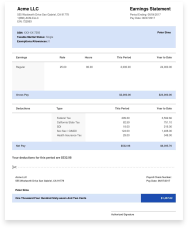
On most pay stubs, the amount withheld from paycheck earnings shows up in the deductions section. Look for the label OASDI or FICA SS. When employees ask what is social security tax withheld, point them to this line. It sits next to federal income tax, state income tax, and Medicare (often labeled Fed Med/EE or FICA MED).
Clear labels on pay stubs matter. New hires often ask about deduction line items in their first few pay periods. A paystub generator that labels Social Security withholding clearly cuts down on HR questions and keeps your records in order.
Reporting and Depositing Social Security Tax
Report Social Security tax each quarter on Form 941. If your total tax is under $1,000, you can file once a year on Form 944. By January 31, give each employee a Form W-2. Send copies with Form W-3 to the Social Security Administration.
Deposit through the Electronic Federal Tax Payment System (EFTPS). Your deposit schedule (monthly or twice a week) depends on your lookback period. See IRS Publication 15 for full rules on what is social security tax withheld and how to deposit it.
Late deposits bring penalties from 2% to 15%. The trust fund recovery penalty (TFRP) can hold business owners personally liable for unpaid taxes.
You Might Also Like
- Adjusted Gross Income on Your W-2: What Employers Need to Know
- Understanding Provision for Income Taxes
- California Payroll Tax: Employer Requirements
- How to Estimate Quarterly Taxes for 1099 Workers
- Strategies to Lower Your Taxable Income
Conclusion
Knowing what is social security tax withheld is a core employer duty. In 2026, the social security percentage stays at 6.2% per side on wages up to $184,500. Correct withholding, on-time EFTPS deposits, and proper Form 941 reporting keep your business in good standing.
Clear pay stubs that show Social Security withholding give your employees the openness they expect. Create correct pay stubs for your team in minutes with our paystub generator.



Frequently Asked Questions
Similar Articles



We’ve helped numerous individuals and businesses create professional documents! Create yours today!