What Does FUTA Mean for Your Business in 2026
By Davis Clarkson , March 17 2026

FUTA is an employer payroll tax that most business owners overlook until a penalty notice arrives. If you run a business with employees and generate pay stubs, knowing what does FUTA mean is essential. Getting payments right is a rule you can't skip. What does FUTA stand for? Federal Unemployment Tax Act. It funds unemployment insurance benefits for workers who lose their jobs. As an employer, you pay it in full; it never comes from your employees' wages.
This guide covers FUTA rates, how to calculate your liability, who qualifies, and the most common employer mistakes.
Key Takeaways
- FUTA stands for Federal Unemployment Tax Act, a federal employer-only payroll tax.
- The standard rate is 6% on the first $7,000 of each employee's wages; with the 5.4% FUTA tax credit, the effective rate is 0.6%.
- FUTA is never deducted from employee wages; it comes entirely out of your business.
- File Form 940 annually by January 31; make quarterly deposits if liability exceeds $500.
- California is the only credit reduction state for the 2025 tax year (filed in 2026).
What Does FUTA Mean? Definition and How It Works
FUTA stands for Federal Unemployment Tax Act. It requires employers to pay unemployment taxes that fund state unemployment programs. It's an employer-only tax: 6% on the first $7,000 of each employee's wages per year. With the 5.4% credit, the effective rate drops to 0.6%, or $42 per employee.
The Federal Unemployment Tax Act was first enacted in 1939. The Internal Revenue Service (IRS) and the Department of Labor jointly administer it. The tax funds unemployment compensation paid to workers who lose their jobs. The $7,000 FUTA wage base has not changed since 1983; only Congress can raise it. For most businesses, that cap is hit quickly. Once an employee's wages exceed $7,000, you stop paying FUTA on their earnings for the rest of the year.
For small business owners, what does FUTA mean in practice? It's a flat tax on every eligible worker you employ. The system works alongside state unemployment programs. Employers pay both federal FUTA and State Unemployment Tax Act (SUTA) taxes on wages. Paying state taxes on time earns the 5.4% federal credit that keeps your effective rate low.
What Is FUTA on a Paycheck?
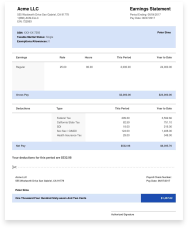
FUTA does not appear on employee pay stubs. It's an employer-paid tax that's never deducted from employee wages. Employees see deductions for federal income tax, Social Security, and Medicare (all employee-side taxes). FUTA is paid directly by the employer to the IRS and doesn't show as a line item on any employee check stub.
This is a common source of confusion. Here's how the two sides break down:
| Tax | Who Pays | Appears on Employee Pay Stub? |
|---|---|---|
| Federal income tax | Employee (withheld) | Yes |
| Social Security (FICA) | Split: employee + employer | Yes (employee portion) |
| Medicare (FICA) | Split: employee + employer | Yes (employee portion) |
| State income tax | Employee (withheld) | Yes (where applicable) |
| FUTA | Employer only | No |
| SUTA | Employer only (most states) | No |
If an employee searches "what is futa on my paycheck" and points to a line item labeled "FUTA," that's likely a payroll labeling error. FUTA doesn't belong on a check stub as a deduction. It's your cost as the employer, paid separately through EFTPS.
For a breakdown of which deductions appear on employee checks, see our guide to payroll deductions. Our pay stub templates show the correct employee-side deductions.
Who Pays FUTA Tax and Who Is Exempt?

Employers must pay FUTA if they paid more than $1,500 in wages in any quarter, or had at least one employee for 20 or more weeks. Exempt employers include 501(c)(3) nonprofits, government agencies, and household employers below $1,000 per quarter. Independent contractors are not covered; only W-2 employees count.
Let's break down the thresholds in practical terms:
General business employers must pay FUTA if either of these applies:
- You paid $1,500 or more in total wages in any quarter of the current or preceding year.
- You had at least one employee who worked any part of a day in 20 or more different weeks.
Household employers (nannies, housekeepers, personal assistants) must pay FUTA if they paid $1,000 or more in any calendar quarter.
Agricultural employers have a separate calculation involving $20,000 quarterly wages or 10 or more workers.
Exempt from FUTA:
- 501(c)(3) organizations.
- Federal, state, and local government agencies.
- Religious organizations for work done by ministers.
- Workers in certain fishing operations.
One critical point: independent contractors are not subject to FUTA. If you misclassify a contractor as an employee, you could owe back taxes and penalties. The IRS uses a behavioral and financial control test for worker classification. Getting this right controls your FUTA tax burden. Every W-2 employee is a FUTA liability and needs accurate employee pay stubs.
What Does FUTA Mean for Your Tax Rate? Rates and Calculation
The standard FUTA tax rate is 6% on the first $7,000 of each employee's wages. That's a maximum of $420 per employee per year before the credit. Most employers qualify for the 5.4% FUTA tax credit by paying state unemployment taxes on time. This brings the effective rate down to 0.6%, or $42 per employee per year.
Here's a step-by-step calculation for a business with five employees:
Example: Small retail business, 2025 tax year (filed 2026)
| Employee | Annual Wages | FUTA-Taxable Wages | FUTA at 6% | After 5.4% Credit |
|---|---|---|---|---|
| Employee 1 | $32,000 | $7,000 | $420 | $42 |
| Employee 2 | $28,000 | $7,000 | $420 | $42 |
| Employee 3 | $18,000 | $7,000 | $420 | $42 |
| Employee 4 | $9,500 | $7,000 | $420 | $42 |
| Employee 5 | $4,200 | $4,200 | $252 | $25.20 |
| Total | $32,200 | $1,932 | $193.20 |
Employee 5 earns less than $7,000, so their FUTA-taxable wages are capped at actual earnings.
For California employers in 2026: the credit reduction reduces your 5.4% credit by 0.3%, so your effective rate is 0.9% instead of 0.6%. Employees 1 through 4 would owe $63 each instead of $42.
Key rule: Once wages hit $7,000 for the year, FUTA stops on that employee. Most higher earners hit this cap in Q1.
FUTA vs SUTA: Key Differences for Employers

FUTA and SUTA (state unemployment insurance) are both employer unemployment taxes. They operate at different levels. Your SUTA payments directly affect your FUTA bill.
FUTA (Federal):
- Rate: 0.6% effective (after 5.4% credit).
- Wage base: $7,000 (federal, unchanged since 1983).
- Filed: Form 940, annually.
- Paid to: IRS via EFTPS.
SUTA (State):
- Rate: varies by state and employer experience rating (typically 1% to 8%).
- Wage base: varies by state ($7,000 to $62,500 or more).
- Filed: state quarterly tax form.
- Paid to: state unemployment agency.
To earn the 5.4% FUTA credit, pay your SUTA taxes in full and on time. If you underpay SUTA or pay late, the IRS cuts your credit and your FUTA bill goes up.
For context, FICA (Federal Insurance Contributions Act) covers Social Security and Medicare taxes. It's split between employer and employee. FUTA and SUTA are employer-only taxes.
Credit Reduction States in 2026
When a state borrows from the federal unemployment fund and fails to repay on schedule, it becomes a credit reduction state. Employers in those states lose part of their 5.4% FUTA credit and pay a higher rate.
For the 2025 tax year (reported on Form 940 by January 31, 2026):
California is the only credit reduction state. The reduction is 0.3%, bringing California employers' effective FUTA rate to 0.9% instead of the standard 0.6%.
New York fully repaid its federal unemployment loan in mid-2025 and is no longer a credit reduction state. NY employers are back to the standard 0.6% effective rate.
Employers in California must complete Schedule A (Form 940) to calculate the extra tax. The IRS publishes an updated list each November for the preceding tax year. Check before filing Form 940. For California employers in 2026, what does FUTA mean? A higher effective rate: 0.9% instead of 0.6%.
How to File and Pay FUTA Taxes
FUTA is filed annually, but deposits may be required quarterly. The filing vehicle is Form 940, and payments go through the Electronic Federal Tax Payment System (EFTPS).
Quarterly deposit rule:
A quarterly FUTA deposit is required when your cumulative FUTA tax liability exceeds $500 for the quarter. Deposit by the end of the following month. If annual liability stays at or below $500, pay with your Form 940 filing.
Quarterly deposit deadlines:
| Quarter | Wages Covered | Deposit Deadline |
|---|---|---|
| Q1 (Jan-Mar) | Jan 1 - Mar 31 | April 30 |
| Q2 (Apr-Jun) | Apr 1 - Jun 30 | July 31 |
| Q3 (Jul-Sep) | Jul 1 - Sep 30 | October 31 |
| Q4 (Oct-Dec) | Oct 1 - Dec 31 | January 31 |
Form 940 annual filing deadlines:
- January 31 if you haven't made all deposits on time.
- February 10 if all deposits were made in full and on time.
EFTPS enrollment: All federal tax deposits must go through EFTPS. If you're not enrolled, register at eftps.gov. Processing the enrollment confirmation takes up to seven business days.
Common FUTA Mistakes to Avoid
Most FUTA errors come from process failures that raise your tax bill or trigger penalties. These are among the most common payroll mistakes small business owners make. Here are the five most common:
- Missing SUTA payment deadlines. Paying your state unemployment tax late, even by a day, can cost you part of the 5.4% federal credit. Your effective FUTA rate rises as a result. Pay SUTA on time, every quarter.
- Misclassifying workers. Treating W-2 employees as independent contractors means you haven't been paying FUTA on their wages. If the IRS reclassifies them, you'll owe back taxes, interest, and penalties for every year they were misclassified.
- Ignoring credit reduction state status. If you operate in California, recalculate your FUTA liability at 0.9% and file Schedule A. Failing to account for the credit reduction leads to underpayment.
- Missing the $500 deposit threshold. Some employers assume they can pay everything with Form 940 in January. If your quarterly liability ever exceeds $500, you're required to deposit by the end of the following month. Late deposits trigger penalties starting at 2%.
- Confusing the annual Form 940 with quarterly deposits. Form 940 is a summary and reconciliation document, not a payment trigger. Deposits are due quarterly when the threshold is crossed. The annual form just settles the difference.
Conclusion
FUTA is a federal employer tax with an effective rate of 0.6% on the first $7,000 per employee per year. Keep SUTA payments current to protect your federal credit. Deposit through EFTPS when your quarterly liability crosses $500, and file Form 940 by January 31. California employers should factor in the 0.9% rate before filing.
Need to create professional pay stubs for your employees? Use our paystub generator to generate accurate, compliant pay documentation in minutes.
You Might Also Like



Frequently Asked Questions
Similar Articles



We’ve helped numerous individuals and businesses create professional documents! Create yours today!