Voluntary Deductions: A 2026 Guide for Employers
By Jaden Miller , August 27 2026

Running payroll for a growing team is more than gross pay and net pay. Voluntary deductions help your workers fund 401(k), health plans, HSAs, and other perks. They flow through payroll. Set them up wrong, and you get W-2 fixes and upset workers. This 2026 guide breaks it all down. We cover what they are, the main types, pre-tax deductions vs post-tax deductions, and your duties as the boss. You'll also learn how to manage them as your team grows.
Key Takeaways


- Voluntary deductions are amounts a worker lets you pull from each paycheck for perks like 401(k), health plans, HSAs, or union dues.
- Pre-tax cuts taxable income. Post-tax does not.
- Federal law needs written authorization before any benefit-related withholding.
- Wrong pre-tax or post-tax codes lead to W-2 errors at year-end.
What Are Voluntary Deductions?
Voluntary deductions are payroll withholdings a worker picks in writing. They fund perks or savings through payroll. They differ from required ones like FICA, income tax, and court-ordered garnishments. Those you must take out by law, no matter what the worker wants.
So what is voluntary deductions vs. mandatory? Mandatory comes out of every paycheck. The IRS or a court says it must. Voluntary only happens when the worker signs a form. Why might someone voluntarily have money deducted from their paycheck? To fund savings, health plans, and other perks through easy auto-withholding. As the boss, you can't add or pull these on your own. Every dollar needs a signed form and the right tax code.
Types of Voluntary Payroll Deductions
The voluntary payroll deductions you'll handle fall into a few buckets. Here are the most common, with 2026 limits:
- Health insurance premiums (medical, dental, vision). Usually pre-tax via a Section 125 plan.
- Retirement plan contributions. Traditional 401(k) caps at $23,500 in 2026. Roth 401(k) caps at the same level. Roth IRA caps at $7,000 ($8,000 if age 50+). The IRS sets these limits.
- HSA contributions. $4,400 single, $8,750 family in 2026. Needs a High Deductible Health Plan. (See where HSA amounts land on the W-2 so you code them right.)
- FSA contributions. $3,400 in 2026. "Use it or lose it" still applies.
- Group life and disability insurance. Usually post-tax. That keeps the payout tax-free.
- Union dues. Post-tax. Withheld per the union contract.
- Other: charity gifts, commuter perks, stock purchase plans.
A 2026 wrinkle: more than 20 states now make employers without a retirement plan join a state-run program. Think CalSavers, OregonSaves, or Illinois Secure Choice. Employer-backed retirement perks are now part of the standard package.
Pre-Tax vs Post-Tax Voluntary Deductions
Pre-tax deductions come out before income tax and FICA. That cuts taxable income for the year. Post-tax deductions are taken after taxes. They don't lower the tax bill now. The split matters. It shapes how each line shows up on the W-2. It also shapes how much net pay the worker takes home.
| Voluntary Deduction | Tax Treatment | W-2 Impact |
|---|---|---|
| Traditional 401(k) | Pre-tax | Lowers Box 1 wages |
| Roth 401(k) | Post-tax | No effect on Box 1 |
| Health insurance (Section 125) | Pre-tax | Lowers Box 1, 3, 5 wages |
| HSA contribution | Pre-tax (via Section 125) | Lowers Box 1, 3, 5 wages |
| FSA contribution | Pre-tax | Lowers Box 1, 3, 5 wages |
| Group life over $50K | Post-tax | Imputed income added |
| Union dues | Post-tax | No effect |
| Charitable contributions | Post-tax | No effect |
The practical impact: pre-tax saves the worker tax money now. Post-tax (Roth, life insurance) is taxed now. The payouts then stay tax-free later.
Mandatory vs Voluntary Deductions: What's the Difference?
Mandatory deductions are required by law. They include federal and state income tax based on Form W-4. They also cover FICA (Social Security tax and Medicare tax). And they include court-ordered items like wage garnishments or child support. Voluntary deductions are perks the worker picked. You can't withhold a cent without written authorization. Both show up on the pay stub. But the rules are not the same.
| Deduction Type | Required by Law? | Needs Employee Consent? |
|---|---|---|
| Federal income tax | Yes | No (uses Form W-4) |
| FICA (Social Security + Medicare) | Yes | No |
| Wage garnishments / child support | Yes (court order) | No |
| 401(k), HSA, FSA, premiums, union dues | No | Yes (written) |
Why Employees Choose Voluntary Deductions
Workers pick voluntary deductions for three reasons. First, they reduce taxable income through pre-tax payments. Second, they grab employer matches that boost pay. Third, they unlock group-rate perks. Those rates beat the open market.
Here's the math workers run. Putting $200 a month into a 401(k) cuts the tax burden by $2,400 a year. With a 50% match, that's $1,200 more in savings the worker did not have to fund. Group health rates almost always beat the open market. Auto-withholding kills the "should I save this month?" doubt.
For you as the boss, this is the point. A real benefits package, backed by clean payroll work, is a top way to attract and retain workers in 2026.
How to Manage Voluntary Deductions in Your Business
Treat voluntary deduction work as a four-part job:
- Get written authorization first. Every voluntary deduction needs a signed form before you withhold a dollar. Keep it in the worker's file. This is a federal rule. Most states add their own on top.
- Use payroll software to enforce limits. Yearly caps for 401(k), HSA, and FSA reset each year. Good payroll software flags overages early.
- Code pre-tax vs post-tax right. Miscode one line, and you'll send W-2 fixes at year-end. Audit your codes once a quarter.
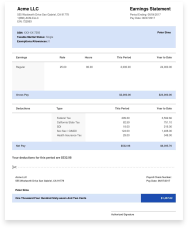
- Make the pay stub clear. Each line should show the current amount and a YTD total. Clear stubs cut down on worker questions. If your payroll tool can't make clean stubs, paystubs.net has templates that break out every line.
Share a quick check with your team. Find the deductions block. Decode the codes (MED, 401K, FSA, VLIFE). Match the YTD to expectations. Flag any gap to payroll within one pay cycle.
Pro Tip: Review each worker's picks at open enrollment. Life events like marriage, a new child, or lost coverage may change last year's amounts. A 15-minute yearly check beats fixing one bad code across 12 paychecks.
Common pitfalls to avoid: missing life-event updates, going over FSA limits ("use it or lose it"), miscoding pre-tax vs post-tax on the W-2, and withholding without a signed form. Read up on the most common payroll mistakes so you can catch them early.
Conclusion
Voluntary deductions come down to three points. They are picked by the worker. They need a signed form. They must be coded right as pre-tax or post-tax. Clear pay stubs are the easiest way to cut team questions and stay audit-ready. Need stubs that show every line? Use our paystub generator to make compliant pay stubs in minutes.
You Might Also Like
- 1099 Tax Deductions: what counts as a write-off when you pay contractors, not just W-2 staff.
- What Is a Payroll Tax Holiday?: how short tax breaks affect what you withhold.
- Working Two Jobs: How Do You File a W-2?: a quick guide when a worker asks about second-job withholding.
- Biweekly Pay Stub: What to Include: a clean breakdown of every line your stubs should show.
- Paystub Templates: ready-to-use templates for issuing stubs to your team.



Frequently Asked Questions
Similar Articles



We’ve helped numerous individuals and businesses create professional documents! Create yours today!