Proof of Employment: What Employers Need to Know (2026)
By Davis Clarkson , March 19 2026

When one of your employees applies for a mortgage or signs a lease, the lender calls you. USCIS calls you for visa petitions. Landlords call you too. They all need proof of employment: confirmation of a staff member's job title, status, and income. This guide covers every document type and how to issue each one. If your employees also need professional pay stubs, our paystub generator creates accurate documentation in minutes.
Key Takeaways
- The most common form is an employment verification letter (EVL) issued on company letterhead by your HR team
- Pay stubs are widely accepted by lenders and landlords, but USCIS and background check services require a formal EVL
- Employers in CA, NY, IL, and MA (and 18+ other states) cannot disclose salary history in EVLs for job applicants as of 2026
- Self-employed workers should use 1099s, bank statements, and a paystub generator for income documentation
- EVL turnaround: 1 business day (digital HR) to 5–7 days (manual HR)
What Is Proof of Employment?
This official documentation confirms a person's employment status, job title, and income. Common income verification documents include an EVL issued by HR, recent pay stubs (typically 3 months), and W-2 or 1099 tax forms. Bank statements and signed employment contracts are also accepted. Lenders, landlords, visa officers, and new employers all request this documentation.
Which document is required depends on who's asking. Mortgage lenders want an EVL plus recent pay stubs. A landlord may accept pay stubs alone. USCIS requires a formal letter on company letterhead. Knowing the distinction prevents delays for your team.
When Is Proof of Employment Required?
Your employees need income verification documentation in five common situations:
- Mortgage and loan applications: Lenders request an EVL plus 3 months of pay stubs. Our proof of income for mortgage guide covers exactly what documentation lenders require.
- Rental applications: Landlords verify income before approving a lease; pay stubs are often sufficient, but some require a signed letter.
- Visa and immigration filings: USCIS requires a formal EVL for H-1B visa sponsorship, Green Card applications, and Employment Authorization Document renewals.
- New employer background checks: Prospective employers verify employment dates, job title, and status through third-party services or direct HR contact.
- Government benefit eligibility: Income-based programs require employment verification documents confirming wages and current status.
Most of these requests come with tight deadlines. A slow HR response creates real consequences for your employee's mortgage closing or visa timeline.
Employment Verification Letter: What It Is and What to Include

An employment verification letter—also called a letter of employment—is the most commonly requested employment document. It's a formal letter issued on company letterhead confirming an employee's job status, title, and employment history.
What to Include in the Letter
Every EVL needs the employee's full name, job title, employment start date, and current status (full-time or part-time). Add your company name, address, and phone number on company letterhead, and have an authorized HR signatory sign the document. For mortgage or rental requests, include salary. Never include the employee's Social Security number or unrelated personal details.
Proof of Income Letter vs. Employment Verification Letter
These two documents serve different purposes. An EVL confirms employment status and job title; it's used for background checks and job applications. A proof of income letter from employer confirms wages and salary; it's used for mortgages, loans, and rentals. Pay stubs serve as proof of income directly, while an EVL confirms the employment relationship. Lenders frequently request both.
Best Practices for Issuing the Letter
Your HR department should use company letterhead with an authorized HR signature. As of 2026, 21+ states, including California, New York, Illinois, and Massachusetts, ban salary disclosure in EVLs for job applications. You can include salary in letters for mortgages and rentals. Process each request within 3–5 business days and log it through your HR ticketing system.
Pay Stubs and Employment Verification
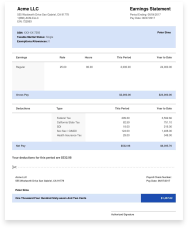
Pay stubs qualify as valid employment documentation in most cases. A pay stub shows the employer's name, employee name, pay dates, gross pay, net pay, and tax withholdings—covering both income and employment status simultaneously.
Pay stubs and employment verification are related but not the same. For rentals and most lenders, pay stubs are enough. For USCIS visa filings or background checks, you'll also need a formal EVL.
Lenders typically request 3 months of pay stubs, not just one, to confirm that income is consistent rather than a one-time payment. Most payroll software including ADP, Workday, Paychex, and QuickBooks Payroll lets employees download stubs directly from a self-service portal.
Tax Forms as Proof of Employment

W-2 forms and 1099s serve as annual income verification documents. A W-2 shows total wages, state and federal tax withholdings, and your employer identification number (EIN). It's the standard income documentation for mortgage applications covering the prior year. The IRS provides guidance on W-2 filing requirements for employers.
For contractors and freelancers, the relevant tax document differs.
A 1099-NEC confirms income paid to an independent contractor and serves as their primary income verification. Lenders may request both current pay stubs and prior-year W-2s or 1099s to confirm income stability over time.
How to Issue a Proof of Employment Letter (Employer Steps)
A timely response supports employees during major milestones like mortgage closings and visa filings.
When you receive a request for proof of employment documents, handle it efficiently with this process:
- Receive the request in writing via your HR department's ticketing system; this creates a documentation trail.
- Identify the purpose: mortgage, rental, visa, or job application. Salary disclosure rules differ by use case.
- Draft on company letterhead with all required fields (see above).
- Get authorized signatory approval from HR or a senior manager.
- Deliver within 3–5 business days via secure email or physical copy.
Most states only require basic employment confirmation. California has stricter post-termination rules. When unsure, check with your legal team.
How to Show Proof of Employment Without Pay Stub
Not every worker has pay stubs. Here's what to use instead:
- New employee (no stubs yet): An offer letter plus an EVL from HR confirms the employment relationship before any pay period closes.
- Self-employed or sole proprietor: 1099 forms plus Schedule C tax returns and 3 months of bank statements establish income history. See our self-employed pay stub guide for detailed documentation options.
- Gig or contract workers: Three months of 1099s, a profit-and-loss statement, and bank statements together substitute for traditional pay stubs.
- Cash-paid employees: Bank statements (3 months) plus a signed letter from the employer confirming wages. Our guide on proving income when paid in cash covers additional documentation options.
You Might Also Like
- Self-Employed Proof of Income Guide
- Pay Stub as Proof of Residency
- How to Report Freelance Income Without a 1099
- DoorDash Employment Verification: What to Know
- Adjusted Gross Income on W-2 Explained
Conclusion
Employment documentation spans multiple types: employment verification letters, pay stubs, W-2s, and 1099s. The right one depends on who's requesting it and why. As an employer, your job is to issue accurate documentation promptly, respect your state's salary disclosure laws, and support your team through major financial milestones.
Need to generate professional pay stubs for your employees? Browse our paystub templates to create accurate pay documentation in minutes, accepted by lenders and landlords nationwide.



Frequently Asked Questions
Similar Articles



We’ve helped numerous individuals and businesses create professional documents! Create yours today!