How to Find Annual Income: A Simple Guide
By Jaden Miller , March 2 2026

If someone just asked you "What's your annual income?" and you had no idea what to say, you're not alone. Maybe it was on a rental application, a credit card form, or a loan document. Don't worry. Learning how to find annual income is a lot simpler than it sounds, and you don't need a paystub generator or math degree to do it.
In this guide, we'll walk through exactly where to find annual income on your pay stub, tax forms, or using a quick formula. Need to find your annual income for a loan? Just want to know how to check annual income for budgeting? Either way, we've got you covered.
Key Takeaways
- Your annual income is the total money you earn in one year, either before taxes (gross) or after taxes (net).
- The fastest way to find annual income is to check the "Year-to-Date" (YTD) line on your most recent pay stub.
- If you don't have a pay stub, multiply your paycheck amount by the number of pay periods per year.
- Lenders and landlords usually want your gross (before taxes) number, not your take-home pay.
How to Find Annual Income: What It Means
Your annual income is the total amount of money you earn in one year. It can refer to your gross income (before taxes and deductions) or your net income (after everything is taken out). Most forms and applications ask for gross annual income unless they specify otherwise.
Think of it like a yearly report card for your earnings. Whether you're paid hourly or on a salary, your annual income is simply the total of what you made over 12 months. If you've ever asked yourself "what is my total annual income," this is the number you're looking for. It sounds complicated, but it really comes down to one number.
Gross vs. Net Income: What's the Difference?

Gross income is your total earnings before taxes and deductions. It's the salary your employer quotes you. Net income is your take-home pay after federal tax, state tax, Social Security, Medicare, and other deductions are subtracted. Most workers take home about 75-80% of their gross pay. For a deeper breakdown, check out our guide on net vs. gross income.
Here's a quick example. If your gross annual income is $50,000, your net income (what actually lands in your bank account) is roughly $38,000 to $40,000 after all deductions. The exact amount depends on your state, filing status, and benefits.
This is key when learning how to find annual income for any application. When a lender, landlord, or credit card form asks for your "annual income," they almost always mean gross. Reporting your net income by mistake could hurt your approval chances. When in doubt, use the bigger number (gross).
If you need to know how to determine annual income for a specific form, check whether it says "gross" or "net." Most of the time, it's gross. In nearly every situation, just use your gross number.
How to Find Annual Income on a Pay Stub
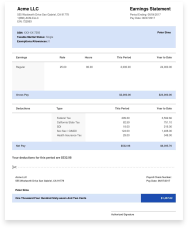
Wondering how to find annual income on paystub records? The fastest method is to look at the Year-to-Date (YTD) Gross Earnings on your most recent pay stub. YTD simply means "the total so far this year," starting from January 1st.
Here's where to look:
- Pull up your most recent pay stub (paper or digital).
- Find the section labeled "Earnings" or "Year-to-Date."
- Look for "YTD Gross" or "YTD Earnings." That's your total gross income for the year so far.
If it's the end of December, that YTD number is essentially your annual income. If it's mid-year, you can estimate your full-year income by dividing your YTD by the number of months worked, then multiplying by 12. This is the simplest way to find annual income without doing any calculations from scratch.
Pay stubs from online generators like PayStubs.net clearly label YTD fields, making this even easier to find.
Where to Find Annual Income Without a Pay Stub

Don't have a pay stub handy? No problem. Here's how to find out annual income through other documents:
- W-2 form (Box 1): Shows your total wages from the previous year. Your employer sends this by January 31st each year. If you need a copy, here's how to get a W-2 from a previous employer.
- Tax return (Form 1040, Line 1): Your most recent IRS filing shows last year's income.
- HR portal or payroll app: Services like ADP, Workday, or Gusto let you view earnings history online.
- Bank statements: Add up your direct deposits over 12 months for a rough estimate.
These are all reliable places where to find annual income records. If none are available, you can calculate it yourself using the method below.
How to Find Your Annual Income by Calculating It
If you're asking "how do i find out my annual income" but don't have documents handy, simple math is all you need. Multiply your paycheck amount by the number of times you're paid per year. For hourly workers, multiply your hourly rate by hours worked per week, then by 52. For example, $15 per hour at 40 hours per week equals $31,200 annually.
To find your annual income, simply multiply your paycheck amount by the number of times you're paid each year. If you're paid weekly, multiply by 52. If you're paid biweekly (every two weeks), multiply by 26. If you're paid twice a month (semimonthly), multiply by 24. And if you're paid monthly, multiply by 12.
A few more examples to help:
- $2,500 biweekly = $65,000 per year
- $20 per hour, 40 hours per week = $41,600 per year
- $4,000 monthly = $48,000 per year
If you earn overtime regularly, include that in your calculation. The same goes for consistent bonuses or commissions. That's essentially how to find my annual income using basic math.
Still wondering "how do i know my annual income" without doing any calculations? Go back to the YTD method on your pay stub. It's the easiest shortcut.
What Counts as Annual Income?
Annual income includes your salary or hourly wages, tips, overtime, bonuses, freelance earnings, rental income, Social Security benefits, and alimony or child support. Basically, any money that comes in regularly during the year counts toward your total annual income.
Here's a quick list:
- Salary or hourly wages (your main job)
- Tips and overtime pay
- Bonuses and commissions
- Freelance or gig income (1099 work)
- Rental income from property you own
- Social Security or disability benefits
- Alimony or child support payments
If money comes in regularly, it probably counts. When in doubt, include it. Knowing how to find annual income means accounting for all of these sources. If you're paid in cash, see our guide on how to show proof of income if paid in cash.
What Gets Taken Out? (Common Deductions Explained)
Confused about why your paycheck is smaller than expected? Here's what typically gets deducted from your gross pay:
- Federal income tax: The amount depends on your tax bracket and filing status.
- State income tax: Varies by state. Some states (like Texas and Florida) have no state income tax at all. Learn more about the 3 types of taxes that affect your paycheck.
- Social Security tax: 6.2% of your wages, up to the 2026 wage base of $184,500.
- Medicare tax: 1.45% of all wages (plus an extra 0.9% if you earn over $200,000). Together with Social Security, these are called FICA taxes.
- 401(k) or retirement contributions: If you contribute to your employer's plan, this comes out pre-tax. The 2026 limit is $23,500.
- Health insurance premiums: Your share of employer-sponsored health coverage.
Understanding deductions is a key part of learning how to find out annual income accurately. One more term you might see: Adjusted Gross Income (AGI). This is your gross income minus specific deductions like retirement contributions and student loan interest. You'll find your AGI on your tax return, and it's what the IRS uses to determine your tax bracket.
You Might Also Like
- Is PTO Taxed? What You Need to Know
- Do Paychecks Expire? Here's What to Know
- Where to Find HSA Contributions on Your W-2
- Do Minors Have to Pay Taxes?
- Understanding Tax Loopholes
Conclusion
Now you know how to find annual income using several different methods. Check your pay stub's YTD line for the fastest answer. Look at your W-2 or tax return for last year's number. Or multiply your paycheck by pay periods to calculate it yourself.
Now that you know your number, you're better prepared for tax forms, loan applications, and budgeting. Need a professional pay stub with clearly labeled income fields? Create yours in minutes with our easy paystub generator. No experience needed.



Frequently Asked Questions
Similar Articles



We’ve helped numerous individuals and businesses create professional documents! Create yours today!