Involuntary Deductions: An Employer's 2026 Compliance Guide
By Jaden Miller , May 14 2026

A garnishment order just landed on your desk for one of your employees. Involuntary deductions aren't optional. Getting them wrong puts your business on the hook for every dollar you should have withheld. The good news: the rules are simple once you know the basics.
This guide covers the five main types of required withholdings. It also explains the federal CCPA limits, how to rank multiple orders, and how these amounts should show up on the pay stubs you issue in 2026.
Key Takeaways
- Involuntary deductions are court- or government-ordered withholdings you're legally required to process, not optional.
- The five main types: required payroll taxes, child support, tax levies, student loan garnishments, and creditor garnishments.
- The CCPA caps most garnishments at 25% of disposable earnings, with higher ceilings for child support.
- When multiple orders hit the same employee, child support takes first priority.
- Document every step to protect your business from disputes and audits.
What Are Involuntary Deductions?
Involuntary deductions are court-ordered or government-ordered amounts an employer must take from an employee's paycheck. They include federal and state payroll deductions, child support, tax levies, student loan garnishments, and creditor garnishments. Unlike voluntary deductions such as 401(k) contributions, these amounts aren't optional for either party.
Your role here is simple. You're a neutral third party required by law to process the transfer. You can't refuse the order or change the amount. The employee must take it up with the agency that issued it.
Voluntary vs. Involuntary Deductions

The difference comes down to consent. Voluntary deductions are benefits the employee opts into in writing. They can change or cancel them at any time. The involuntary kind is required by law. Neither of you can waive it.
| Deduction Type | Authorization | Examples |
|---|---|---|
| Voluntary | Employee opts in, revocable | 401(k), health insurance, HSA, commuter benefits, charitable giving |
| Involuntary | Required by law or court order | FICA, federal/state income tax, child support, tax levies, student loans |
The two categories should be listed separately on the pay stub. That way anyone reading it can tell which amounts are required and which are optional.
The 5 Types of Involuntary Deductions
Most employers see the same set of deduction types over and over. Here's a quick rundown of each so you know it when you see it.
Required Payroll Taxes
This bucket covers FICA (Social Security and Medicare), federal income tax, and state income tax. Social Security and Medicare are split between the employee and the employer. Income tax is withheld based on the W-4 form the employee filled out at onboarding.
Child Support Garnishments
Child support orders come from a court. Your state's child support agency usually sends them to you. In some states, they also include alimony. The cap can reach 50-65% of disposable earnings, based on dependents and any past-due amounts.
Tax Levies
When an employee owes back taxes, the IRS sends you Form 668-W. It includes a table showing the exempt amount you can't touch. Everything above that goes to the IRS until the debt clears or a release (Form 668-D) shows up. States follow a similar process with their own forms.
Student Loan Garnishments
The Department of Education can garnish up to 15% of disposable earnings for defaulted federal student loans. This happens through administrative wage garnishment, which doesn't need a court order. You'll get the order by mail with the amount and start date.
Creditor Garnishments and Bankruptcy Orders
Unpaid consumer debts can reach a paycheck only after a judge rules for the lender. Four states block most of these orders outright: North Carolina, South Carolina, Texas, and Pennsylvania. Chapter 13 bankruptcy rolls the debts into a court-run deduction plan. Chapter 7 usually triggers an automatic stay that halts most active collections.
CCPA Limits and State Rules

The Consumer Credit Protection Act sets the federal cap on garnishments. As of 2026, the limit for most orders is the lesser of two numbers. The first is 25% of disposable earnings. The second is the amount by which weekly pay goes above 30 times the federal minimum wage ($217.50).
| Employee Weekly Disposable Earnings | Maximum Garnishment (CCPA) |
|---|---|
| $217.50 or less | $0 (fully protected) |
| $217.51 to $290 | Everything over $217.50 |
| Over $290 | 25% of disposable earnings |
Several states set stricter limits than the federal default. California, New York, and other high-wage states use their own minimum wage when it helps the employee more. The Department of Labor lists current thresholds. Your payroll system should track them by state.
Employer Responsibilities
Your legal risk here is real. If you ignore a valid order or get the math wrong, you can be on the hook yourself. That covers the amount you should have withheld, plus penalties.
Work each new order through these four steps:
- Review the order within one business day. Confirm the employee's identity, the issuing authority, the withholding amount, and the start date.
- Notify the employee in writing before the next pay period begins. Provide a copy of the order.
- Begin deductions on the specified effective date, not before.
- Remit payment to the issuing agency within the deadline. Federal child support orders must be remitted within 7 business days of the pay date. IRS tax levies are typically paid on your next regular pay cycle, and other orders follow whatever deadline the notice spells out.
Good records protect your business. Keep the original order, the date you got it, and your notice to the employee. Also save the first deduction date and every payment receipt in the file. If a dispute or audit comes later, those records are what you'll rely on. Review the pay stub laws in your state to confirm your retention and delivery requirements.
Handling Multiple Orders for the Same Employee
When two or more orders target the same employee, process them in this priority:
- Child support (always first)
- Federal tax levy
- State tax levy
- Creditor garnishment
If the CCPA cap is reached before all orders are paid, stop at the legal limit. Tell any later-filing agencies that the cap is exhausted. A Chapter 13 bankruptcy plan usually rolls everything together and outranks later orders.
Example: an employee has both a child support order ($150/week) and a federal tax levy. You process child support first. Then you apply the tax levy to whatever disposable earnings are left under the CCPA cap.
Showing Involuntary Deductions on Your Pay Stubs
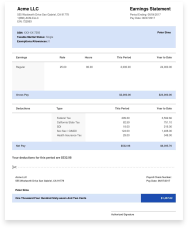
Every required amount should show up on the pay stub as its own labeled line. Keep it apart from voluntary deductions. Use clear labels like "Child Support Garnishment," "Federal Tax Levy," and "Student Loan Garnishment." That way the employee or anyone reading the stub can see what was taken and why. For a visual reference on how a garnishment on a pay stub should look, see our breakdown.
Clear labels also help with audits, job verification, and employee disputes. Need clean, ready-to-use pay stubs for your team without rebuilding the format by hand? Our pay stub templates split the line items for you.
You Might Also Like
- Managing Employee Pay Stubs
- State to State Pay Stub Requirements
- Biweekly Pay Stub
- DIY Payroll: The Types of Check Stub Paper Out There
- What Is Social Security Wages on W2
Conclusion
These amounts come with hard deadlines and personal risk. The job is to respect the priority order, stay under the CCPA cap, and keep a clean paper trail. When you handle the mechanics right, the process is routine.
Need to issue accurate pay documents for your team in minutes? Use our paystub generator to create professional pay stubs with involuntary deductions labeled the right way every time.



Frequently Asked Questions
Similar Articles



We’ve helped numerous individuals and businesses create professional documents! Create yours today!