Balance of Net Pay Meaning: Direct Deposit Explained (2026)
By Jaden Miller , June 3 2026

If you run payroll, an employee will eventually ask about this term on their direct deposit setup. The balance of net pay meaning appears inside PayStubs.net-supported platforms like ADP, Workday, and Gusto, but is rarely defined in plain language. Here is the working definition.
Key Takeaways
- The balance of net pay is the leftover portion of an employee's net pay. It goes to their last direct deposit account after fixed-amount splits are funded.
- It is not a separate deduction or a different paycheck total. It is the final destination account in a priority list.
- Payroll systems (ADP, Workday, Gusto) label this field differently, but the function is identical.
- For employees with a single account on file, balance of net pay equals 100% of net pay.
Balance of Net Pay Meaning Explained
The balance of net pay is the remainder of net pay that lands in an employee's last direct deposit account. It arrives after any fixed-amount splits have funded other accounts. It is not a separate paycheck total but the final destination for take-home pay.
Net pay is take-home pay. Payroll deductions shrink gross pay to taxable income. Standard 2026 deductions: federal income tax (per Form W-4 with the IRS), Social Security tax 6.2% (reported to the Social Security Administration), Medicare tax 1.45%. Pre-tax deductions add up too. Think 401(k) retirement contributions ($23,500 cap for 2026), 403(b) plans, Roth IRA, HSA, FSA, and health insurance premiums.
If you need to define account balance for your team, explain it as the amount of money remaining in a specific account after all transactions. In payroll contexts, the account balance reflects what is net pay after deductions hit the bank.
How the Balance of Net Pay Works with Multiple Direct Deposit Accounts

When an employee splits direct deposit across accounts, payroll funds the fixed-amount accounts first by priority. Take-home pay that is left flows into the balance of net pay account, the catch-all. Configure this list in your payroll system at onboarding.
A three-account example: $200 fixed to savings, $100 to a vacation fund, and the balance to checking. ADP labels this field "Remaining Net Pay." Workday calls it "Net Pay Distribution." Gusto treats the last listed account as catch-all. See gross vs net pay differences to understand how to calculate net pay from gross pay vs net pay totals.
Why the Balance of Net Pay Meaning Matters for Pay Stubs
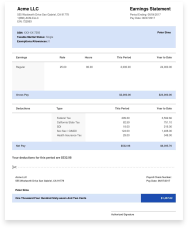
Employees should budget against net pay, not gross. Compare each deposit to the net pay line on the pay stub every cycle. If the deposit looks short, the cause is usually a W-4 change, a new pre-tax deduction, a payroll error, or a wage garnishment. The Fair Labor Standards Act sets minimum wage and overtime rules, but does not regulate direct deposit allocation.
You Might Also Like

- Net vs Gross Income
- Involuntary Deductions
- Medicare Tax
- What Is FICA Tax On My Paystub
- Common Payroll Mistakes
Conclusion
In short, the balance of net pay is the final-priority account that catches whatever take-home pay is left after splits. Configure it at onboarding so your team gets paid right. Need accurate stubs to back deposits? Use our paystub generator to create compliant stubs fast.



Frequently Asked Questions
Similar Articles



We’ve helped numerous individuals and businesses create professional documents! Create yours today!