What Is Double Time Pay? A Simple Guide for 2026
By Jaden Miller , March 2 2026

Confused about what is double time pay? You're not alone, and don't worry. It sounds intimidating but it's actually straightforward once you break it down. If your boss mentioned "double time" or you noticed it on your pay stub and wondered "what does double time mean?", you're in the right place.
This guide covers how does double time work, how it's different from overtime, when does double time kick in, and how is double time calculated. No jargon, no assumptions. Just clear answers.
Key Takeaways
- Double time pay means earning 2x your regular hourly rate for qualifying hours worked
- It's not required by federal law, but California mandates it after 12 hours in a workday
- The formula is simple: regular hourly rate x 2 x double time hours worked
- Always check your pay stub to confirm double time was calculated correctly
- Double time and overtime are different; don't confuse them
What Is Double Time Pay? (The Basics)
Double time pay means you earn twice your regular hourly rate for qualifying hours worked. If your normal rate is $20 per hour, double time pays you $40 per hour. It's not required by federal law, but California mandates it after 12 hours in a single workday.
Think of it like this: overtime (time and a half) bumps your pay by 50%. Double time is the full 2x multiplier. So if you make $15 an hour, double time means $30 an hour.
Here's what trips people up: not every state requires double time. Most only require overtime. Some people ask "what is double overtime?" and it's just another way of saying double time pay. Understanding what is double time pay depends on where you live and your employer's policy.
Double Time vs Overtime: What's the Difference?

Overtime pays 1.5 times your regular rate (called "time and a half"), while double time pays 2 times your regular rate. For example, a $20/hour worker earns $30/hour for overtime and $40/hour for double time. Most states only require overtime. Double time is mainly a California requirement or union contract benefit.
Here's a quick comparison:
| Pay Type | Rate | $15/hr Example | $20/hr Example | $25/hr Example |
|----------|------|---------------|---------------|---------------|
| Regular | 1x | $15.00 | $20.00 | $25.00 |
| Overtime | 1.5x | $22.50 | $30.00 | $37.50 |
| Double time | 2x | $30.00 | $40.00 | $50.00 |
You might also hear "double time and a half." That's 2.5x your regular rate, mainly found in union contracts for holidays. So is overtime double pay? No. Overtime is 1.5x. Double time is the 2x rate. If you're trying to understand the difference between gross and net income, that's worth checking too.
When Does Double Time Pay Kick In?
Double time kicks in based on state law, employer policy, or union contracts. In California, it's required after 12 hours in a single workday or after 8 hours on your 7th consecutive workday. The Fair Labor Standards Act (FLSA) only mandates overtime at 1.5x.
When does double time apply in practice? Common triggers:
- State law (California): Working more than 12 hours in a workday
- 7th consecutive day: In California, after 8 hours on your 7th straight workday
- Union contracts: Many unions in healthcare, construction, and retail negotiate double time for holidays or weekend shifts
- Employer policy: Some companies voluntarily offer double time for holidays, even if the law doesn't require it
Is holiday pay double time? Not automatically. No federal or state law requires it. But is holiday pay double time in California? Still no, not by law. However, many employers and unions offer it during busy seasons like Black Friday or peak construction months. When is it considered double time? Only when state law, your employer's policy, or your union contract says so.
| State/Level | Double Time Required? | Details |
| Federal (FLSA) | Only OT at 1.5x after 40 hrs/week | |
| California | Yes | After 12 hrs/day or 8 hrs on 7th day |
| Most other states | No | Only OT at 1.5x after 40 hrs/week |
California Double Time Pay Rules (2026)

California is the state most people think of when it comes to double time pay, and for good reason. When is double time paid in California? Whenever you cross specific hour thresholds.
Here's how to calculate double time in California with the rate tiers for a single workday:
| Hours Worked | Pay Rate | Example ($20/hr) |
|-------------|----------|-------------------|
| Hours 1 to 8 | Regular (1x) | $20.00/hr |
| Hours 9 to 12 | Overtime (1.5x) | $30.00/hr |
| Hours 13+ | Double time (2x) | $40.00/hr |
For the 7th consecutive workday in a workweek, the rules shift: hours 1 to 8 are overtime (1.5x), and hours 9 and beyond are double time (2x).
For 2026: California's minimum wage is $16.50 per hour. If you need to know when to pay double time in California, these thresholds are your answer. Understanding how different types of taxes affect your paycheck can also help you make sense of your earnings.
Is the 7th day of work double time? Only the hours after 8 on that 7th day. The first 8 hours are overtime, not double time.
What the FLSA Says About Double Time Pay
The Fair Labor Standards Act does not require double time pay. The FLSA only mandates overtime at 1.5x your regular rate of pay after 40 hours in a workweek. The Department of Labor enforces this through the Wage and Hour Division.
"Exempt" means salaried workers in professional, administrative, or executive roles who don't qualify for overtime or double time. The salary threshold is $684 per week ($35,568 per year) as of 2026. Check your employee handbook if you're unsure.
Who Is Eligible for Double Time Pay?
Nonexempt (hourly) employees are eligible for double time pay in states that require it, like California. Salaried nonexempt workers can also qualify. Independent contractors and exempt employees generally don't qualify. Check your union contract if you have one, as many include double time provisions.
Quick checklist: Am I eligible?
- Are you an hourly (nonexempt) worker? Likely eligible
- Are you salaried but classified as nonexempt? Possibly eligible
- Are you an independent contractor or freelancer? Generally not eligible
- Do you have a union contract? Check it for double time clauses
Wondering how do you get double time? It comes down to your state, your job classification, and your employer's policies.
Need pay documentation? Our pay stub templates make it easy.
How to Calculate Double Time Pay
Multiply your regular hourly rate by 2, then multiply by the number of double time hours worked. Formula: regular hourly rate x 2 x DT hours = double time pay. For a $20/hour worker doing 3 DT hours: $20 x 2 x 3 = $120.
Three real examples:
Example 1: Basic double time
You earn $15/hr and work 2 hours of double time on a holiday.
$15 x 2 x 2 = $60 in double time pay.
Example 2: California 14-hour shift
You earn $20/hr and work a 14-hour day in California.
- Hours 1 to 8: $20 x 8 = $160 (regular)
- Hours 9 to 12: $30 x 4 = $120 (overtime at 1.5x)
- Hours 13 to 14: $40 x 2 = $80 (double time at 2x)
- Total: $360
Example 3: With a weekly bonus
You earn $25/hr, worked 50 hours, and received a $200 non-discretionary bonus.
- True regular rate: ($25 x 50 + $200) / 50 = $29/hr
- Double time rate: $29 x 2 = $58/hr (not $50)
Calculating Double Time for Salaried Employees
If you're salaried and wondering what is double time pay for your situation, first convert to an hourly rate: annual salary / 52 / 40 = hourly rate. A $52,000 salary = $25/hr. Then apply the 2x formula.
What About Bonuses and Commissions?
Non-discretionary bonuses change your "regular rate." Recalculate: (total weekly compensation) / (total hours worked) = true regular rate. Then multiply by 2.
What Double Time Looks Like on Your Pay Stub
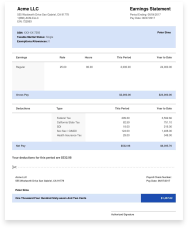
Now that you understand what is double time pay, how do you verify it? Look for separate line items on your pay stub for regular hours, overtime hours, and double time hours. Common labels include "DT HRS," "Double Time," or "2x Pay."
To verify: multiply your double time hours by twice your regular rate. If the amount matches, you're good. If something looks off, bring your timesheet to payroll. Knowing the difference between a pay stub and a payslip helps you understand your documentation.
Common Double Time Pay Mistakes (And How to Avoid Them)
Once you understand what is double time pay, spotting errors gets easier. Here are the top three mistakes:
- Using base rate instead of true regular rate. If you earned bonuses or commissions, the regular rate changes. Employers sometimes forget this, which means your double time could be underpaid.
- Misclassifying employees as exempt. Some employers incorrectly classify hourly workers as exempt to avoid paying overtime or double time. If your job duties don't match the exemption criteria, you may be owed back pay.
- Missing California's 7th-day trigger. Employers sometimes overlook that the 7th consecutive workday in California has its own double time rules after 8 hours. Understanding your W-2 form can help you verify your annual earnings match your pay stubs.
You Might Also Like
- Is PTO Taxed? What You Need to Know
- Medicare Tax: How It Works and What It Means for Your Pay
- Adjusted Gross Income on Your W-2 Explained
- Do Minors Have to Pay Taxes?
- Provision for Income Taxes: What It Means
Conclusion
Now you know what is double time pay, and it's not as complicated as it seemed. The bottom line: what is double time pay is 2x your regular rate, California is the main state that requires it, and always verify the math on your pay stub.
Ready to create your first pay stub? It's easier than you think. Get started with our paystub generator in minutes. No experience needed.



Similar Articles



We’ve helped numerous individuals and businesses create professional documents! Create yours today!