Payroll Register: A Small Business Owner's Guide (2026)
By Jaden Miller , April 17 2026

You just hired your fourth employee. You cut your first round of checks. Then you realize no single document shows what you paid, what you withheld, and what you owe the IRS next quarter. That missing document is a payroll register. It is the backbone of payroll records for every business that writes paychecks.
This guide covers what a payroll register is, every field that belongs on it, and how to build one for your business. You will see the 2026 FICA numbers, the FLSA retention rules, and a worked example from a real pay period.
Key Takeaways
- A payroll register is an internal record. It shows every employee's gross pay, deductions, taxes, and net pay for one pay period.
- It feeds your pay stubs, Form 941 filings, and W-2s at year-end.
- FLSA requires 3 years of records. The IRS requires 4 years for tax records.
- It is not the payroll journal. The journal posts total payroll cost to your general ledger.
- Good registers cut audit risk. Payroll errors cost US employers $78,700 per 1,000 workers each year.
What Is a Payroll Register?
A payroll register is an internal business record. It lists every employee's gross pay, hours worked, tax withholding, deductions, and net pay for one pay period. It feeds pay stubs, quarterly Form 941 filings, and year-end W-2s. It is also what auditors request first during a DOL or IRS review.
The short payroll register definition every owner should know: one document, one pay period, every employee. If someone asks what is a payroll register or what is payroll register, point them to last Friday's payroll register. It is the single source of truth for that pay period.
Three documents often get mixed up. The payroll register is the internal master record. The pay stub is the summary for one person, built from the register. Form 941 is the quarterly IRS filing that sums register totals. Get the register right and the other two fall in line.
What's in a Payroll Register?
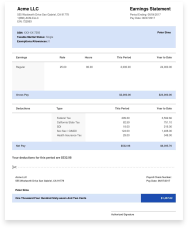
A standard payroll register uses the same set of fields for every employee. The field list below is what should appear on every payroll register report your business runs:
| Field | What It Captures |
|---|---|
| Employee ID and name | Identifier for the worker |
| Pay period dates | Start and end of the cycle |
| Hours worked | Regular hours, logged from the time system |
| Overtime pay hours | Hours over 40 in a workweek under FLSA |
| Regular pay | Rate multiplied by regular hours |
| Overtime pay | Time-and-a-half calculation |
| Gross pay | Regular plus overtime, before any deductions |
| FICA | Employee share of Social Security and Medicare |
| Federal withholding | Based on W-4 elections |
| State and local tax | State income tax plus local where applicable |
| Other payroll deductions | Health insurance, 401(k), garnishments |
| Net pay | What direct deposit actually transfers |
Each column feeds a later document. Gross pay and federal withholding feed Form 941. FICA totals feed Social Security filings. Net pay feeds direct deposit. The full row feeds the pay stub your employee sees.
Most payroll systems build two versions. One is the per-period register. The other is the cumulative (year-to-date) version. The YTD one is what you match against your general ledger and year-end W-2 figures.
How to Create a Payroll Register
How to create a payroll register breaks into seven steps. This works for a spreadsheet or full payroll software:
- Gather employee data from W-4 and I-9 forms. Confirm filing status.
- Pull hours worked from your time system for the pay period.
- Work out gross pay for each employee (regular plus overtime).
- Apply tax withholding for federal, state, and local rules.
- Take out items like health insurance, 401(k), and garnishments.
- Get net pay. Record it with the direct deposit batch.
- Save the register, match it to bank totals, and archive.
A worked example. John Smith earns $22 per hour. He worked 42 hours this pay period. Regular pay is 40 at $22 = $880. Overtime pay is 2 at $33 (time-and-a-half) = $66. Gross pay = $946. FICA at 7.65% = $72.37. Federal withholding (married, 1 dependent) runs roughly $45. State tax is around $25. Net pay lands at $803.63. That one row is John's entry in the payroll register for this pay period.
Which tool you use depends on headcount. 1-5 employees run fine on a payroll register template in a spreadsheet. 6-15 employees save time with cloud payroll software that auto-calculates state and local taxes. 15+ employees need a full HRIS or payroll platform. Compliance load grows faster than headcount.
Taxes and Employer Contributions in the Register

Every payroll register should show the full tax picture. Not just the employee side. Here are the 2026 lines your business owes:
- FICA - employee share: 6.2% Social Security on wages up to the $176,100 wage base. Plus 1.45% Medicare on all wages.
- FICA - employer match: Your business pays the same 6.2% + 1.45%. This doubles the FICA line on your payroll expense.
- FUTA: 6% federal unemployment tax on the first $7,000 per worker per year. Most employers get a credit that drops the real rate to 0.6%.
- SUTA: State unemployment tax. Rate and wage base vary by state and your experience rating.
- State and local income tax withholding: Based on employee choices and state rules.
These figures feed your quarterly Form 941 deposits with the IRS. They also feed your SUTA payments to the state. The Social Security Administration gets the annual totals through your W-2 filings at year-end. That is why year-to-date register accuracy matters.
How to Use a Payroll Register for Audits
A payroll register earns its keep during an audit. Times your business will need one: SBA loan requests, workers' comp audits, DOL wage-and-hour audits, IRS Form 941 reviews, and employee mortgage or lease checks.
Build payroll reconciliation into every pay period. Match register totals to bank direct deposit totals the same day. Post gross pay and payroll tax totals to your general ledger through the payroll journal. A payroll audit that spots a $200 gap in week one is easy to fix. Catching it six months later across 12 pay periods is a weekend of work.
Payroll Register vs. Payroll Journal
Payroll register vs payroll journal trips up many new employers. The split is simple once you see it side by side. The payroll register is per-employee detail for one pay period. The payroll journal is the accounting entry. It posts total payroll cost to your general ledger.
Same numbers, different audience. The register is what an HR or compliance auditor asks for. The journal is what your bookkeeper and CPA post at month-end. Your payroll software makes both from the same run. But only the register shows the rows for each worker.
FLSA Compliance and Record Retention
The Fair Labor Standards Act sets the baseline for payroll records. FLSA requires 3 years of records. Those cover hours worked, wage rates, and payments made. The IRS requires 4 years for tax records. State rules vary. California matches federal at 3 years. A few states stretch longer.
FLSA is not just for large employers. The Department of Labor applies it to any business in interstate commerce. In practice, that means almost every business that ships goods, takes credit cards, or sells online. Size limits matter far less than many small business owners think.
The practical rule: keep payroll records for 4 years at minimum. One policy covers both the FLSA 3-year window and the IRS 4-year window. Archive each pay period's register, labeled by date, in a secure folder. Limit access to payroll staff.
Best Practices for Maintaining Your Register
Payroll errors are costly. US employers lose $78,700 per 1,000 workers each year to payroll mistakes. And 1 in 5 payrolls has at least one error (EY survey).
Keep payroll registers clean with this checklist:
- Update the register the same day you run payroll.
- Match totals to direct deposit before the next cycle.
- Log wage garnishment, 401(k), and health insurance changes as they happen.
- Archive each pay period's register in a secure folder named by date.
- Review the YTD columns before issuing pay stubs.
- Build payroll expense tracking into the same review.
Payroll registers only work when current. A register updated a week late has already missed the match window. Need a simple way to turn register rows into clean pay stubs every cycle? A tool like PayStubs.net is built for small business owners who do not want to run a full payroll system yet.
You Might Also Like
- Gross vs. Net Pay Differences
- What Is FICA Tax on My Paystub?
- How Many Pay Periods in a Year?
- Payroll Deductions Explained
- How to Calculate Semi-Monthly Payroll
Conclusion
A payroll register is the backbone of your payroll records. It feeds your pay stubs, your quarterly Form 941 filings, and your year-end W-2s. It also keeps you in line with FLSA and IRS retention rules. If you still run payroll out of memory or scattered spreadsheets, the fix is simple. Get every pay period onto one consistent record.
The next piece is the pay stub itself. That is the part your employees actually see. Build clean, compliant pay stubs for every pay period in minutes with our paystub generator.



Frequently Asked Questions
Similar Articles



We’ve helped numerous individuals and businesses create professional documents! Create yours today!