Imputed Income: An Employer's Guide to Taxable Benefits
By Jaden Miller , June 4 2026

As a business owner, you offer perks to attract and retain good people. A company car. An extra tier of life insurance. Tuition help, or the occasional reward. A reliable pay stub maker keeps your records clean. But the IRS still taxes some perks as wages, even when no cash changes hands. That hidden value is called imputed income. Reporting it correctly is your job, not your employee's. Handle it wrong and it shows up as a bad W-2 in January. This guide covers what it is, which benefits trigger it, how to value it, and where it lands on a pay stub and W-2. You also get a checklist to keep your payroll clean.
Key Takeaways
- Imputed income is the taxable value of non-cash perks you provide. It gets added to wages even though the worker receives no extra cash.
- Group-term life insurance over $50,000 is the most common trigger. Personal use of a company car is another.
- It raises taxable wages and the tax owed. It does not raise take-home pay.
- Report it on the W-2 in Boxes 1, 3, and 5. Group-term life over $50,000 also goes in Box 12, Code C.
- De minimis perks, like occasional snacks or small gifts, stay tax-free.
What Is Imputed Income?
Imputed income is the cash value of a non-cash benefit the IRS treats as taxable wages. You give an employee a perk, like life insurance over $50,000 or personal use of a company car. No money changes hands. But you must put a dollar value on it and add that to their taxable income.
The word "imputed" just means a value is assigned even when no payment occurs. By definition, it is value you attach for tax purposes. Many people search for the imputed income meaning after a strange line shows up on a pay stub. Others ask, "What is imputed pay?" when their taxable wages rise without a raise. If you want to define imputed income for your team, keep it simple. Call it the taxable value of a benefit they never got as cash. For you, the label matters less than the duty behind it. A taxable benefit has to be valued, withheld on, and reported. Think of imputed earnings as compensation delivered as a perk, not a paycheck.
Common Examples of Imputed Income

The list of taxable perks runs longer than most owners expect. So what are imputed earnings in real life? They are the everyday benefits below, each one a perk the IRS still wants taxed.
Group-Term Life Insurance Over $50,000
Of every taxable perk, this one trips up the most employers. The first $50,000 of employer-paid coverage is tax-free. The value above that line becomes taxable to the employee. Say you provide a $150,000 policy. Only the cost of the $100,000 above the exemption counts. The IRS sets that cost with a standard age-based table, not what you pay the insurer. There is an easy out for your team. An employee who does not want the extra tax can waive coverage above $50,000. That zeroes out the taxable amount.
Personal Use of a Company Car
Driving a business vehicle for non-work trips creates a taxable benefit. Work mileage stays excluded. The daily commute and weekend errands do not. You value the personal use at fair market value. Most employers use the IRS annual lease value or the cents-per-mile method. Keep mileage logs so you can split business from personal use cleanly. A rough guess can raise red flags in an audit.
Other Benefits That Trigger Imputed Income
Plenty of smaller perks land in the same bucket. Gym memberships, wellness cash, prizes, and gift cards of any amount are all taxable. Cash equivalents never qualify for an exemption. Tuition assistance is tax-free only up to the annual IRS limit. Anything above that limit becomes taxable. Moving-expense payments need special care. Since the Tax Cuts and Jobs Act, they are taxable for every employee except active-duty military. That rule still holds in 2026. Domestic partner health coverage carries a double hit. Say the partner is not the employee's tax dependent. Then the worker pays their premium share with after-tax dollars. On top of that, your contribution toward the partner's coverage is taxable too. Fix only one of those and your payroll is still wrong. Offering fringe benefits like these helps you attract and retain staff. But each perk has tax implications you must track.
How to Calculate Imputed Income for Group-Term Life
Calculate group-term life by hand once. Then you can trust your payroll system's numbers. The IRS publishes Table 2-2. It lists a monthly cost per $1,000 of coverage, based on the employee's age. You apply that rate only to coverage above the $50,000 exemption. Here is a worked example at a glance, for a 45-year-old with $100,000 of employer-paid coverage:
| Step | Figure |
|---|---|
| Total coverage | $100,000 |
| Less tax-free amount | $50,000 |
| Taxable coverage | $50,000 |
| IRS Table 2-2 rate (age 45 to 49) | $0.15 per $1,000 / month |
| Monthly imputed income | 50 × $0.15 = $7.50 |
| Annual imputed income | $7.50 × 12 = $90 |
That $90 gets added to the employee's taxable wages for the year. Does the employee pay part of the premium with after-tax dollars? Subtract that amount before you report the total.
Which Benefits Are Excluded From Imputed Income?

Several benefits are excluded from imputed income. De minimis perks, like occasional snacks and small gifts, top the list. Next come working-condition benefits, such as business use of a company car. Then there are qualified benefits up to IRS limits, like health insurance, the first $50,000 of group-term life, and education help. Cash and gift cards are always taxable, never de minimis.
Three buckets do most of the work. De minimis benefits are items so small and frequent that tracking them would be silly. Think coffee, a holiday gift basket, or branded swag. The catch is simple: cash and gift cards are never de minimis, no matter the amount. Working-condition benefits are things an employee could deduct as a business expense. Job-related training and the business use of that company car both qualify. Finally, a long list of qualified benefits is tax-free up to set IRS caps. These include health insurance, the first $50,000 of group-term life, retirement and HSA contributions, dependent care, education help, and adoption help. Stay under each cap and there is nothing to impute. Cross it and only the extra is taxable.
How Imputed Income Appears on a Pay Stub
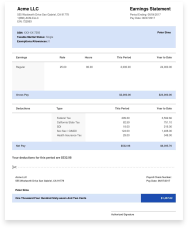
When imputed income lands on a pay stub, it rarely spells out the full phrase. Look for short codes like IMP, Imp Inc, GTL, Fringe, or Taxable Benefit in the earnings section. Here is the part that confuses workers. The amount is added to taxable gross. Then it is offset right away on the deduction side, because the worker never gets that money as cash. So taxable wages climb while take-home pay holds steady. That is the imputed income meaning in plain terms: value the worker is taxed on but never banks. As the employer, label the line clearly and be ready to explain it. Then a confused worker will not assume a payroll error when their imputed pay shows up.
LTD Imputed Income: The Disability Coverage Trade-Off
Long-term disability coverage creates one of the less obvious cases. Say you pay your employees' LTD premiums and do not tax them on it. Then any future disability benefit they collect is taxable, often right when they can least afford it. You can instead treat the premium as ltd imputed income now. The employee pays a small tax on the premium each year. In return, the eventual benefit comes out tax-free. Many employers offer this as a tax-choice election, so workers decide for themselves. It is a small line on the stub today for protected income later.
How Imputed Income Affects Taxes and W-2 Reporting
This value counts as wages. So it raises the employee's taxable income and the tax they owe, even though their take-home pay does not move. That gap is why the imputed income tax question comes up so often. You withhold Social Security and Medicare (FICA) on the imputed amount every pay period, just like regular wages. Federal income tax withholding is more flexible. You can use the flat supplemental rate or the employee's normal W-4 math. At year-end, the value flows onto the W-2. It folds into the wages in Box 1, Box 3, and Box 5. Group-term life over $50,000 also goes in Box 12 with Code C. Get those boxes right and the employee's tax return matches your payroll records.
The Employer's Imputed Income Compliance Checklist
You can keep this manageable with a simple routine, each pay period and at year-end:
- Identify the taxable benefits. Audit your full perks list and flag anything non-cash: extra life insurance, company cars, gym stipends, tuition above the cap, domestic partner coverage. If a benefit is not on a clear exclusion list, review it.
- Value each benefit at fair market value. Use the IRS tables where they exist, like Table 2-2 for group-term life or the lease-value method for cars. Document how you reached each figure.
- Add, withhold, and report. Add the value to taxable wages, withhold FICA, settle on income-tax withholding, and report it on the W-2 in the right boxes.
Keep your benefit valuations with your payroll records. The supporting math protects you if a number is ever questioned. If you make the documentation yourself, accurate pay stub templates make it easy to show a clean, labeled line.
Conclusion
A perk that costs your employee nothing can still create taxable wages you must track. Spot the benefits that trigger imputed income. Value each one right. Report it on the W-2 with no surprises in January. Do that well and you keep offering competitive benefits while staying fully compliant. When you need clean, professional records for every employee, our paystub generator creates accurate pay stubs in minutes.
You Might Also Like



Frequently Asked Questions
Similar Articles



We’ve helped numerous individuals and businesses create professional documents! Create yours today!