What Is FWT on Paystub and What Does It Mean for You?
By Davis Clarkson , January 7 2026
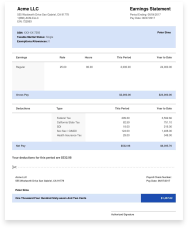
FWT on Paystub stands for Federal Withholding Tax. Maybe you have once looked at FWT on your paystub and had no idea what it means? It is the part of your pay that your employer sends to the IRS for you.
Your Federal income tax is usually the highest deduction from your paycheck. When you understand how it works, you can make the right money choices. And you can avoid any surprises when it’s tax time. Also, you can make your paystubs with an online paystub generator once you have the correct information.
This guide gives you everything you need to know about FWT on paystub. You’ll learn how it is calculated and how you can check it.
- What Does FWT on Paystub Mean?
- What Is FITW on Pay Stub?
- FWT Meaning and Why It Appears on Your Paystub
- Factors That Affect FWT Deduction and FWT Tax Meaning
- How To Calculate FWT Tax on a Paystub
- When To Check Your Federal Withholding Tax
- How to Check Your FWT on Paystub
- The Importance of FWT for Employers and Small Businesses
- Final Thoughts
What Does FWT on Paystub Mean?
FWT on paystub is federal withholding tax, and it is also called federal income tax withholding or FITW. When you see FWT on paystub, it is the amount your employer withholds from your pay. Then, your employer sends it to the Internal Revenue Service. The taxes withheld are FWT funds, and they go to the government. The federal government uses FWT funds to pay for services and infrastructure projects. It also funds federal programs that serve the citizens.
The FWT system is a pay-as-you-go system. The IRS makes employers withhold federal taxes on every paycheck. So, employees do not have to pay all their federal taxes at the end of the year. The taxes withheld mean not paying a huge lump sum. It also gives the federal government a steady income throughout the tax year.
Also Read: What Is OASDI Tax on Paycheck?
What Is FITW on Pay Stub?
FITW means Federal Income Tax Withholding. FITW is another abbreviation for FWT. Both FITW paystub and FWT on paystub mean the same thing. It is still the money that your employer withholds from your paycheck and sends to the IRS.
The federal withholding tax can appear as different abbreviations on paystubs. Some employers write FED. Some employers write FIT. Some employers just write tax withholding. No matter the abbreviation used, the federal income tax withholding is the same.
FWT Meaning and Why It Appears on Your Paystub
You see FWT on paystub because it is required by law. Employers must withhold federal income tax from your pay and clearly disclose it. But aside from following the law, it provides you with transparency. You will be able to track what is being taken out and check that the amounts are correct.
When you check your pay stub, you’ll likely see other withholdings that are not federal withholding. These are other taxes and deductions on your pay stub. One is the Federal Insurance Contributions Act (FICA) tax. This covers the Social Security and Medicare taxes. Others are:
-
State income tax withholding
-
State tax withholdings
-
Local taxes.
What you’ll see on your own pay stub depends on where you live. If you know the taxes withheld and you review them constantly, you can avoid a large tax bill when tax season comes around. This is because you would have paid enough federal tax during the tax year.
A paystub is also proof of income that you need when you are looking for a loan or a mortgage. It shows the lender that you earn the amount you claim you earn. And that you pay taxes.
Read More: Payroll Deductions Explained: Understanding Your Paycheck
Factors That Affect FWT Deduction and FWT Tax Meaning
Here are the things that contribute to your FWT deduction:
-
Your Gross Earnings and Income Level
The higher your income, the higher the FWT on paystub. The U.S. has a progressive tax system. If you earn a higher income, you get higher tax rates. The withholding can increase when the number of hours worked goes up. Your withholding can also increase because of overtime or a bonus. Working fewer hours can lower taxable income, and that means less withholding. As your gross pay increases, the taxes withheld go up with it.
-
Filing Status and Form W-4 Information
The amount of withholding the taxpayer will pay depends on their filing status. Your filing status can be single, married or head of household. For example, if you claim dependents, it can reduce your FWT. You can get tax credits for qualifying children or dependents. Choosing the wrong filing status can make the taxpayer owe money at tax time or receive a tax refund.
-
Pre-Tax Deductions
You may notice something when you put money into retirement accounts or health insurance premiums. They usually come out before your federal tax withholding is calculated. Now, increasing contributions means that you earn less income. Lower taxable income cuts down your tax bill. In turn, that lowers the amount taken from each paycheck, so the taxes withheld are lower.
-
Tax Credits
Tax credits, like the child tax credit or dependent care credit, lower what you owe. Tax credits also affect your withholding. You can put the amounts for the tax credits you’re eligible for on your W-4. So, you lower your FWT over the year instead of receiving a tax refund.
-
Major Life Events
Make changes to your W-4 when a life change occurs. Maybe you get married or have a child. You may have gotten a new job or bought a house. Whatever happens, update your W-4. Making these changes can help you avoid surprises at tax time.
Also Read: Effective Ways Income Earners Can Lower Taxable Income
How To Calculate FWT Tax on a Paystub
There are two main ways an employer can use to calculate your FWT tax:
-
The Wage Bracket Method
The wage bracket method is the easier method of calculating withholding. All the employer needs to determine how much tax you’ll pay are three things. These include:
-
Your gross pay
-
Filing status
-
How often you get your pay
For example, suppose a person is single and earns $1,500 every two weeks. The employer checks the wage range in the table. Then, they find the withholding amount depending on the employee’s information. The method is quick, and it cuts down on mistakes. The method is the preferred choice for small businesses.
-
The Percentage Method
This strategy is more specific and can be used for any income level. If you use payroll software, you’ll notice that it mostly uses this. That’s because it can handle various situations. The method calculates tax by subtracting the standard deduction from the pay. Then, it applies the tax rates to the difference.
The method is suitable when the employee's income is not stable. For example, the employee may get bonuses or commissions. The method can adapt to varying income amounts.
Check Out: Create pay stubs easily with ready-made templates
When To Check Your Federal Withholding Tax
Check your withholding when any of the following situations happen in your life:
-
You change jobs
-
You get a raise
-
You get a promotion
-
You get a new job
-
You earn additional income from side jobs.
-
If you have had any major life changes, such as getting married, having a child or getting divorced.
These events can change the amount of tax you owe, so you may need to change your W‑4.
You also need to check in the middle of the year, around June or July. Look at your taxes withheld so far and your last paycheck stub for your year-to-date totals. Then, compare the taxes withheld to the amount you expect to pay as income tax for the year. Doing this can help you spot any problems early.
How to Check Your FWT on Paystub

Begin by looking at your paystub. Your recent paycheck stub lists the tax you are paying now and year-to-date totals.
Next, open the IRS Tax Withholding Estimator, a web tool that can show whether your tax withholding is correct. The IRS Tax Withholding Estimator will ask for your paystub, your last year's tax returns, and an estimate of this year’s income. The tool looks at what you have paid and what you should pay based on your income and the federal taxes that you owe. It also shows the tax rates. Then, it suggests the needed changes.
If you get a tax refund each time, you likely withhold too much money and miss out on money during the year. If you owe money at tax time, especially if it is over $1,000, you are underwithholding. This may result in penalties.
The Importance of FWT for Employers and Small Businesses
Employers must withhold FWT from the employee's wages and deposit the FWT with the IRS on a schedule. Employers must also file the Form 941 returns.
If employers miss a deadline or mess up the numbers, they will face penalties. To get it right, they have to enter the W‑4 information accurately. They must also use the IRS-provided tables and keep the records for at least four years.
Federal tax withholding is important. However, employers must also handle other deductions from employees' wages. They include state tax withholdings, state and local taxes, as well as Social Security and Medicare taxes. This is why having proper payroll departments is important.
Check Out: Generate professional paystubs in minutes with our paystub generator.
Final Thoughts
Knowing what FWT on paystub means can keep you on top of your tax situation. It ensures that you are not caught off guard at the end of the year. Also, you’ll be free from over-withholding. Remember to always review your withholding after any major life change. A few minutes spent checking your withholding now can save you a lot of stress later.
As an employer, you need to create professional pay stubs that reflect FWT and all other deductions. Our easy-to-use paystub generator can help you make the process seamless. You can generate accurate pay stubs within minutes. Check it out today and improve your payroll documentation.


Frequently Asked Questions
Similar Articles



We’ve helped numerous individuals and businesses create professional documents! Create yours today!