What Is Medical ER on Paystub? And How It Works
By Jaden Miller , January 7 2026
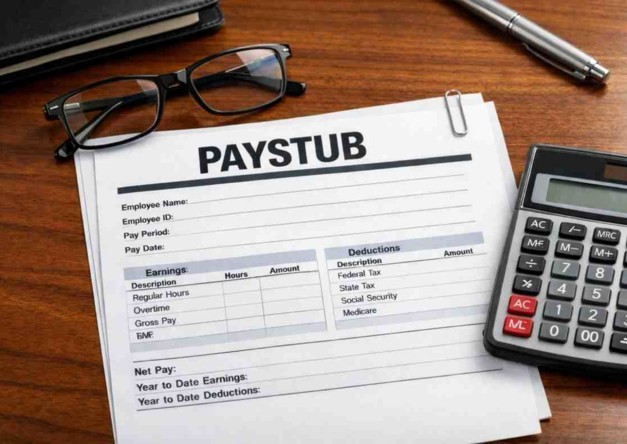
The ER medical on pay stub shows your employer-paid health contributions rather than a deduction from your paycheck. It is the portion of an employee's health insurance paid by the employer.
Although ER health is not an employee deduction, employees need to understand it. You can use a paystub maker to create your stubs and see how the ER Health is shown on a paystub.
This article explains everything you need to know about the medical ER on paystub. It will explain EE vs ER payroll differences and FSA and HSA ER meaning on a paystub.
- What Does a Pay Stub Contain?
- What Is Medical ER on Paystub?
- EE vs ER on Paystub: EE and ER Health Contributions
- Other Employer Responsible Health Contributions
- HSA and FSA on a Pay Stub
- Identifying ER Cost of Medical on Pay Stub
- Why ER Health Varies on Paystub
- Common ER Health Pay Stub Mistakes
- How ER Health on Pay Stub Affects Tax Reporting and Year-End Forms
- What To Do if Your ER Health Information Looks Wrong
What Does a Pay Stub Contain?
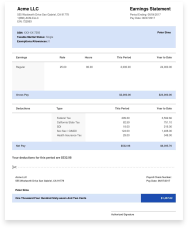
It is important to know the content of a pay stub to easily spot the ER Medical on paystub. A pay stub typically contains:
-
The employee's personal details
-
The employer's details
-
Pay date and the pay period
-
Gross income and any additional earnings, like overtime and extra bonuses
-
Deductions, including federal and state taxes, and Medicare taxes. It also includes OASDI.
-
Net pay
-
Additional information, such as employer contributions and benefits
Read more: What Is an Earnings Statement? Importance and Key Components Explained
What Is Medical ER on Paystub?
If you are wondering, “What is ER cost of medical?” here is the answer. ER health or Medical ER on paycheck stub is a significant portion of your health insurance that your employer pays on your behalf. ER stands for employer responsible health insurance contributions.
The ER health amount is not deducted from your paycheck; instead, your employer pays it. It is simply the amount your employer pays toward your health coverage.
Why Is ER Health Cost Shown on Pay Stub?
ER health shows up on your pay stub so you can see your employer’s contributions toward your health insurance plans. It shows a record of your employer paying a portion of your health expenses. Employers include ER on pay stubs for transparency and to allow employees to make informed decisions.
Where Does ER Health Appear on a Pay Stub
ER health may appear under the employer contributions or benefits sections. This section shows other employer contributions. These payments are made on the employee’s behalf.
Also check: Generate accurate pay stubs in minutes with our paystub generator.
EE vs ER on Paystub: EE and ER Health Contributions
Many employees may confuse EE Health and ER health on a paystub; however, they are not the same. Below is what you need to know about these two paystub abbreviations.
Key Differences Between ER and EE Health Costs
ER health represents the portion of health insurance costs your employer pays on your behalf. It appears on the paycheck stub for transparency. However, it does not reduce your gross pay.
On the other hand, EE Health is the employee’s contribution toward medical insurance. It is listed as a deduction from your gross pay. EE Health deductions may be taken from pre-tax income, depending on the health plan.
How ER and EE Health Work Together in Payroll
In payroll processes, ER and EE Health combine to cover the full cost of your health coverage each pay period. While EE Health affects take-home pay, ER Health increases your total benefits. This helps many employees afford quality healthcare coverage.
Other Employer Responsible Health Contributions
Employers are responsible for payroll costs beyond ER health. These contributions support the employee’s total benefits.
Mandatory employer payroll taxes include:
-
OASDI or Social Security tax
-
Medicare tax
-
Federal Unemployment Tax (FUTA)
-
State unemployment taxes (SUTA) in applicable states.
Read more: What Does OASDI Tax Mean on a Paycheck?
HSA and FSA on a Pay Stub
Both HSA and FSA appear as a payroll deduction on your pay stub. Here is what they mean:
-
Health Savings Accounts (HSA)
An HSA is a tax-advantaged savings account. The HSA helps you cover qualified medical expenses while providing tax advantages.
You must have a High Deductible Health Plan (HDHP) to open an HSA. The HSA funds remain with you even if you change jobs. Also, your employer may contribute to your HSA.
The HSA typically covers expenses such as:
-
Deductibles
-
Coinsurance
-
Prescriptions
-
Dental insurance if considered as a qualified medical expense.
-
Flexible Spending Accounts (FSA)
Flexible Spending Accounts are given to employees through their employers. Contributions made to the FSA lower an employee's taxable income. This is because deductions are made from the employee’s gross pay.
Also, the FSA funds are generally “use it or lose it”. This means any unused funds expire at the end of the year. However, your employer could offer a grace period or carryover.
FSAs end if you leave your job. Hence, you should monitor your contributions through your pay stub. An FSA lets employees save:
-
Pre-tax money for medical
-
Dental and vision
-
Dependent care expenses.
Identifying ER Cost of Medical on Pay Stub

Employees need to know how ER health is displayed on a pay stub so they can easily spot the amount the employers contribute. ER health may appear as:
-
ER health
-
ER health Cov
-
Employer Contribution Health.
Why ER Health Varies on Paystub
ER health contributions vary. Not every employee benefits from the same ER health amount. This is because:
-
Health Insurance premiums vary based on family and individual coverage.
-
The type of plan can affect the health contribution.
-
The pay period can also affect the contribution. This could be weekly, biweekly, or monthly.
Common ER Health Pay Stub Mistakes
Even with detailed pay stubs, mistakes can happen. Employees need to be aware of common errors so they can easily spot them on their pay stubs.
Missing or Incorrect ER Health Amounts
Sometimes, ER health contributions may be missing or inaccurately reported. This can occur due to payroll processing errors. It can also be due to delays in updating employer health plan information.
Always compare your pay stub to the benefits statements your employer provides. This can help you notice any missing ER health amount on your paystub.
Outdated Health Plan Information
If your health plan changes, pay stubs may still reflect old ER health amounts until payroll is updated. For example, if you switch from individual to family coverage, your employer’s payroll system may not have updated it.
Check your pay stub to ensure your benefits match the current plan. This way, you'll spot any outdated payroll information and ask the payroll department to update it.
How ER Health on Pay Stub Affects Tax Reporting and Year-End Forms
ER health contributions are not included in your taxable income. They do not increase federal income tax, state income tax, Social Security deductions or Medicare taxes.
This means your take-home pay and income tax reporting are not affected by your employer’s portion of health coverage. Your employer's contributions are generally not related to your payroll tax, so they don’t increase tax withholding.
ER Health on Form W-2
On your Form W-2, ER health contributions are reported in Box 12 with Code DD. It shows the total cost of employer-sponsored health coverage. Here, you will find the ER and EE contributions.
Also check: Paystub templates you can use to create your own pay stub
What To Do if Your ER Health Information Looks Wrong
The ER health amounts on your pay stub may be missing, incorrect or outdated. It is important to know how to verify these errors. Verifying ensures your total benefits and compensation are accurate.
Here is how to verify your ER health amounts
-
Review your pay stub carefully. Take notes of both EE and ER contributions.
-
Compare the information on your pay stub with the information on your employer's benefits statement.
-
Check year-to-date totals to ensure contributions are consistent across pay periods.
Who To Contact
If the ER health amount on your pay stub is incorrect, contact your employer’s HR department or the payroll team. HR will be able to confirm your benefits eligibility status, any changes to the health plan, and the employer contribution rates.
Payroll is responsible for how those figures are calculated and displayed on your paycheck stub. Share the incorrect pay stub with them. Request a written explanation of the problem and how it will be fixed.
Your employer may be using a third-party processor like GTL Payroll. In such situations, you may also be advised to reference their payroll reports when resolving ER health display issues.
Documents To Request
Below are documents you may need to request if your ER health amount looks wrong:
-
Current and past pay stubs to identify when the error began
-
Your offer letter or employment contract
-
Benefit enrollment forms showing employer contribution commitments.
-
A corrected pay stub after the issue had been fixed.
-
If taxes were affected, a Form W-2c for your records.
Read more: How Income Earners Can Lower Taxable Income
Final Thoughts
Employees need to understand the medical ER on paystub and how it works. This can help them accurately interpret their total compensation, benefits and employer health contributions. ER health represents what your employer pays toward your health plan. It does not reduce your paycheck or affect federal income tax, Medicare taxes or other deductions. Continually review and confirm with HR or payroll if needed.
You can easily create and organize your pay details with our paystub generator. Quickly generate accurate pay stubs to see how your ER health appears on pay stubs.



Frequently Asked Questions
Similar Articles



We’ve helped numerous individuals and businesses create professional documents! Create yours today!